The Ultimate Guide to Authentic Salsa: Bold Flavors, Fresh Ingredients & Pro Tips
Have you ever wondered why restaurant-style salsa tastes so much brighter and more vibrant than the jarred versions lining grocery store shelves? The secret lies in fresh ingredients, proper technique, and a little bit of culinary intuition. Making your own Salsa at home isn’t just rewarding—it’s a game-changer for taco nights, enchilada feasts, or simply elevating your everyday snacking. Not only does homemade salsa allow you to control spice levels and freshness, but it also connects you to a rich culinary tradition that—much like Salsa dancing—celebrates rhythm, passion, and bold expression. In this comprehensive guide, we’ll walk you through every step to create the freshest, most flavorful salsa you’ve ever tasted.
—
Ingredients & Kitchen Tools
Fresh Produce & Pantry Staples
– 6 medium Roma tomatoes – Meaty with fewer seeds for a thicker texture
– 1 medium white onion – Quartered; red onion works as a sweeter substitute
– 2–3 jalapeño peppers – Adjust based on heat preference; remove seeds for milder salsa
– 1 large garlic clove – Fresh is non-negotiable; avoid pre-minced jarred garlic
– ½ cup fresh cilantro leaves – Packed loosely; includes tender stems for more flavor
– Juice of 1 lime – Bottled juice lacks the bright, fresh acidity
– 1 teaspoon sea salt – Start with less and adjust; kosher salt also works
– ½ teaspoon ground cumin – Optional but adds earthy warmth
Kitchen Tools
– Medium pot – For boiling water (blanching tomatoes)
– Slotted spoon – To transfer hot tomatoes safely
– Blender or food processor – Pulse for chunky texture or blend for smooth
– Cutting board & sharp knife – Essential for prep work
– Mixing bowl – To combine and adjust seasoning
– Rubber spatula – To scrape every last bit from the blender
—
Prep Time & Cooking Schedule
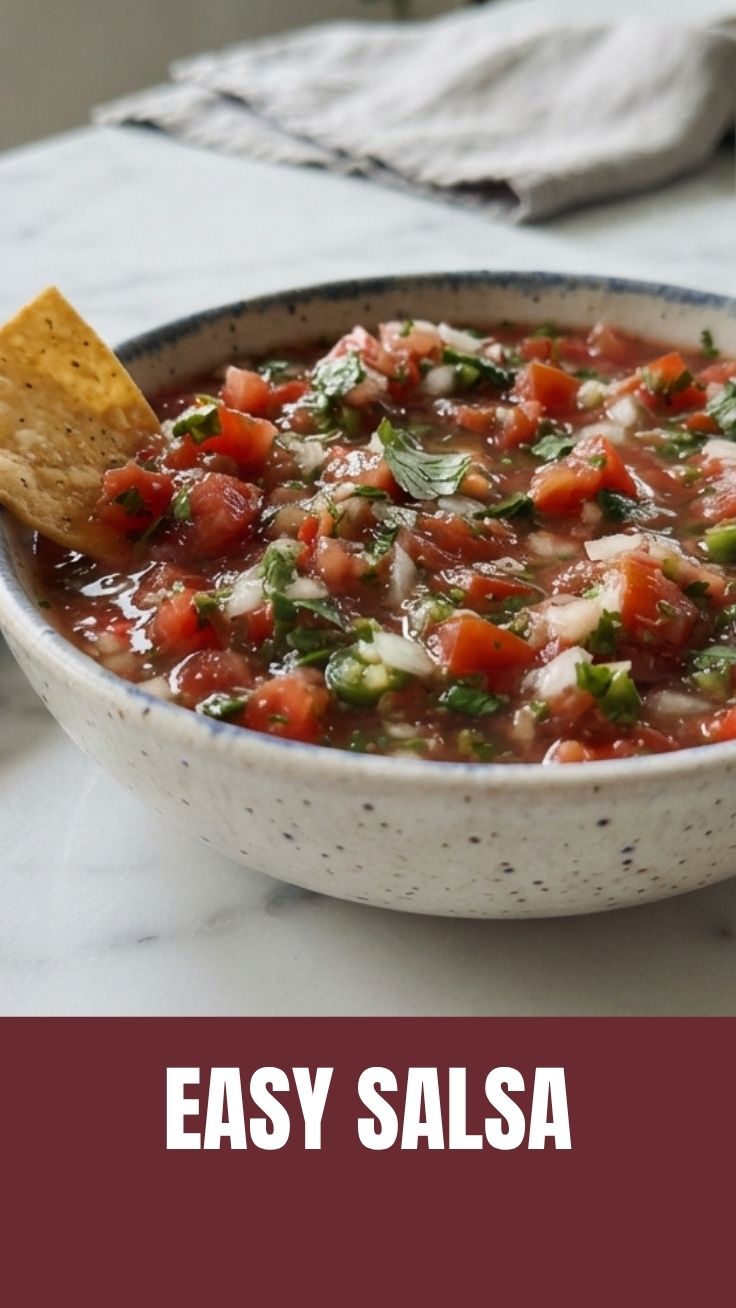
Total time: Approximately 30–35 minutes
Prep time: 15 minutes
Cooking time: 8–10 minutes (blanching tomatoes)
Cooling & blending time: 10 minutes
Resting time: 15–30 minutes (optional, for flavor melding)
Planning tip: This salsa tastes best when made at least 30 minutes before serving. The flavors need time to marry—similar to how dancers need a moment to find their rhythm. You can prepare it up to one day in advance and refrigerate; just bring to room temperature and stir before serving.
—
Step-by-Step Instructions
1. Prepare the tomatoes: Bring a medium pot of water to a rolling boil. Score an “X” on the bottom of each Roma tomato, then carefully lower them into the boiling water for 45–60 seconds. Use a slotted spoon to transfer to a bowl of ice water to stop cooking. The skins should peel off easily.
2. Char the aromatics (optional but recommended): Toast the quartered onion, jalapeño peppers, and garlic clove in a dry skillet over medium-high heat for 3–4 minutes until lightly charred. This step adds incredible smoky depth that elevates your Salsa from good to unforgettable.
3. Blend the base: In a blender or food processor, combine peeled tomatoes, charred vegetables, cilantro, lime juice, salt, and cumin. Pulse 5–7 times for a chunky texture, or blend continuously for a smoother consistency. Pro tip: Never over-blend—air incorporation can make salsa frothy and dilute its bright flavor.
4. Adjust seasoning and texture: Taste and adjust salt, lime, or heat. If too acidic, add a pinch of sugar. If too thin, add half a diced tomato and pulse briefly. Much like mastering the steps of Salsa dancing, flavor balancing requires practice and intuition—trust your palate.
5. Rest and serve: Transfer to a serving bowl and let rest for at least 15 minutes at room temperature. This allows the flavors to meld harmoniously. Serve with warm tortilla chips, atop tacos, or alongside grilled proteins.
—
Nutritional Benefits & Advantages
This fresh salsa is a nutritional powerhouse with remarkably few calories. Each serving (about ½ cup) contains approximately:
– 25–35 calories
– 1g protein
– 5g carbohydrates (mostly fiber and natural sugars)
– 0g fat
– High in vitamin C – From tomatoes, lime, and peppers
– Rich in lycopene – A powerful antioxidant linked to heart health
– Contains capsaicin – From jalapeños, known to boost metabolism
Because this recipe is naturally gluten-free, vegan, and low-sodium (when adjusted), it fits seamlessly into most dietary patterns. The absence of added oils, sugars, or preservatives makes it significantly healthier than most store-bought versions.
—
Tips Variations & Cooking Advice
Flavor Variations
– Smoky chipotle variety: Add one canned chipotle pepper in adobo sauce for deep, smoky heat
– Fruity twist: Blend in ½ cup diced mango or pineapple for sweetness
– Roasted version: Roast all vegetables at 400°F for 20 minutes instead of blanching
Dietary Adaptations
– Low-FODMAP: Omit garlic and use garlic-infused oil (check tolerance)
– Low-histamine: Use fresh, not canned, ingredients and avoid cumin
Texture & Cooking Advice
– For chunky salsa: Hand-dice all ingredients instead of blending
– For restaurant-style: Add one small can of fire-roasted diced tomatoes
– Temperature matters: Cold ingredients dull flavor; let salsa sit at room temperature before serving
—
Common Mistakes to Avoid
– Over-blending: Creates watery, frothy salsa. Pulse, don’t run continuously.
– Using bland tomatoes: Out-of-season tomatoes need help—add a pinch of sugar or use fire-roasted canned tomatoes.
– Skipping the char: Raw onion and garlic can taste harsh. Charring transforms them.
– Adding cilantro stems carelessly: While tender stems are fine, thick woody stems add bitterness.
– Forgetting to taste and adjust: Salt levels vary based on tomatoes and personal preference—always taste before serving.
—
Storage & Meal Prep Tips
– Refrigeration: Store in an airtight glass container for up to 5 days
– Freezing: Freeze in airtight containers or silicone ice cube trays for up to 3 months—thaw overnight in the fridge
– Reheating: Serve chilled or at room temperature; never microwave salsa as it kills freshness
– Meal prep: Double the batch and freeze portioned cubes to add to soups, stews, or marinades later
Pro tip: Place a paper towel on top of the salsa before sealing to absorb excess moisture—this prevents watery texture from developing.
—
Conclusion
Creating fresh, vibrant salsa at home transforms not just your meals but your entire approach to cooking. This recipe proves that simple ingredients—when handled with care and intention—yield extraordinary results. Whether you’re preparing a classic Salsa for game day or experimenting with roasted variations, the key lies in balancing acidity, heat, and freshness. Much like the graceful movements of Salsa dancing, making great salsa takes practice, rhythm, and a willingness to adjust. We encourage you to try this recipe, share your results, and explore our other fresh Mexican-inspired dishes for more culinary adventures.
—
FAQs
1. Can I use canned tomatoes instead of fresh?
Yes. Use one 14.5-ounce can of fire-roasted diced tomatoes (drained) and skip the blanching step. The flavor will be slightly different but still delicious, especially in winter.
2. How do I make salsa less spicy without losing flavor?
Remove all seeds and white membranes from jalapeños before adding. For even milder results, replace jalapeños with ½ a small green bell pepper and add a pinch of cayenne for warmth.
3. Why is my salsa watery, and how can I fix it?
Watery salsa usually comes from over-ripe tomatoes or over-blending. To fix, drain off excess liquid and add a handful of crushed tortilla chips or one diced tomato with firm texture.
4. Can I make salsa ahead for a party?
Absolutely. Prepare up to 24 hours in advance. Store in the refrigerator, then bring to room temperature for 20 minutes before serving. Stir well and adjust salt if needed.
5. How do I achieve a smoky flavor without a grill?
Roast vegetables on a baking sheet at 400°F for 15–20 minutes until charred, or use a broiler for 3–5 minutes per side. Alternatively, add ½ teaspoon smoked paprika to the blender.
Best way to grow Salsa: 5 Proven Tips
Ingredients
Equipment
Method
- Choose the right varieties of tomatoes, peppers, onions, cilantro, and garlic that are known for their flavor and suitability for salsa.
- Prepare your garden beds with rich, well-draining soil, amending it with compost to provide essential nutrients for healthy growth.
- Ensure all your salsa ingredients receive adequate sunlight, ideally 6-8 hours per day, and water them consistently to prevent drying out.
- Implement proper pest control strategies and provide support for taller plants like tomatoes and peppers to ensure a bountiful harvest.
- Harvest your ingredients at their peak ripeness for the best flavor, and consider companion planting to enhance growth and deter pests naturally.