The Ultimate Guide to Making Restaurant-Quality Pad Thai at Home
Have you ever wondered why the Pad Thai you order at your favorite Thai restaurant tastes so much better than any takeout version? The secret lies in balancing sweet, sour, salty, and umami flavors—something you can absolutely master in your own kitchen. Preparing this iconic dish at home not only saves money but also lets you control every ingredient, from the protein to the spice level. Whether you’re a seasoned cook or a curious beginner, learning to make authentic Noodles from scratch will transform your weeknight dinners. In this guide, we’ll walk you through every step, from sourcing the right rice sticks to achieving that perfect wok hei char. Let’s dive into the world of Pad Thai and discover how simple Noodles can become a masterpiece.
—
Ingredients & Kitchen Tools
Essential Ingredients
– Rice stick noodles (6 oz) – The backbone of the dish; use medium-width (¼-inch) for authentic texture.
– Protein – Choose shrimp (4 oz), chicken (4 oz sliced), or firm tofu (6 oz). Shrimp adds sweetness; tofu works for vegetarians.
– Pad Thai sauce – 3 tbsp tamarind paste, 2 tbsp fish sauce (or soy sauce for vegan), 1.5 tbsp brown sugar, 1 tbsp lime juice.
– Aromatics – 2 cloves garlic (minced), 1 shallot (thinly sliced).
– Eggs – 2 large eggs, lightly beaten.
– Crunch & garnish – ¼ cup roasted peanuts (crushed), 1 cup bean sprouts, 2 green onions (sliced), lime wedges, fresh cilantro.
– Oil – Vegetable or peanut oil (2 tbsp) for high-heat cooking.
– Optional – Dried chili flakes for heat, pickled radish for tang.
Kitchen Tools
– Large wok or nonstick skillet (12–14-inch) – Essential for high-heat stir-frying.
– Spatula or wok spatula – For tossing without tearing noodles.
– Small bowl – For mixing sauce.
– Strainer – To rinse noodles after soaking.
– Knife & cutting board – For prep.
Substitutions
No tamarind? Mix 2 tbsp lime juice + 1 tbsp brown sugar + 1 tbsp water. Gluten-free? Use tamari instead of soy sauce. For a low-carb version, swap rice noodles for zucchini noodles (add at the end).
—
Prep Time & Cooking Schedule
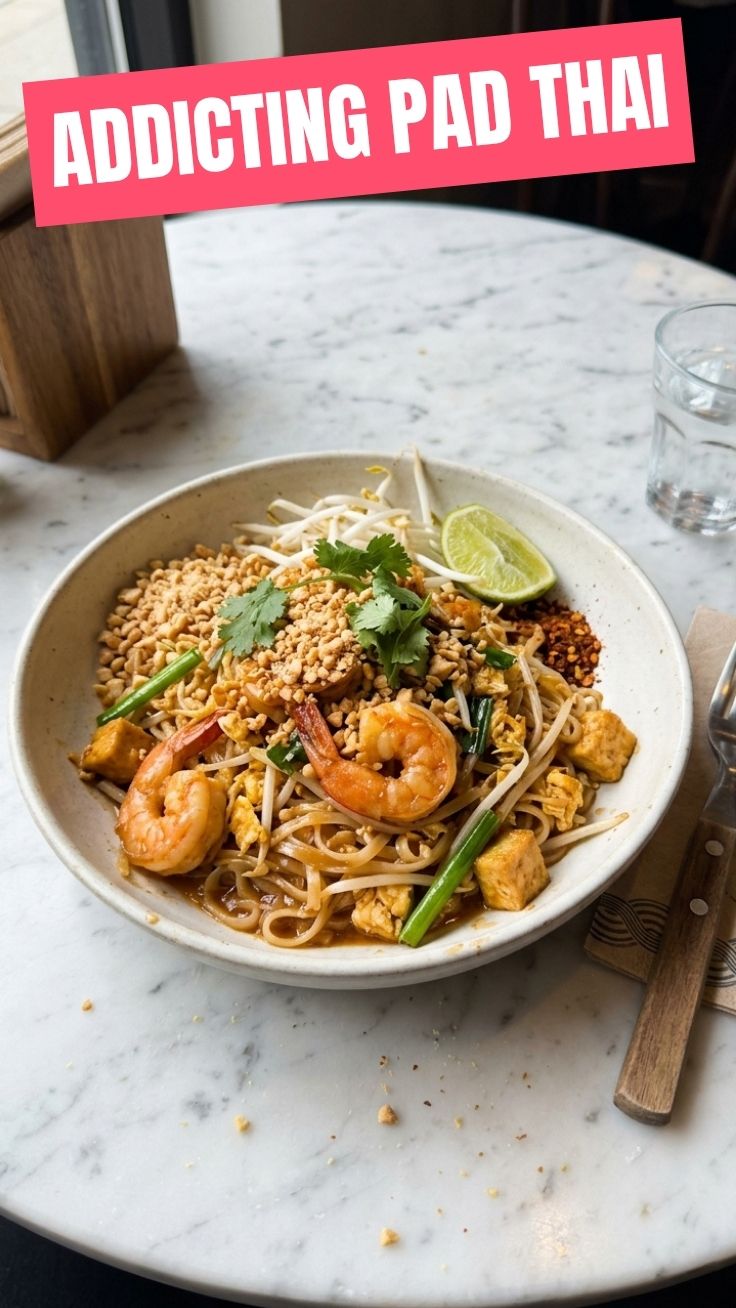
Prep Time: 15 minutes (soak noodles, chop veggies, mix sauce)
Cook Time: 10 minutes (fast, active stir-frying)
Total Time: 25 minutes
Plan to have all ingredients prepped and within arm’s reach before you turn on the heat. Soak the rice noodles in warm water (not boiling) for 20–30 minutes until pliable but still firm. Drain and set aside. Meanwhile, whisk sauce ingredients together until sugar dissolves. This schedule ensures the noodles won’t overcook during the final stir-fry.
—
Step-by-Step Instructions
1. Heat the wok over high heat until smoking. Add 1 tbsp oil, then sear your protein (shrimp, chicken, or tofu) for 2–3 minutes until cooked. Remove and set aside.
2. Add remaining oil, then stir-fry garlic and shallot for 30 seconds until fragrant. Pour in beaten eggs and scramble gently until just set.
3. Add the soaked noodles and toss to coat with oil. Pour the Pad Thai sauce over the noodles, using tongs to separate strands. Cook for 1–2 minutes until the sauce absorbs and noodles turn slightly sticky.
4. Return protein to the wok. Add bean sprouts and green onions, tossing for 30 seconds. The key is to keep the noodles slightly chewy—not mushy.
5. Plate immediately. Top with crushed peanuts, fresh cilantro, and a lime wedge. Serve hot.
Pro tip: For extra smoky flavor, push noodles to one side and char them briefly against the hot wok surface—this mimics restaurant wok hei. Remember, Noodles should be the star; don’t over-sauce them. Adjust seasoning with extra fish sauce or lime to balance sweet and sour.
—
Nutritional Benefits & Advantages
A single serving of this Pad Thai (using shrimp and 2 tbsp oil) provides approximately:
– Calories: 450–500 (moderate for a main dish)
– Protein: 20–25g from shrimp and eggs
– Healthy fats: Peanuts and oil offer monounsaturated fats that support heart health.
– Carbohydrates: 50–60g (mostly from rice noodles) – moderate glycemic load, especially if paired with veggies.
– Fiber: 3g from bean sprouts and scallions.
– Key micronutrients: Tamarind provides magnesium and potassium; shrimp adds selenium and vitamin B12.
This recipe is naturally dairy-free. For a lower-calorie version, reduce oil to 1 tbsp and use only 4 oz noodles. The high heat cooking method preserves nutrients better than boiling.
—
Tips, Variations & Cooking Advice
– Spice it up: Add 1 tsp Thai chili paste (nam prik pao) to the sauce for heat and depth.
– Vegetarian version: Replace fish sauce with soy sauce + a pinch of kelp powder for umami.
– Noodle alternative: Use gluten-free soba noodles (cook separately) or kelp noodles (no soak needed).
– Meal prep hack: Double the sauce and store in the fridge for up to 2 weeks. Freeze cooked protein separately.
– Wok alternative: If you don’t have a wok, use a large cast-iron skillet—preheat it well before adding oil.
– Texture tip: Don’t rinse noodles after soaking; their starch helps thicken the sauce.
—
Common Mistakes to Avoid
– Overcooking noodles: Soaking them too long makes them mushy. They should be limp but still slightly firm in the center.
– Crowding the wok: Cook in batches if needed. Overcrowding lowers temperature and steams the noodles instead of stir-frying.
– Skipping the squeeze: Always finish with fresh lime juice—its acidity cuts through the richness and brightens the dish.
– Under-seasoning: Taste your Pad Thai before plating. If it’s too sweet, add more fish sauce; if too salty, add a splash of lime juice.
– Using cold protein: Bring shrimp or chicken to room temperature before cooking to ensure even cooking and prevent rubbery texture.
—
Storage & Meal Prep Tips
– Refrigeration: Store leftovers in an airtight container for up to 3 days. The noodles will soften slightly, but flavor remains.
– Freezing: Not recommended—rice noodles become gummy after thawing. Freeze the sauce and protein separately.
– Reheating: Microwave in 30-second bursts with a damp paper towel to restore moisture. For best results, reheat in a hot nonstick skillet with 1 tsp water, tossing quickly until steaming.
– Meal prep: Cook noodles and sauce up to 2 days ahead. Keep raw bean sprouts and peanuts separate to add fresh at serving.
—
Conclusion
Mastering Pad Thai at home is a rewarding journey that pays off with every perfectly balanced bite. From the chewy Noodles coated in tangy tamarind sauce to the crunch of peanuts and fresh bean sprouts, this dish proves that takeout can be beaten. We’ve covered the essential techniques—proper noodle soaking, high-heat stir-frying, and final seasoning adjustments—to help you achieve consistent, restaurant-quality results. Now it’s your turn: grab your wok, fire up the stove, and create your own version. Share your results in the comments or explore our other Thai-inspired recipes for more culinary adventures.
—
Frequently Asked Questions
1. Can I use regular pasta instead of rice noodles?
No—rice stick noodles are essential for authentic texture. Pasta will become mushy and won’t absorb the sauce properly. Look for “banh pho” in Asian markets or online.
2. Why is my Pad Thai too dry?
You likely used too little oil or overcooked the noodles. Ensure your wok is hot enough (smoking) before adding oil, and don’t drain the sauce too early. Add a tablespoon of water if the wok seems dry.
3. Can I make this gluten-free?
Absolutely. Use tamari or coconut aminos instead of soy sauce, and ensure your fish sauce is gluten-free (most are). The rice noodles themselves are naturally gluten-free.
4. How do I get the noodles to not stick together?
Toss them immediately after adding to the hot wok, and avoid overcooking. A little oil in the soaking water also helps. If they do clump, use tongs to separate while stir-frying.
5. Is tamarind paste necessary?
It’s the soul of the dish, but you can substitute with equal parts lime juice and brown sugar (add a splash of Worcestershire sauce for depth). The flavor will be different but still delicious.
—
Ready to elevate your weeknight dinner? Bookmark this recipe and let us know how your Pad Thai turns out!
Proven way to grow pad thai sauce in 5 steps. Pad Thai.
Ingredients
Equipment
Method
- Gather all ingredients for the Pad Thai sauce, ensuring they are measured accurately before you begin.
- In a small saucepan, combine the tamarind paste, fish sauce, palm sugar, rice vinegar, and sriracha if using.
- Heat the mixture over medium-low heat, stirring constantly until the palm sugar is fully dissolved.
- Bring the sauce to a gentle simmer and continue to cook for 5-7 minutes, allowing it to thicken slightly.
- Remove the sauce from heat and let it cool completely before storing or using it immediately in your Pad Thai recipe.