The Ultimate Greek Salad Recipe: Fresh, Flavorful, and Perfectly Balanced
Have you ever taken a bite of a salad that instantly transported you to a sun-drenched Mediterranean coastline? That’s the magic of a properly made Greek Salad. This iconic dish, a cornerstone of the Mediterranean diet, is more than just a bowl of vegetables—it’s a celebration of simplicity, quality ingredients, and bold flavors. While it might seem easy to throw together, preparing this salad at home offers a world of difference from restaurant versions. You control the ripeness of the tomatoes, the quality of the feta, and the perfect balance of oregano and olive oil. In this guide, we’ll walk you through every step to create a Greek Salad that’s bursting with authenticity and freshness, ensuring you capture that same vibrant taste at home without any shortcuts.
Ingredients & Kitchen Tools
Essential Ingredients:
– Ripe Tomatoes (4 large): Use vine-ripened or heirloom for maximum sweetness and juicy texture.
– English Cucumber (1 large): Crisp and less watery than standard cucumbers; no peeling needed.
– Red Onion (1 medium): Thinly sliced and soaked in cold water for 10 minutes to mellow the sharpness.
– Kalamata Olives (½ cup): Brine-cured, dark purple olives with a rich, fruity flavor.
– Green Bell Pepper (1 large): Adds crunch and a mild, slightly bitter note.
– Feta Cheese (200g): Use a block of authentic Greek feta in brine, not pre-crumbled.
– Extra Virgin Olive Oil (¼ cup): High-quality, peppery oil is non-negotiable for authenticity.
– Red Wine Vinegar (2 tbsp): Balances the richness with acidity.
– Dried Oregano (1 tsp): Greek oregano is preferred for its robust, earthy aroma.
– Sea Salt & Black Pepper: To taste; use flaky salt for texture.
Optional Substitutions:
– Cucumber: Swap with Persian cucumbers for a sweeter, seedless alternative.
– Feta: Use vegan feta or a creamy goat cheese for a different tang.
– Olives: Substitute with Castelvetrano olives for a milder, buttery flavor.
Essential Kitchen Tools:
| Tool | Purpose |
|——|———|
| Large mixing bowl | For tossing salad |
| Chef’s knife & cutting board | For chopping vegetables |
| Vegetable peeler (optional) | For peeling cucumber if desired |
| Small mixing bowl | For whisking dressing |
| Citrus juicer | For fresh lemon juice variation |
| Salad servers or tongs | For gentle mixing |
Prep Time & Cooking Schedule
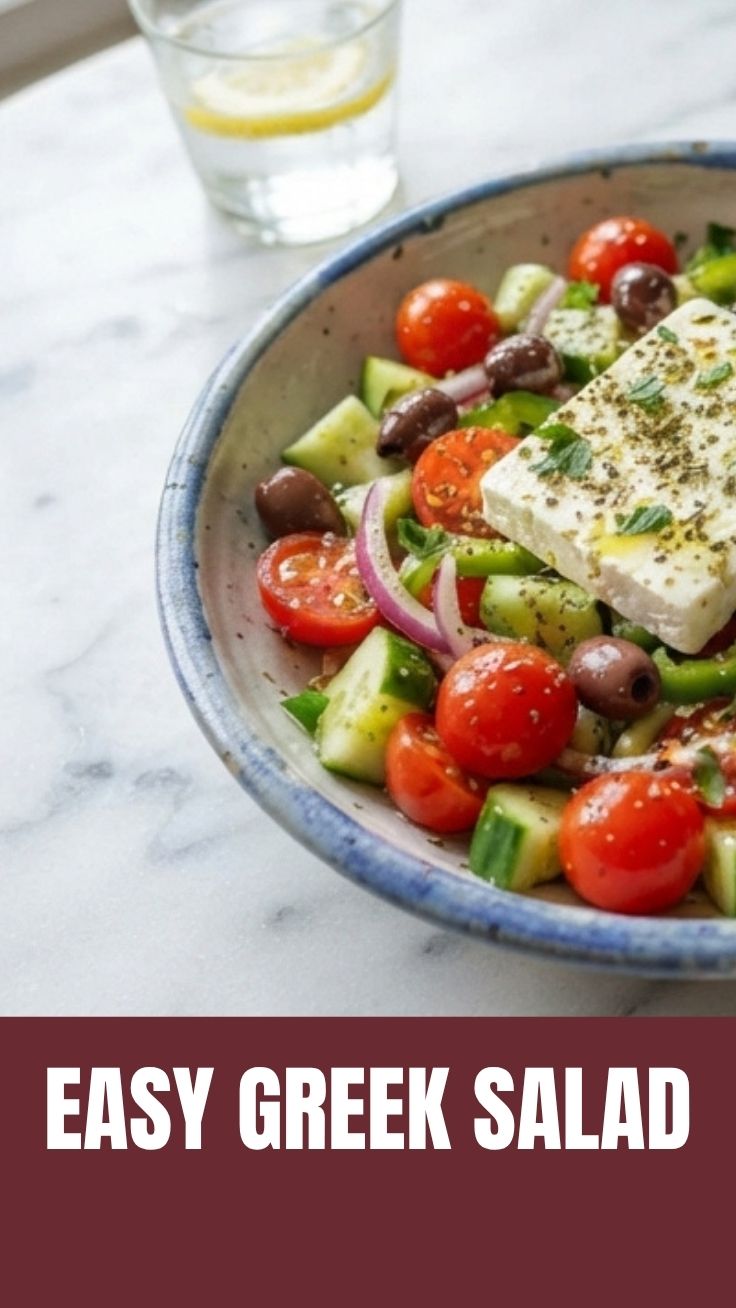
Preparation Time: 15 minutes
Resting Time (optional): 30 minutes (for marinating textures)
Total Time: 15–45 minutes
Context: This recipe requires zero cooking time—the only “work” is chopping and assembling. However, letting the salad rest for 30 minutes after dressing allows the flavors to meld beautifully. Plan accordingly: if you’re serving immediately, keep the dressing on the side to prevent soggy vegetables. For best results, prep all ingredients ahead, toss with dressing just before serving, and let rest for 10 minutes if you have the time.
Step-by-Step Instructions
1. Prepare the vegetables: Core and chop tomatoes into 1½-inch chunks. Cut cucumber into half-moons or thick slices (about ½-inch). Slice red onion into thin rings (soak in cold water if desired). Cube green bell pepper into bite-sized pieces.
2. Assemble the base: In a large mixing bowl, combine tomatoes, cucumber, red onion, and green pepper. Toss gently to distribute evenly.
3. Add olives and feta: Scatter Kalamata olives over the top. Break the feta block into large, irregular chunks (about 1-inch pieces) using your hands or a knife—do not crumble finely. The goal is distinct, creamy pockets of cheese throughout the salad, which is key to an authentic Greek Salad.
4. Create the dressing: In a small bowl, whisk together extra virgin olive oil, red wine vinegar, dried oregano, and a pinch of salt and pepper. Taste and adjust—it should be bright and herbaceous with a slight tang.
5. Dress and rest: Pour dressing over the salad and toss gently with tongs. Let rest at room temperature for 10 minutes (or up to 30 minutes if time allows). This allows the vegetables to absorb the seasoning without becoming limp.
6. Final touches: Just before serving, taste and adjust salt and pepper. Add a final sprinkle of dried oregano and a drizzle of olive oil for presentation. Serve immediately.
Practical Tips:
– Temperature control: All ingredients should be at room temperature for best flavor. Cold feta dulls its creaminess.
– Texture cues: If cucumbers seem watery, pat them dry with paper towels after chopping.
– Seasoning: The Mediterranean diet emphasizes bold, natural flavors—don’t be shy with oregano, but go easy on salt since feta and olives add salinity naturally.
Nutritional Benefits & Advantages
This salad is a nutritional powerhouse, aligning perfectly with heart-healthy eating patterns. Here’s a breakdown per serving (approximately 1½ cups):
| Nutrient | Amount | % Daily Value |
|———-|——–|—————|
| Calories | 220 | 11% |
| Total Fat | 18g | 23% |
| Saturated Fat | 6g | 30% (from feta) |
| Cholesterol | 30mg | 10% |
| Sodium | 680mg | 30% |
| Carbohydrates | 10g | 4% |
| Fiber | 3g | 11% |
| Protein | 8g | 16% |
| Vitamin C | 40mg | 44% |
| Calcium | 250mg | 19% |
Key Health Benefits:
– Heart health: Olive oil and olives provide monounsaturated fats that support cardiovascular function.
– Antioxidant-rich: Tomatoes and bell peppers are loaded with lycopene and vitamin C.
– Bone strength: Feta offers calcium and phosphorus for bone density.
– Hydration: Cucumbers are 96% water, aiding hydration and digestion.
Tips Variations & Cooking Advice
Flavor Variations:
– Lemon-Herb Twist: Replace red wine vinegar with fresh lemon juice and add chopped fresh dill or mint.
– Spicy Kick: Add a pinch of crushed red pepper flakes or sliced pepperoncini for heat.
– Creamy Option: Top with a dollop of thick Greek yogurt mixed with minced garlic.
Ingredient Swaps:
| Original | Swap | Result |
|———-|——|——–|
| Kalamata olives | Green olives stuffed with pimento | Milder, brinier flavor |
| Feta | Ricotta salata | Saltier, firmer texture |
| Red onion | Shallots | Sweeter, milder bite |
| Cucumber | Zucchini (raw, thinly sliced) | Lower-carb alternative |
Dietary Adaptations:
– Gluten-free: Naturally suitable; ensure no cross-contamination with packaged feta.
– Dairy-free: Use marinated tofu cubes or nutritional yeast flakes for a cheesy flavor.
– Low-sodium: Rinse olives and feta briefly in water; omit added salt.
Cooking Method Alternatives:
– Grilled version: Briefly char cucumber, bell pepper, and red onion on a grill pan for a smoky flavor.
– Deconstructed bowl: Serve all components separately in a platter, allowing guests to assemble their own.
Common Mistakes to Avoid
| Mistake | Solution |
|———|———-|
| Using pre-crumbled feta | Always buy a block of feta in brine; it retains moisture and creaminess. |
| Over-dressing | Vegetables release water as they sit; dress lightly just before serving. |
| Skipping the resting time | Letting salad rest allows flavors to marry; 10 minutes is minimum. |
| Cutting vegetables too small | Large, rustic chunks preserve texture and prevent mushiness. |
| Using dried herbs only | Fresh oregano (if available) brightens the dish; strip leaves from stems. |
| Not patting cucumber dry | Excess water dilutes dressing; pat with paper towels after slicing. |
Pro Tip: If you’re making this salad ahead, keep the dressing separate and combine only when ready to serve. The vegetables will stay crisp for up to 24 hours in the fridge.
Storage & Meal Prep Tips
Refrigeration:
– Store undressed salad in an airtight container for up to 3 days.
– Dressing can be stored separately in a jar for up to 1 week.
– Once dressed, consume within 12 hours for optimal texture.
Freezing:
– Not recommended; vegetables and feta will become mushy upon thawing.
Reheating:
– Not applicable—this salad is served cold or at room temperature. If refrigerated, let sit at room temperature for 10 minutes before serving to restore flavors.
Meal Prep Strategy:
| Day | Task |
|—–|——|
| Prep day | Chop all vegetables; store in separate containers. |
| Morning of | Mix dressing; keep in fridge until 30 minutes before serving. |
| Serving | Combine vegetables, olives, feta, and dressing; rest 10 minutes. |
Pro Tip for Meal Prep: If you’re packing for lunch, layer ingredients in a jar: dressing at the bottom, then cucumbers, tomatoes, peppers, olives, and feta on top. Shake when ready to eat—this prevents sogginess.
Conclusion
Creating an authentic Greek Salad at home is about respecting simplicity and quality. By using ripe, seasonal vegetables, creamy block feta, and a bold oregano-tinged dressing, you can capture the essence of the Mediterranean diet in minutes. This isn’t just a side dish—it’s a vibrant, nutrient-packed meal that celebrates fresh ingredients and bold flavors. Whether you’re serving it alongside grilled fish, or enjoying it solo with crusty bread, this salad delivers every time. Give it a try, and don’t forget to share your results—tag us in your photos or leave a comment below with your favorite twist!
FAQs
Q: Can I use cherry tomatoes instead of large tomatoes?
A: Absolutely! Halve or quarter cherry tomatoes for a sweeter, burst-in-your-mouth texture.
Q: Why does my feta crumble when I try to cut it?
A: Feta from brine is softer; chill it for 15 minutes before cutting, or simply break it into chunks with your hands.
Q: How do I fix an overly salty salad?
A: Add more chopped cucumber or tomato to dilute the saltiness. You can also rinse the olives and feta briefly.
Q: Can I make this salad vegan?
A: Yes! Substitute feta with marinated tofu cubes or a vegan feta alternative. Use a tahini-based dressing for creaminess.
Q: How long can this salad sit out at a party?
A: Up to 2 hours at room temperature. For longer events, keep the dressing separate and add just before serving.
Best way to grow a 7-Ingredient Greek Salad
Ingredients
Equipment
Method
- Choose a sunny spot in your garden or on your balcony that receives at least 6-8 hours of direct sunlight daily for optimal growth of your vegetables.
- Prepare your soil by enriching it with compost and organic matter, ensuring it is well-draining and has a pH between 6.0 and 7.0 for healthy plant development.
- Plant cucumber and bell pepper seeds or seedlings, spacing them according to package directions to allow for adequate growth and air circulation.
- Sow tomato seeds or plant young tomato plants, providing stakes or cages for support as they grow to prevent breakage and encourage fruit production.
- Plant red onion sets or seeds in rows, ensuring they are not too crowded, and thin them as needed to promote larger bulb formation.
- Water all plants regularly, especially during dry spells, keeping the soil consistently moist but not waterlogged to encourage strong root systems.
- Harvest cucumbers when they are firm and 6-8 inches long, tomatoes when fully ripe and red, bell peppers when vibrant and firm, and red onions when the tops begin to fall over.
- Wash all harvested vegetables thoroughly under cool running water, removing any dirt or debris.
- Dice the cucumber, tomatoes, and bell pepper into bite-sized pieces; thinly slice the red onion.
- In a large bowl, combine the prepared vegetables with crumbled feta cheese and Kalamata olives.
- Drizzle with olive oil and gently toss the salad to combine all ingredients, ensuring an even distribution of flavor.