The Ultimate Falafel Bowl: A Fresh, Flavor-Packed Mediterranean Meal You Can Make at Home
Have you ever craved a meal that’s both nourishing and bursting with vibrant flavors, but thought it was too complicated to recreate at home? Imagine a bowl filled with crispy, golden chickpea patties, fluffy grains, crunchy vegetables, and a creamy, tangy sauce—all coming together in under an hour. This is the magic of a Falafel Bowl, a cornerstone of Mediterranean Food that is as versatile as it is delicious. Preparing this dish at home not only saves you money but also gives you complete control over the ingredients, ensuring a healthier, fresher, and more satisfying experience. Whether you’re a seasoned cook or a kitchen novice, this guide will walk you through every step to create a restaurant-quality bowl right in your own kitchen.
Ingredients & Kitchen Tools
Ingredients
– For the Falafel: 1 can (15 oz) chickpeas, drained and rinsed; 1/2 cup fresh parsley; 1/4 cup fresh cilantro; 1 small onion, roughly chopped; 3 cloves garlic; 1 tsp ground cumin; 1 tsp ground coriander; 1/2 tsp salt; 1/4 tsp black pepper; 2 tbsp all-purpose flour (or chickpea flour for gluten-free); 1/2 tsp baking powder; Oil for frying (avocado or vegetable oil).
– For the Bowl Base: 1 cup cooked quinoa or brown rice; 2 cups mixed greens (romaine, spinach, arugula); 1 cup cherry tomatoes, halved; 1 cucumber, diced; 1/2 cup pickled red onions; 1/4 cup kalamata olives.
– For the Sauce: 1/2 cup plain Greek yogurt (or vegan yogurt); 2 tbsp tahini; 1 lemon, juiced; 1 clove garlic, minced; Salt and water to thin.
Kitchen Tools
– Food processor (for falafel mixture)
– Large skillet or deep fryer
– Mixing bowls
– Measuring spoons and cups
– Spatula
– Paper towels (for draining)
– Serving bowls
Optional Substitutions
– Gluten-Free: Use chickpea flour instead of all-purpose flour.
– Vegan: Replace Greek yogurt with a plant-based yogurt or use a simple lemon-tahini dressing.
– Low-Carb: Swap quinoa for cauliflower rice.
Prep Time & Cooking Schedule
– Prep Time: 20 minutes
– Cook Time: 15 minutes
– Resting Time: 10 minutes (for falafel mixture to firm up)
– Total Time: 45 minutes
Context to Help You Plan: This recipe is perfect for a weeknight dinner or a weekend meal prep session. The falafel mixture can be prepared a day in advance and stored in the refrigerator. While the falafel is resting, you can cook your grains and chop your vegetables. The active cooking time is short, making it an efficient choice for busy schedules.
Step-by-Step Instructions
1. Prepare the Falafel Mixture: In a food processor, combine the chickpeas, parsley, cilantro, onion, garlic, cumin, coriander, salt, and pepper. Pulse until the mixture is coarse but holds together when pressed. Avoid over-processing; you want some texture. Transfer to a bowl, stir in the flour and baking powder, and refrigerate for 10 minutes. This resting step is crucial for preventing the falafel from falling apart during frying.
2. Shape and Fry the Falafel: Heat 1 inch of oil in a large skillet over medium-high heat (350°F/175°C). While the oil heats, shape the mixture into 12-14 small patties or balls. Carefully place them in the hot oil, working in batches to avoid overcrowding. Fry for 3-4 minutes per side, until deep golden brown and crispy. Transfer to a paper towel-lined plate to drain. Pro Tip: For even cooking, use a thermometer to maintain a consistent oil temperature.
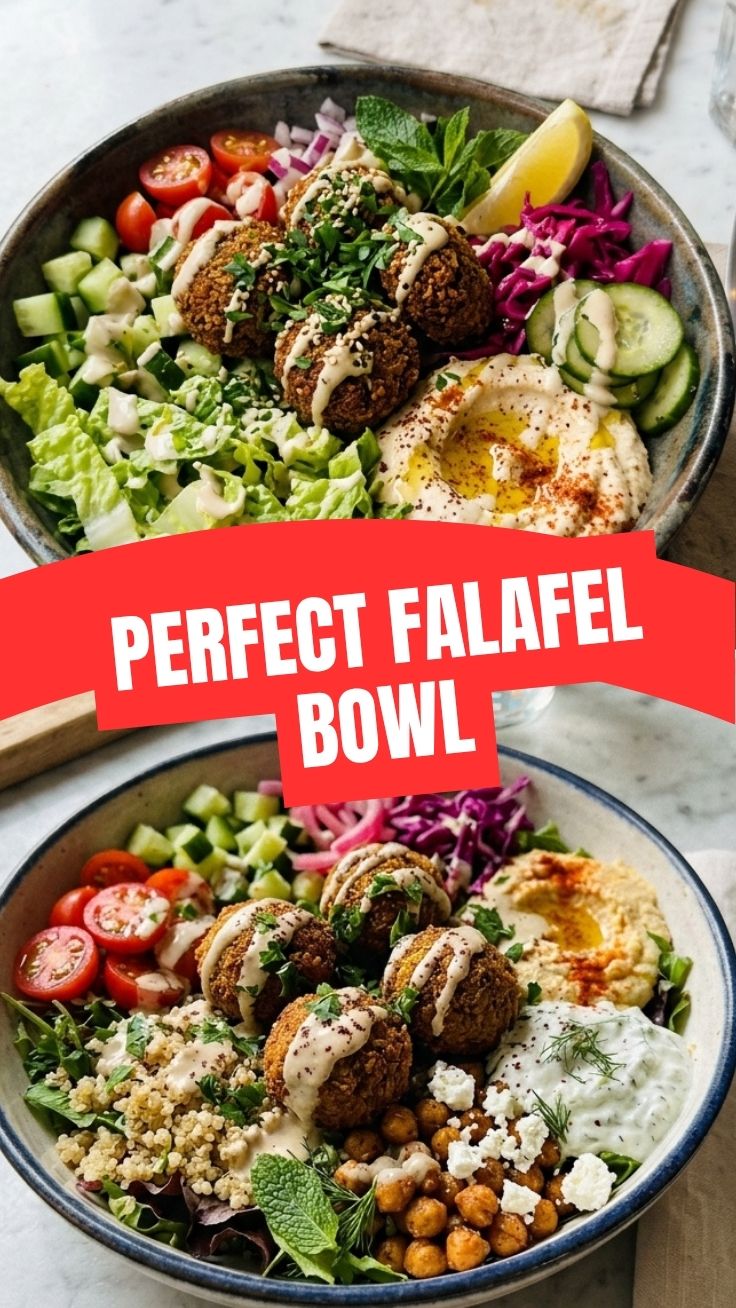
3. Assemble the Bowl: In each serving bowl, layer the cooked quinoa or rice, mixed greens, cherry tomatoes, cucumber, pickled red onions, and olives. Top with 4-5 falafel patties. Drizzle generously with the yogurt-tahini sauce. This Falafel Bowl is a perfect example of how Mediterranean Food can be both hearty and refreshing, offering a balanced meal in every bite.
4. Make the Sauce: While the falafel cooks, whisk together the Greek yogurt, tahini, lemon juice, and minced garlic in a small bowl. Add salt to taste and thin with water, one tablespoon at a time, until you reach a pourable consistency.
Nutritional Benefits & Advantages
This Falafel Bowl is a nutritional powerhouse. Chickpeas are rich in plant-based protein and fiber, which support digestive health and keep you full longer. The fresh vegetables provide a wide array of vitamins, including vitamin C from tomatoes and vitamin K from cucumbers. Quinoa or brown rice adds complex carbohydrates for sustained energy, while the tahini sauce offers healthy fats and calcium. This meal is naturally vegetarian and can easily be made vegan, making it a versatile option for various dietary preferences.
Tips Variations & Cooking Advice
– Flavor Variations: Add a pinch of cayenne pepper or smoked paprika to the falafel mixture for a spicy kick. Swap the yogurt sauce for a classic lemon-tahini dressing for a tangier profile.
– Ingredient Swaps: Use sweet potatoes or roasted cauliflower instead of grains for a low-carb base. Try adding feta cheese or avocado for extra creaminess.
– Cooking Methods: For a healthier version, bake the falafel at 375°F (190°C) for 20-25 minutes, flipping halfway through. Air-frying at 375°F for 12-15 minutes also yields excellent results.
– Dietary Adaptations: To make this dish gluten-free, use chickpea flour in the falafel and ensure your grains are certified gluten-free. For a dairy-free sauce, use a plant-based yogurt or a simple vinaigrette.
Common Mistakes to Avoid
– Over-processing the Falafel Mixture: This can result in a dense, pasty texture. Pulse only until combined.
– Skipping the Resting Time: Without resting, the falafel may crumble in the oil. Always refrigerate for at least 10 minutes.
– Using Cold Oil: If the oil isn’t hot enough, the falafel will absorb excess oil and become greasy. Maintain a steady 350°F.
– Overcrowding the Pan: This lowers the oil temperature and leads to uneven cooking. Fry in small batches.
– Soggy Bowls: If you’re meal prepping, store the sauce and falafel separately from the greens and grains to prevent sogginess.
Storage & Meal Prep Tips
– Refrigeration: Store leftover falafel in an airtight container in the refrigerator for up to 4 days. Keep the sauce and vegetables in separate containers.
– Freezing: Cooked falafel freezes well for up to 3 months. Place them on a baking sheet in a single layer, freeze until solid, then transfer to a freezer bag. Reheat directly from frozen in an oven or air fryer at 375°F for 10-12 minutes.
– Reheating: To maintain crispiness, reheat falafel in a skillet with a little oil or in an air fryer. Avoid microwaving, as it will make them soft.
– Meal Prep: Prepare the falafel mixture and sauce up to 2 days in advance. Cook grains and chop vegetables ahead of time. Assemble bowls just before serving for the best texture.
Conclusion
Creating a Falafel Bowl at home is a rewarding experience that brings the vibrant flavors of Mediterranean Food to your table with ease. From the crispy, herb-packed falafel to the creamy sauce and fresh vegetables, every component works in harmony to deliver a meal that is both satisfying and nutritious. We encourage you to try this recipe, experiment with your favorite toppings, and share your results with friends and family. For more inspiration, explore our other Mediterranean-inspired dishes and discover how simple it is to eat well every day.
FAQs
1. Can I use canned chickpeas for falafel?
Yes, canned chickpeas work perfectly. Just make sure to drain and rinse them thoroughly to remove excess sodium and starch.
2. How do I prevent my falafel from falling apart?
Ensure the mixture is not too wet. If it feels sticky, add a little more flour. Also, don’t skip the resting time in the refrigerator.
3. Can I make this bowl gluten-free?
Absolutely! Use chickpea flour instead of all-purpose flour in the falafel, and choose gluten-free grains like quinoa or rice.
4. What can I use instead of tahini?
If you don’t have tahini, you can substitute with almond butter or sunflower seed butter for a similar creamy texture.
5. How long do leftovers last?
Cooked falafel and sauce can be refrigerated for up to 4 days. For best results, store components separately and assemble when ready to eat.
Falafel Bowl
Ingredients
Equipment
Method
- Prepare falafel according to package directions, heating them in an oven, air fryer, or pan until crispy and warmed through.
- Warm pita bread or cook rice as per instructions; set aside when done.
- Prepare your chosen sauce, such as whisking tahini with water and lemon juice or having tzatziki ready.
- Wash and chop fresh vegetables like cucumber, cherry tomatoes, and red onion, and prepare lettuce or mixed greens.
- To assemble, place a base of pita bread or rice in each bowl, then add a generous layer of mixed greens.
- Arrange the warm falafel and chopped vegetables over the greens, then drizzle generously with your preferred sauce and add hummus.
- Serve your customizable falafel bowls immediately, optionally garnishing with feta cheese or olives.