The Ultimate Guide to Perfect French Toast: A Breakfast Classic Made Easy
Have you ever wondered why restaurant French toast tastes so much better than what you make at home? The secret isn’t a fancy ingredient or professional equipment—it’s technique. Mastering French Toast at home transforms humble bread and Eggs into a golden, custard-like breakfast that rivals any brunch spot. Not only is it budget-friendly, but you also control the quality of every ingredient. This guide will walk you through everything from selecting the right bread to achieving that perfect caramelized crust.
Ingredients & Kitchen Tools
Essential Ingredients
– Thick-cut bread (brioche, challah, or Texas toast): Stale bread absorbs custard better than fresh.
– Large eggs (4–6): The backbone of the custard—use farm-fresh for richer flavor.
– Whole milk or heavy cream (1 cup): Fat content determines creaminess; half-and-half works too.
– Vanilla extract (1 tsp): Pure extract over imitation for depth.
– Ground cinnamon (1 tsp): Adds warmth without overwhelming.
– Pinch of nutmeg (optional): A subtle, nutty accent.
– Butter or oil: For frying—butter adds flavor, oil prevents burning.
– Salt (½ tsp): Balances sweetness and enhances egg flavor.
Kitchen Tools
– Large shallow dish (pie plate works perfectly)
– Whisk or fork
– Non-stick skillet or griddle
– Spatula (thin, flexible preferred)
– Paper towels or wire rack (for draining)
– Measuring cups and spoons
Substitutions
– Dairy-free: Use almond, oat, or coconut milk (full-fat versions yield creamier results).
– Gluten-free: Choose sturdy gluten-free bread (Udi’s or Schär). Avoid soft varieties.
– Egg-free: Not recommended—the Eggs provide structure. For egg allergies, try a chia/flax egg substitute (1 tbsp ground chia + 3 tbsp water per egg), but texture differs.
Prep Time & Cooking Schedule
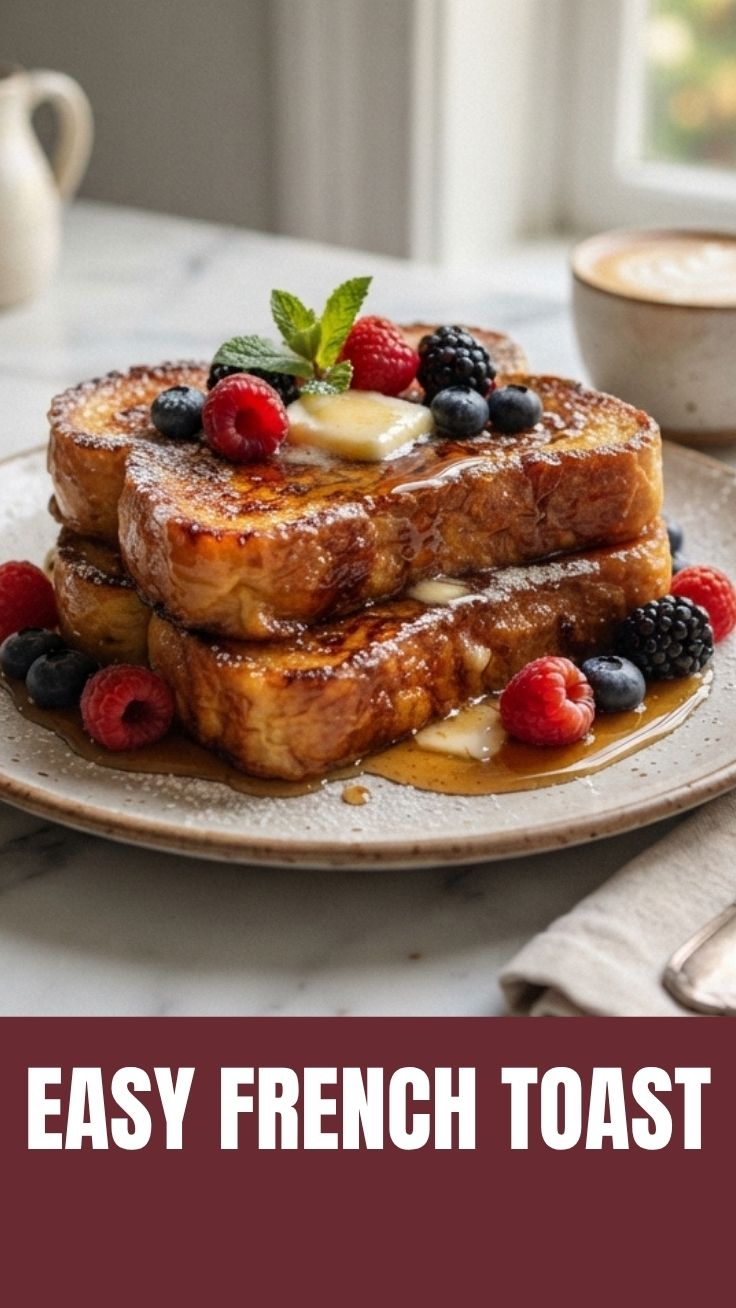
– Prep time: 10 minutes (whisking custard, slicing bread)
– Resting time (soaking): 2–3 minutes per side (longer for thicker bread)
– Cooking time: 8–12 minutes (depending on batch size)
– Total time: 25–30 minutes
Planning tip: Let bread sit out overnight for optimal dryness. If you’re in a rush, toast slices lightly in a 300°F oven for 5–7 minutes.
Step-by-Step Instructions
1. Prepare the custard: In a shallow dish, whisk together 4 large Eggs, 1 cup milk, 1 tsp vanilla, 1 tsp cinnamon, a pinch of nutmeg, and ½ tsp salt until smooth. Avoid over-whisking—it creates foam, not a silky custard.
2. Soak the bread: Dip each slice for 15–20 seconds per side. French Toast relies on even absorption—undipped bread stays dry; over-soaked becomes soggy. Press lightly with a fork to check: the bread should feel heavy but not break apart.
3. Heat the skillet: Over medium heat, melt 1 tbsp butter with 1 tsp oil. Test temperature: flick water on the pan—if it sizzles, it’s ready. Too hot? Butter burns.
4. Cook the toast: Place soaked slices in the pan. Cook 3–4 minutes per side until golden brown. Look for bubbling edges and a firm, custard-like center. Flip gently with a thin spatula.
5. Keep warm: Transfer to a wire rack in a 200°F oven. Avoid stacking—steam softens the crust.
6. Serve immediately: Top with maple syrup, fresh berries, or powdered sugar. Pro tip: Add a pinch of salt to syrup to balance sweetness.
Nutritional Benefits & Advantages
French Toast offers surprising nutritional value when made thoughtfully. The Eggs provide high-quality protein (6–7g per egg) and choline, which supports brain health. Whole-grain bread adds fiber, while cinnamon may help regulate blood sugar. Key advantages:
– Customizable macros: Use egg whites for lower fat, or add protein powder to the custard.
– Vitamin boost: Eggs are rich in B12, selenium, and vitamin D.
– Satiety factor: The protein-fat combo keeps you full longer than cereal or pancakes.
Tips, Variations & Cooking Advice
Flavor Twists
– Orange French toast: Add 1 tbsp orange zest and 2 tbsp orange juice to custard.
– Savory version: Omit vanilla/cinnamon, add garlic powder, thyme, and top with fried eggs.
– Chocolate dream: Whisk 1 tbsp cocoa powder into custard; serve with strawberries.
Diet Adaptations
– Keto: Use low-carb bread (e.g., Sola) and unsweetened almond milk. Swap maple syrup for sugar-free syrup.
– Vegan: Use chickpea flour custard (½ cup chickpea flour + ¾ cup water + spices). Bread should be sturdy.
Cooking Methods
– Baking: Arrange soaked slices on a greased sheet pan. Bake at 375°F for 12–15 minutes, flipping halfway. Great for large batches.
– Air fryer: Cook at 350°F for 5–6 minutes per side. Spray with oil to prevent dryness.
Common Mistakes to Avoid
| Mistake | Why It Happens | Solution |
|———|—————|———-|
| Soggy toast | Over-soaking or using fresh bread | Use stale or slightly dry bread; dip for 20 seconds max |
| Scrambled eggs on bread | Custard not mixed properly | Whisk until yolks and whites are fully combined—no streaks |
| Burnt exterior, raw interior | Pan too hot | Use medium heat; cook slowly for custard to set |
| Uneven browning | Crowding the pan | Cook in single layer; leave 1-inch gaps between slices |
Storage & Meal Prep Tips
Refrigeration: Store leftover French Toast in an airtight container with parchment between layers. Keeps 2–3 days.
Freezing: Lay slices on a baking sheet (not touching) and freeze 1–2 hours. Transfer to a zip-top bag. Keeps 3 months.
Reheating:
– Oven: 350°F for 5–7 minutes (crispiest result)
– Toaster: Works well for thin slices
– Microwave: 30–45 seconds (softens, not recommended for crispiness)
Batch prep: Make custard the night before (store covered, whisk before soaking). Soak and cook the morning of.
Conclusion
Perfecting French Toast comes down to three principles: dry bread, well-mixed custard, and medium heat. By controlling your ingredients—especially the Eggs and dairy—you create a breakfast that’s both indulgent and nourishing. Experiment with toppings, adapt to your dietary needs, and don’t skimp on resting time. Try this method tomorrow morning, and share your golden, syrup-drizzled results with us!
FAQs
1. Can I use any bread for French toast?
Ideally, choose bread that’s 1–2 days old. Brioche, challah, Texas toast, or crusty sourdough work well. Avoid fresh, soft sandwich bread—it disintegrates.
2. What’s the best substitute for eggs?
For a binding agent, try a mashed banana or applesauce (1/4 cup per egg). Texture will be denser. For a custard-like consistency, use chickpea flour whisked with water and spices.
3. Why is my French toast always soggy?
Either your bread is too fresh, you’re soaking too long, or your pan isn’t hot enough. Use stale bread, dip 15–20 seconds, and preheat the pan until butter sizzles.
4. Can I make French toast without milk?
Yes! Use water, melted butter (1 tbsp per cup), or plant-based milk. The texture will be less creamy, but still enjoyable—especially with a pinch of salt.
5. How do I add protein to my French toast?
Whisk 1–2 scoops unflavored protein powder into the custard. Use less milk to compensate (protein powder thickens). Cook on low heat to prevent burning.
Best way to grow fluffy French Toast in 3 stepsFrench Toast
Ingredients
Equipment
Method
- Whisk together the eggs, milk, vanilla extract, and cinnamon in a shallow dish.
- Dip each slice of bread into the egg mixture, ensuring both sides are fully coated.
- Melt butter in a skillet over medium heat and cook the bread for 2-3 minutes per side until golden brown.