The Ultimate Guide to Perfect Homemade Stuffing: A Flavorful Holiday Classic
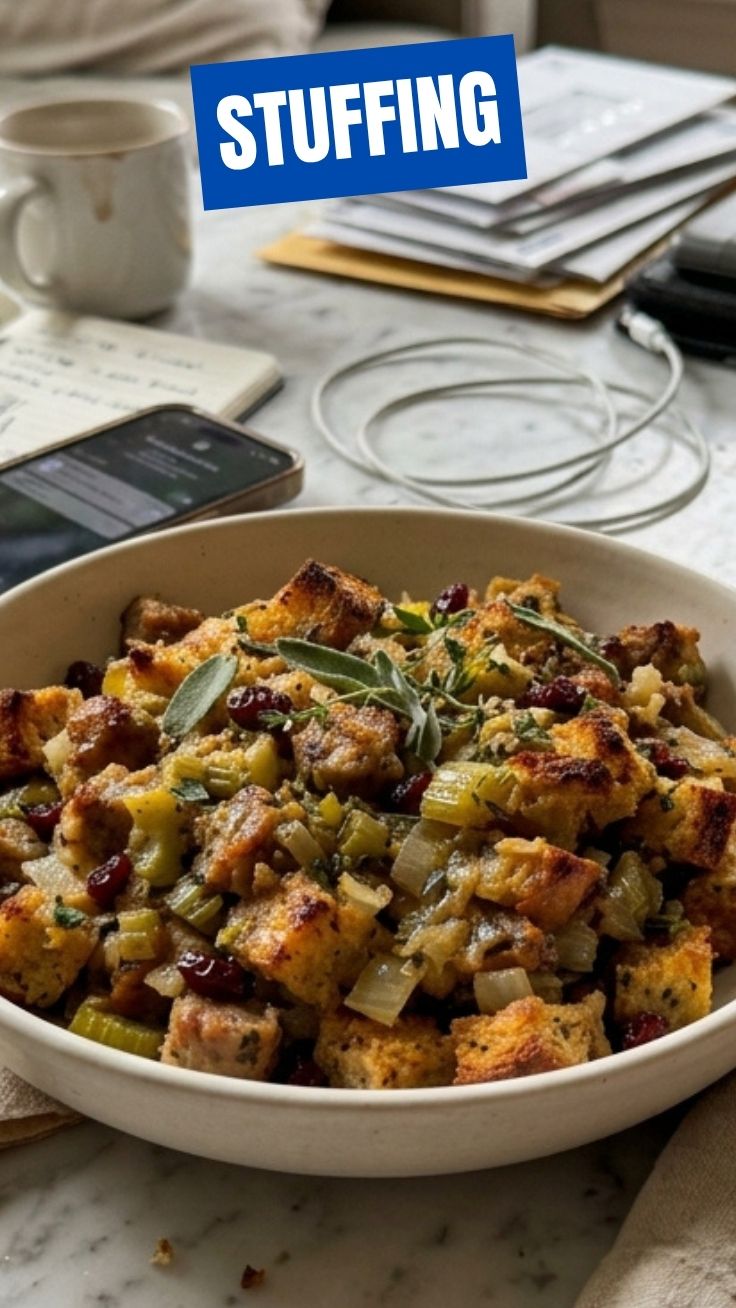
Have you ever wondered why some Stuffing turns out perfectly crisp on top yet moist and tender inside, while others end up dry or mushy? The secret lies in understanding the balance of ingredients, moisture, and cooking technique. Preparing this beloved side dish at home not only fills your kitchen with an irresistible aroma but also allows you to control every flavor element. Whether you’re seeking a traditional recipe or a gluten-free Thanksgiving stuffing that guests will devour, mastering this savory dish will elevate your holiday table.
Ingredients & Kitchen Tools
Core Ingredients
– 1 loaf day-old bread (cubed, about 10 cups) – Stale bread absorbs liquid better; use sourdough, French, or whole wheat
– 1/2 cup unsalted butter – Adds richness; substitute with olive oil for dairy-free
– 1 large yellow onion (diced) – Provides savory base flavor
– 3 celery stalks (chopped) – Adds crunch and aromatic depth
– 2 cups low-sodium chicken or vegetable broth – Controls salt level; adjust based on bread absorption
– 2 large eggs (beaten) – Binds ingredients together for cohesive texture
– 1 tablespoon fresh sage (chopped) or 1 teaspoon dried – Signature herb in traditional recipes
– 1 tablespoon fresh thyme leaves or 1 teaspoon dried – Earthy undertones
– 1 teaspoon kosher salt – Enhances overall flavor
– 1/2 teaspoon black pepper – Adds gentle heat
– 1/2 cup fresh parsley (chopped) – Bright finish
Kitchen Tools
– Large skillet or sauté pan
– 9×13-inch baking dish
– Large mixing bowl
– Chef’s knife and cutting board
– Wooden spoon or spatula
– Measuring cups and spoons
Optional Substitutions
– Gluten-free bread for celiac-friendly version
– Turkey or mushroom broth for deeper umami
– Sausage or mushrooms for added protein and texture
– Dried cranberries or apples for sweet contrast
Prep Time & Cooking Schedule
– Prep time: 20 minutes
– Cook time: 45–55 minutes
– Resting time: 10 minutes after baking
– Total time: Approximately 1 hour 15 minutes
Plan ahead by cubing bread the day before and leaving it uncovered on a baking sheet overnight. This drying step is crucial because fresh bread turns mushy instead of achieving that coveted golden, slightly crisp top. If you forgot to stale your bread, spread cubes on a baking sheet and toast at 300°F for 10–15 minutes until dry but not browned.
Step-by-Step Instructions
Step 1: Prepare the Bread Base
Place dried bread cubes in a large mixing bowl. If using fresh bread, toast as described above. The bread should feel dry to the touch but not hard like croutons.
Step 2: Sauté the Aromatics
Melt butter in a large skillet over medium heat. Add diced onion and chopped celery. Cook for 6–8 minutes until softened and translucent, stirring occasionally. The vegetables should release their moisture but not brown significantly. Add minced garlic during the last 30 seconds to prevent burning.
Step 3: Season the Mixture
Remove skillet from heat. Stir in fresh sage, thyme, salt, and pepper. This blooming technique releases essential oils from the herbs, intensifying their flavor throughout the dish. Let cool for 2–3 minutes to avoid scrambling the eggs.
Step 4: Combine Wet and Dry Ingredients
Pour the sautéed vegetable mixture over the bread cubes. In a separate small bowl, whisk together beaten eggs and 1 cup of broth. Gradually pour this over the bread mixture, tossing gently with a spatula to coat evenly. Add remaining broth slowly—the bread should be moist but not swimming in liquid. If making gluten-free Thanksgiving stuffing, note that gluten-free bread absorbs liquid faster, so reduce broth by 1/4 cup initially and add more if needed.
Step 5: Transfer to Baking Dish
Preheat oven to 375°F. Grease a 9×13-inch baking dish with butter or cooking spray. Transfer the stuffing mixture and spread into an even layer. For extra crispy edges, press gently—this creates a denser texture on bottom while remaining fluffy inside. The key to a perfect Stuffing lies in even moisture distribution.
Step 6: Bake to Golden Perfection
Cover tightly with aluminum foil and bake for 25 minutes. Remove foil and bake for another 20–25 minutes until top is golden brown and internal temperature reaches 165°F. For a crunchier top, broil for 1–2 minutes at the end while watching closely. Let rest 10 minutes before serving—this allows the structure to set.
Nutritional Benefits & Advantages
This homemade stuffing offers significant nutritional advantages over boxed versions. Whole-grain bread provides complex carbohydrates and fiber for sustained energy, while celery and onions contribute vitamins A, C, and K. Fresh herbs like sage and thyme contain antioxidants with anti-inflammatory properties. Using low-sodium broth reduces sodium content by up to 40% compared to commercial mixes, and homemade allows control over fat sources. For protein, eggs add 6 grams per serving plus essential amino acids.
Tips Variations & Cooking Advice
Flavor Twists
– Italian style: Add sun-dried tomatoes, basil, and Parmesan cheese
– Southern cornbread: Replace half the bread with crumbled cornbread
– Apple-pecan: Fold in 1 diced apple and 1/2 cup toasted pecans
– Sausage herb: Brown 1 pound breakfast sausage before sautéing vegetables
Cooking Methods
– Slow cooker: Cook on low for 3–4 hours, removing lid for last 30 minutes
– Stovetop: Use a covered Dutch oven, stirring occasionally for 15–20 minutes
– Stuffed inside turkey: Use caution with food safety; ensure stuffing reaches 165°F
Dietary Adaptations
– Dairy-free: Substitute butter with vegan butter or olive oil
– Vegan: Use flax eggs (1 tablespoon ground flax + 3 tablespoons water per egg) and vegetable broth
– Low-carb: Replace bread with cauliflower rice and almond flour (different texture, but flavorful)
Common Mistakes to Avoid
Mistake 1: Using fresh bread directly
Fresh bread turns soggy because it hasn’t dried enough to absorb liquid properly. Solution: Always dry bread cubes overnight or toast them first.
Mistake 2: Over-moistening the mixture
Soggy stuffing results from adding too much broth at once. Solution: Add liquid gradually and stop when bread feels moist but not wet. Press a cube—if liquid seeps out, you’ve added too much.
Mistake 3: Skipping the sauté step
Raw onions and celery release water during baking, creating uneven texture. Solution: Always cook aromatics until tender before combining.
Mistake 4: Baking uncovered too long
The top burns while interior remains undercooked. Solution: Start covered to steam, then uncover for browning.
Storage & Meal Prep Tips
Refrigeration: Store leftover stuffing in an airtight container for 3–4 days. Place a paper towel inside to absorb excess moisture and replace it daily.
Freezing: Cool completely, then transfer to freezer-safe bags or containers. Remove as much air as possible. Freeze for up to 3 months. Thaw overnight in refrigerator before reheating.
Reheating: For best texture, reheat in a 350°F oven covered with foil for 15–20 minutes. For crispy top, remove foil for last 5 minutes. Microwave in 30-second intervals on 70% power for smaller portions, though this sacrifices some crunch.
Make-ahead tip: Prepare stuffing up to the baking step, cover tightly, and refrigerate for up to 24 hours. Add 10 minutes to baking time since starting from cold.
Conclusion
Achieving perfect Stuffing at home transforms a simple side dish into the star of your holiday spread. By controlling ingredient quality, moisture levels, and seasoning intensity, you create a personalized version that surpasses any boxed alternative. Whether you follow the traditional path or adapt it into a gluten-free Thanksgiving stuffing, the technique remains the same: balance, patience, and attention to detail. Try this recipe for your next gathering, and don’t forget to share your results in the comments. For more holiday inspiration, explore variations like cornbread dressing or wild rice stuffing for future culinary adventures.
FAQs
Can I prepare stuffing a day ahead without baking?
Yes, assemble the stuffing completely, transfer to the baking dish, cover tightly, and refrigerate up to 24 hours. Add 10–15 minutes to baking time since starting cold.
How do I make stuffing without eggs for binding?
Use 1/4 cup unsweetened applesauce, 2 tablespoons ground flaxseed mixed with 6 tablespoons water (flax eggs), or 1/4 cup mashed potato per egg. Note texture will be slightly less cohesive.
Why did my stuffing turn out dry?
This usually happens from under-moistening or over-baking. Ensure bread absorbs enough liquid by doing the squeeze test—a moist cube should hold together without dripping. Cover during the first baking phase to retain steam.
Can I stuff the turkey with this recipe?
Yes, but increase internal temperature goal to 165°F inside the stuffing. Loosely fill the cavity (allow expansion room) and cook immediately—never stuff a turkey ahead of time for food safety.
How do I adjust for high altitude cooking?
Increase baking temperature by 25°F, reduce broth by 2–3 tablespoons, and bake covered for longer (add 5–10 minutes). The lower air pressure causes faster moisture evaporation.
Best way to grow 10 Stuffing recipes
Ingredients
Equipment
Method
- Start by gathering a variety of base ingredients, such as different types of bread, cornbread, or wild rice, to offer diverse textures and flavors in your stuffing recipes.
- Incorporate a range of aromatic vegetables, including onions, celery, and garlic, along with fresh herbs like sage, thyme, and rosemary, to build a strong flavor foundation.
- Add various mix-ins such as cooked sausage, bacon, mushrooms, dried fruits, or nuts to create distinct flavor profiles and enhance the complexity of each stuffing.
- Prepare a flavorful liquid base using chicken or vegetable broth, and optionally include wine or apple cider, ensuring sufficient moisture for a tender stuffing.
- Combine all ingredients thoroughly, adjusting seasonings as needed, and consider baking some stuffings inside a turkey for traditional flavor or in a casserole dish for a crispier top.
- Allow the baked stuffing to rest briefly before serving, ensuring all flavors meld and the dish is easier to portion, and offer a variety of stuffings to cater to different preferences.