The Ultimate Guide to Perfect Roast Turkey: A Step-by-Step Masterclass
Have you ever wondered why some holiday turkeys come out dry, bland, or unevenly cooked, while others are the star of the table? The secret lies in technique, temperature control, and a little patience. Preparing a Roast Turkey at home not only saves you money but also allows you to customize flavors, control ingredients, and create a centerpiece that impresses every guest. Whether you’re a beginner or a seasoned cook, mastering this dish is a rewarding culinary milestone. In this guide, we’ll walk you through every detail—from selecting the bird to carving it perfectly—ensuring your holiday meal is unforgettable. Plus, we’ll share a roast turkey recipe variation that’s both healthy and delicious.
Ingredients & Kitchen Tools
Ingredients
– 1 whole turkey (12–14 lbs) – Fresh or fully thawed frozen turkey. Choose a bird that fits your oven and guest count.
– 1/2 cup unsalted butter, softened – For basting under the skin. Substitute with olive oil for dairy-free.
– Salt and black pepper – Kosher salt is best for even seasoning.
– Fresh herbs (rosemary, thyme, sage) – A sprig of each adds aromatic depth. Dried herbs work too (1 tsp each).
– 1 lemon, halved – Adds brightness and keeps the meat moist.
– 1 onion, quartered – For the cavity, enhancing flavor.
– 4 garlic cloves, smashed – Roasted garlic adds sweetness.
– 2 cups low-sodium chicken broth – For the roasting pan, prevents burning and creates a base for gravy.
– Optional stuffing or aromatics – Celery, carrots, apples.
Kitchen Tools
– Roasting pan with rack – Elevates the turkey for even cooking.
– Meat thermometer – Essential for safety (165°F in breast, 175°F in thigh).
– Basting brush or spoon – For even butter distribution.
– Kitchen twine – To truss the legs.
– Aluminum foil – For tenting the breast if browning too fast.
– Carving knife and fork – For clean slices.
Prep Time & Cooking Schedule
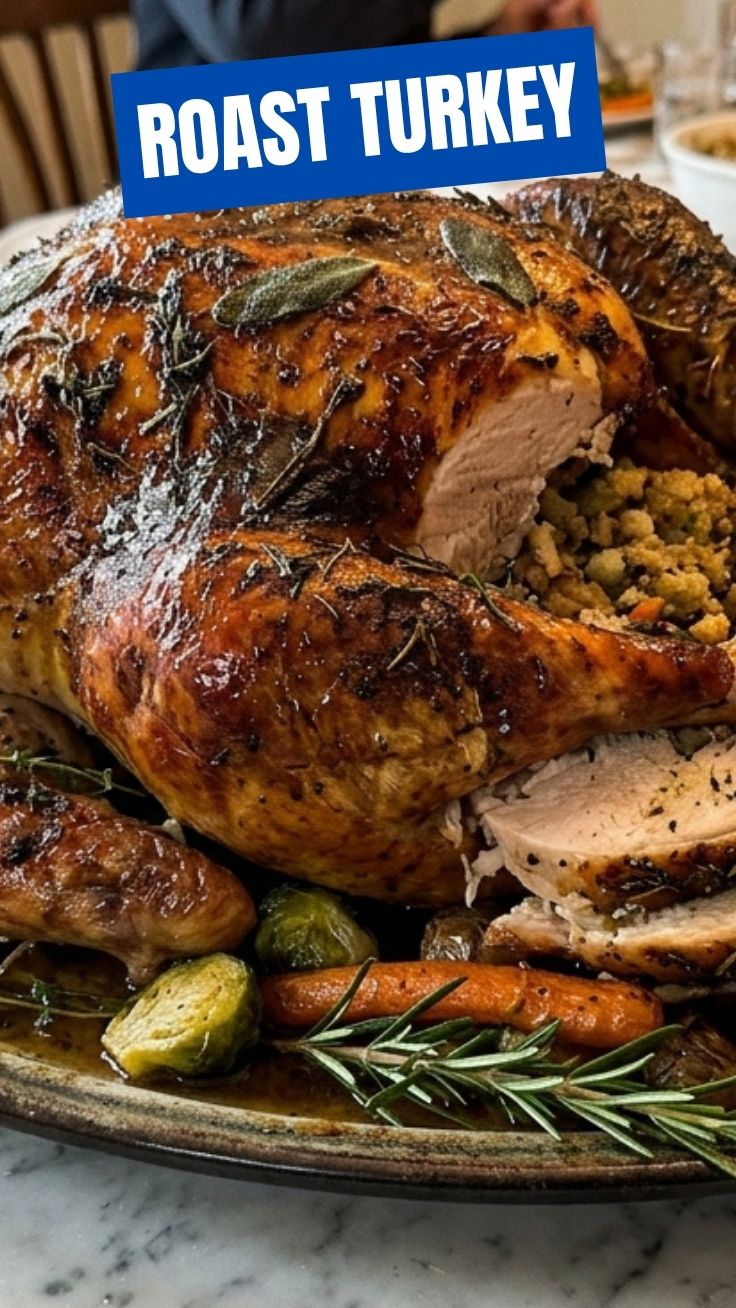
Total time: 4–5 hours (including 30 minutes prep, 3–4 hours cooking, and 20 minutes resting).
Prep time: 30 minutes.
Cook time: 13–15 minutes per pound at 325°F.
Resting time: 20–30 minutes (critical for juicy meat).
Tip: Plan ahead! If using a frozen turkey, allow 24 hours of thawing per 4–5 lbs in the refrigerator. Start your prep early in the day so the turkey rests while you finish sides.
Step-by-Step Instructions
1. Preheat and prepare the bird – Preheat oven to 325°F. Remove turkey from packaging, pat dry inside and out with paper towels. This step is crucial for crispy skin. Season the cavity with salt and pepper, then stuff with lemon halves, onion, garlic, and herb sprigs.
2. Season and truss – Lift the skin gently and spread softened butter under the breast skin and over the skin. Season generously with salt and pepper. Tie legs together with kitchen twine and tuck wing tips under the bird. This ensures even cooking and a golden finish.
3. Roast and baste – Place turkey on the rack in the roasting pan. Pour chicken broth into the bottom of the pan. Roast for 1 hour, then begin basting every 30 minutes with pan juices. If the breast browns too quickly, tent loosely with foil. Continue roasting until the thickest part of the thigh reaches 175°F and the breast reaches 165°F. This is the heart of any Roast Turkey method.
4. Rest and carve – Remove turkey from oven, tent with foil, and let rest for 20–30 minutes. This allows juices to redistribute. For a lighter twist, try this roast turkey recipe variation: skip the butter and use a herb-oil rub, then serve with roasted vegetables.
Nutritional Benefits & Advantages
Turkey is a lean protein powerhouse, packed with tryptophan (which aids sleep), selenium (for immune health), and B vitamins (energy metabolism). A 3-ounce serving of skinless breast provides about 25 grams of protein with only 3 grams of fat. By roasting at home, you control sodium levels (avoid pre-brined birds if you’re watching salt) and avoid preservatives. The herbs and lemon add antioxidants without extra calories. This dish fits low-carb, keto, and gluten-free diets naturally.
Tips, Variations & Cooking Advice
– Flavor variations: Rub the skin with garlic-herb butter, or try a citrus-honey glaze for sweetness. For a spicy kick, add smoked paprika or chipotle powder.
– Dietary adaptations: For dairy-free, use olive oil or vegan butter. For gluten-free, ensure your chicken broth is certified gf.
– Cooking method: Spatchcocking (cutting out the backbone) reduces cooking time by 30–40% and yields even crispier skin. Alternatively, use a roasting bag for extra moisture.
– Portion changes: For smaller crowds, use a turkey breast (4–6 lbs) instead of a whole bird—cook at 350°F for 20 minutes per pound.
Common Mistakes to Avoid
– Skipping the thermometer: Guessing doneness leads to dry meat. Always use a digital thermometer.
– Not patting dry: Moisture on the skin prevents browning. Pat dry before seasoning.
– Overcrowding the pan: Too many vegetables or broth can steam the turkey, inhibiting crispiness.
– Carving too early: Resting is non-negotiable—carving immediately releases juices, leaving dry meat.
– Over-basting: Frequent basting can lower oven temperature and soften skin. Stick to every 30 minutes.
Storage & Meal Prep Tips
Refrigeration: Store leftover turkey in an airtight container for up to 4 days. Separate meat from bones to maintain freshness.
Freezing: Shredded or sliced turkey can be frozen for up to 3 months. Wrap tightly in plastic wrap and foil, or use freezer bags.
Reheating: To avoid drying out, reheat in a 325°F oven with a splash of broth, covered, until warm (about 10–15 minutes). Alternatively, use a microwave with a damp paper towel for 1–2 minutes.
Meal prep: Use leftovers for sandwiches, salads, soups, or casseroles. The bones make an excellent stock.
Conclusion
Mastering the art of a Roast Turkey is about respect for technique—from proper thawing to the final resting period. By following these steps, you’ll achieve a golden, juicy bird that’s the centerpiece of any celebration. Whether you stick to the classic method or explore a lighter roast turkey recipe, the key is to plan ahead and trust your thermometer. Try this recipe for your next holiday meal, and don’t forget to share your results—we’d love to hear how it turned out. For more tips, check out our other holiday recipes like stuffing and gravy.
FAQs
1. Can I use a frozen turkey without thawing?
Yes, but it will take 50% longer to cook. Remove the giblets and neck as soon as possible. Always check internal temperature in multiple spots.
2. How do I prevent the turkey from drying out?
Brine the turkey overnight (wet or dry brine), use butter under the skin, and avoid overcooking—pull it at 165°F in the breast.
3. Can I substitute fresh herbs with dried?
Yes, use 1 teaspoon dried herb for each fresh sprig. Add them to the butter rub or cavity.
4. What if my turkey is browning too fast?
Tent the breast loosely with aluminum foil. This slows browning while allowing the rest of the bird to cook through.
5. How do I make gravy from the drippings?
Pour pan drippings into a fat separator, then whisk 2 tbsp of fat with 2 tbsp flour over medium heat. Add 2 cups of the defatted drippings and broth, whisk until thickened. Season to taste.
Quick way to grow the perfect Roast Turkey
Ingredients
Equipment
Method
- Preheat your oven to 375°F (190°C) and ensure the turkey is thawed; remove the neck and giblets.
- In a small bowl, mix the softened butter with chopped herbs, salt, and pepper.
- Gently separate the turkey skin from the breast meat and spread half of the butter mixture under the skin, then rub the remaining butter mixture over the outside of the turkey.
- Place the quartered onions, chopped carrots, and celery stalks in the roasting pan around the turkey.
- Pour the broth into the bottom of the roasting pan, then place the turkey, breast-side up, on a roasting rack in the pan.
- Roast for 2.5 to 3 hours, or until a meat thermometer inserted into the thickest part of the thigh reads 165°F (74°C).
- If the skin begins to brown too quickly, loosely tent the turkey with aluminum foil.
- Once cooked, remove the turkey from the oven, tent it with foil, and let it rest for 20-30 minutes before carving.