The Ultimate Guide to Making Authentic Pozole at Home
Have you ever craved a steaming bowl of rich, aromatic Mexican stew that warms you from the inside out? Whether you’re a seasoned cook or a kitchen beginner, mastering a traditional Pozole at home is a rewarding experience that brings the flavors of Mexico straight to your table. This hearty soup, made with tender hominy and your choice of meat, is not only deeply satisfying but also surprisingly simple once you understand the key steps. In this comprehensive guide, we’ll walk you through every detail—from selecting ingredients to troubleshooting common pitfalls. You’ll learn a foolproof pozole recipe that delivers restaurant-quality results every time. By preparing it yourself, you control the spice level, meat quality, and garnishes, ensuring a healthier and more personalized dish than any store-bought version.
Ingredients & Kitchen Tools
For the Pozole (6–8 servings)
– 2 lbs pork shoulder (or boneless pork chops) – cut into 2-inch chunks; provides rich flavor when simmered.
– 1 large onion – quartered; adds depth to the broth.
– 4 cloves garlic – smashed; infuses a savory aroma.
– 2 cans (30 oz each) hominy – drained and rinsed; the essential corn kernel base.
– 3 dried guajillo chiles – stemmed and seeded; delivers mild heat and a deep red color.
– 2 dried ancho chiles – stemmed and seeded; adds smoky sweetness.
– 1 tsp dried oregano (Mexican preferred) – earthy note.
– 2 bay leaves – for layered fragrance.
– 8 cups chicken or pork broth – low-sodium recommended.
– Salt and pepper – to taste.
– 1 tbsp vegetable oil – for searing.
Kitchen Tools
– Large heavy-bottomed pot (5–6 quart Dutch oven)
– Blender or food processor
– Fine mesh strainer
– Chef’s knife and cutting board
– Ladle and wooden spoon
– Measuring spoons
Optional Substitutions
– Chicken or beef instead of pork for dietary preferences.
– Dry hominy (soaked overnight) instead of canned – authentic but longer prep.
– Canned chipotle in adobo (1–2 peppers) for a spicier, smokier broth.
Prep Time & Cooking Schedule
– Prep time: 20 minutes (chop meat, clean chiles, dice garnishes)
– Cook time: 2 hours 15 minutes (active: 20 min simmering)
– Resting time: 10–15 minutes after cooking (flavors meld)
– Total: about 2 hours 35 minutes
Plan ahead: You can prepare the chile sauce and sear the meat simultaneously. The stew actually tastes better the next day, so making it a day ahead is ideal.
Step-by-Step Instructions
1. Prepare the chile sauce. Toast the guajillo and ancho chiles in a dry skillet over medium heat for 1–2 minutes per side until fragrant. Place them in a bowl, cover with hot water, and soak for 20 minutes. Transfer chiles to a blender with 1 cup soaking liquid; puree until smooth. Strain through a fine mesh sieve to remove skins.
2. Sear the pork. Heat oil in your pot over medium-high heat. Season pork chunks with salt and pepper. Brown in batches (don’t overcrowd) for 4–5 minutes per side. Set aside.
3. Build the base. In the same pot, lower heat to medium and sauté the quartered onion for 3 minutes, scraping up browned bits. Add garlic and cook 30 seconds.
4. Combine and simmer. Return pork to pot. Add the strained chile puree, oregano, bay leaves, and broth. Bring to a boil, then reduce to a gentle simmer. Cook uncovered for 1 hour, stirring occasionally.
5. Add hominy. After 1 hour, stir in the rinsed hominy. Continue simmering for another hour, or until pork is fall-apart tender. Taste and adjust salt.
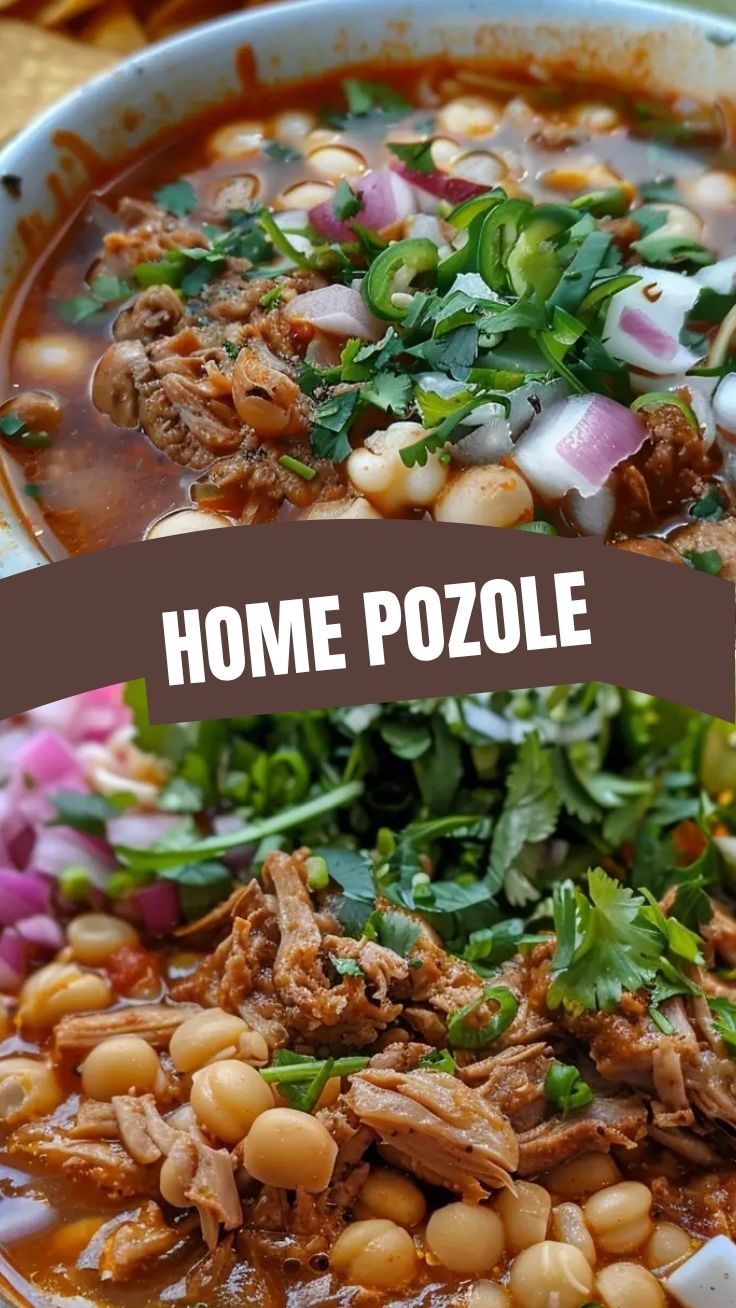
6. Finish and serve. Remove bay leaves and onion quarters. Ladle into bowls and garnish with shredded cabbage, radishes, diced onion, dried oregano, lime wedges, and crushed tortilla chips.
Note: This Pozole develops deeper flavor when cooled and reheated. For a perfect pozole recipe, avoid rushing the simmer—low and slow is key.
Nutritional Benefits & Advantages
Pozole is a nutrient-dense meal. Hominy provides complex carbohydrates and fiber, while pork shoulder offers high-quality protein, B vitamins (especially B12), zinc, and iron. The chiles are rich in antioxidants like capsaicin and vitamin C. A typical bowl (2 cups) contains about 400–500 calories, 25g protein, and 15g fat—a balanced, satisfying dish. Using leaner cuts or chicken further reduces fat while retaining flavor.
Tips Variations & Cooking Advice
– Flavor variations: Add a pinch of cumin or smoked paprika for earthiness. Use chicken thighs and green chile salsa for a “pozole verde.”
– Ingredient swaps: Replace pork with chickpeas for a vegetarian version; use vegetable broth and skip meat. For gluten-free, ensure broth is certified and use corn tortillas.
– Cooking methods: Slow cooker: sear pork, then combine all ingredients (including hominy) and cook on low 8 hours. Instant Pot: sauté, then pressure cook on High for 45 minutes.
– Portion changes: Double the recipe for large gatherings; freeze half for later.
– Dietary adaptions: Dairy-free by default; omit cheese if used. Low-sodium: use unsalted broth and adjust salt at the end.
Common Mistakes to Avoid
– Undercooked hominy: Canned hominy is already cooked, but if using dry hominy, soak it overnight and simmer 2–3 hours before adding meat. Test for tenderness.
– Bitter chile sauce: Over-toasting chiles or blending seeds causes bitterness. Toast only until fragrant and always strain the puree.
– Watery broth: Using too much liquid thins the stew. Start with 8 cups and add more if needed; the broth should coat a spoon.
– Meat not tender: Pork shoulder needs at least 2 hours of gentle simmering. Cutting pieces too large also extends time.
Storage & Meal Prep Tips
– Refrigeration: Cool completely, then store in an airtight container for up to 4 days. The flavors improve overnight.
– Freezing: Freeze in portion-sized bags or containers for up to 3 months. Leave 1-inch headspace for expansion.
– Reheating: Thaw overnight in the fridge. Reheat on stovetop over medium-low heat, adding a splash of broth or water if too thick. Avoid boiling aggressively, which can toughen meat. Microwave in 2-minute intervals, stirring.
Conclusion
Making authentic Mexican stew at home connects you to a rich culinary tradition. With this detailed guide, you now have all the tools to create a deeply flavorful bowl of Pozole that rivals any taqueria. The key is patience—slow simmering transforms simple ingredients into magic. Whether you follow this pozole recipe exactly or customize it with your favorite proteins and garnishes, the result will be a nourishing, crowd-pleasing dish. Try it this weekend, then share your results in the comments—we’d love to see your beautiful bowls!
FAQs
1. Can I make pozole vegetarian?
Absolutely. Use vegetable broth, skip the meat, and double the hominy. Add pinto beans or tofu for protein. Simmer with extra chiles for depth.
2. Why is my pozole broth not red?
The color comes from the chile puree. Be sure to use enough guajillo and ancho chiles (at least 3 each). Adding a teaspoon of tomato paste can enhance redness.
3. How do I reduce the spice level?
Remove seeds and veins from chiles thoroughly. Use fewer chiles or substitute half with mild dried chiles like pasilla. Serve with sour cream or avocado to cool the heat.
4. Can I use canned hominy without draining?
Yes, but the liquid can be starchy. Rinsing gives a clearer broth; if you like a thicker stew, add the liquid directly.
5. How long does pozole last in the fridge?
Properly stored, it stays fresh for 4 days. The texture of hominy remains excellent, but the broth may thicken; thin with broth when reheating.
How to Grow Pozole
Ingredients
Equipment
Method
- Soak corn kernels overnight to soften, then drain and set aside.
- Cut pork shoulder into large chunks and season with salt and pepper.
- Rehydrate red chiles in hot water for 30 minutes, then blend with garlic and a quarter of the onion until smooth.
- In a large pot, combine pork, remaining onion, and chicken broth; bring to a boil, then reduce heat and simmer for 1 hour.
- Add soaked corn kernels to the pot and continue to simmer for another 30 minutes.
- Stir in the blended chile mixture and cook for 15 minutes more, ensuring flavors meld.
- Adjust seasoning with salt to taste and remove pork to shred; return shredded pork to the pot.
- Ladle hot pozole into bowls and serve immediately.
- Garnish with lime wedges, sliced radishes, and shredded cabbage as desired.