Unlock the Secret to Creamy Mediterranean Perfection: Your Go-To Lemon Tahini Dressing Recipe
Have you ever wondered why restaurant-quality salads taste so much more vibrant and satisfying than the ones you whip up at home? The secret often lies in a game-changing sauce that transforms simple ingredients into a culinary masterpiece. Preparing this staple at home not only saves you money but also gives you full control over the freshness and flavor profile, ensuring every meal feels like a special occasion. Today, we’re diving deep into a recipe that will elevate your cooking game: a bright, nutty, and irresistibly creamy Lemon Tahini Dressing. This versatile sauce is the soul of many dishes, often praised as the ultimate Mediterranean sauce, and learning to make it from scratch is easier than you think.
—
Ingredients & Kitchen Tools
Before you begin, gather everything you need. Having these items prepped and ready will make the process smooth and enjoyable.
Ingredients:
– 1/2 cup tahini (well-stirred – the oil separates naturally, so mix it thoroughly before measuring)
– 1/3 cup fresh lemon juice (about 2-3 lemons; avoid bottled juice for the brightest flavor)
– 1/4 cup cold water (plus more for thinning, as needed)
– 2 tablespoons extra-virgin olive oil (for richness and a silky mouthfeel)
– 1 small garlic clove (minced or pressed; adjust to your spice preference)
– 1/2 teaspoon salt (fine sea salt works best)
– 1/4 teaspoon ground cumin (optional, but adds a warm, earthy depth)
Kitchen Tools & Utensils:
– Medium mixing bowl (or a jar with a tight-fitting lid)
– Whisk (or a fork if using a bowl; shake vigorously if using a jar)
– Citrus juicer (or your hands, if you’re feeling old-school)
– Measuring spoons and cups
– Chef’s knife and cutting board (for the garlic)
– Airtight storage container (a glass jar or bottle with a pour spout is ideal)
Optional Substitutions:
– Tahini alternative: Sunflower seed butter or cashew butter for a nut-free version
– Garlic swap: 1/4 teaspoon garlic powder for a milder, less sharp flavor
– Lemon alternative: White wine vinegar or apple cider vinegar (though the lemony brightness will differ)
—
Prep Time & Cooking Schedule
One of the best things about this recipe is its speed. There’s no cooking involved—just mixing.
– Prep time: 5 minutes
– Total time: 5 minutes (plus optional 15-minute rest for flavors to meld)
– Resting time (recommended): 15 minutes at room temperature or up to 2 hours refrigerated. This allows the garlic to infuse and the tahini to fully absorb the lemon.
Context for planning: This dressing comes together faster than chopping a head of lettuce. Make it while your grains are cooking or your roasted vegetables are cooling. The 15-minute rest is a bonus for deeper flavor, but it’s perfectly delicious right away.
—
Step-by-Step Instructions
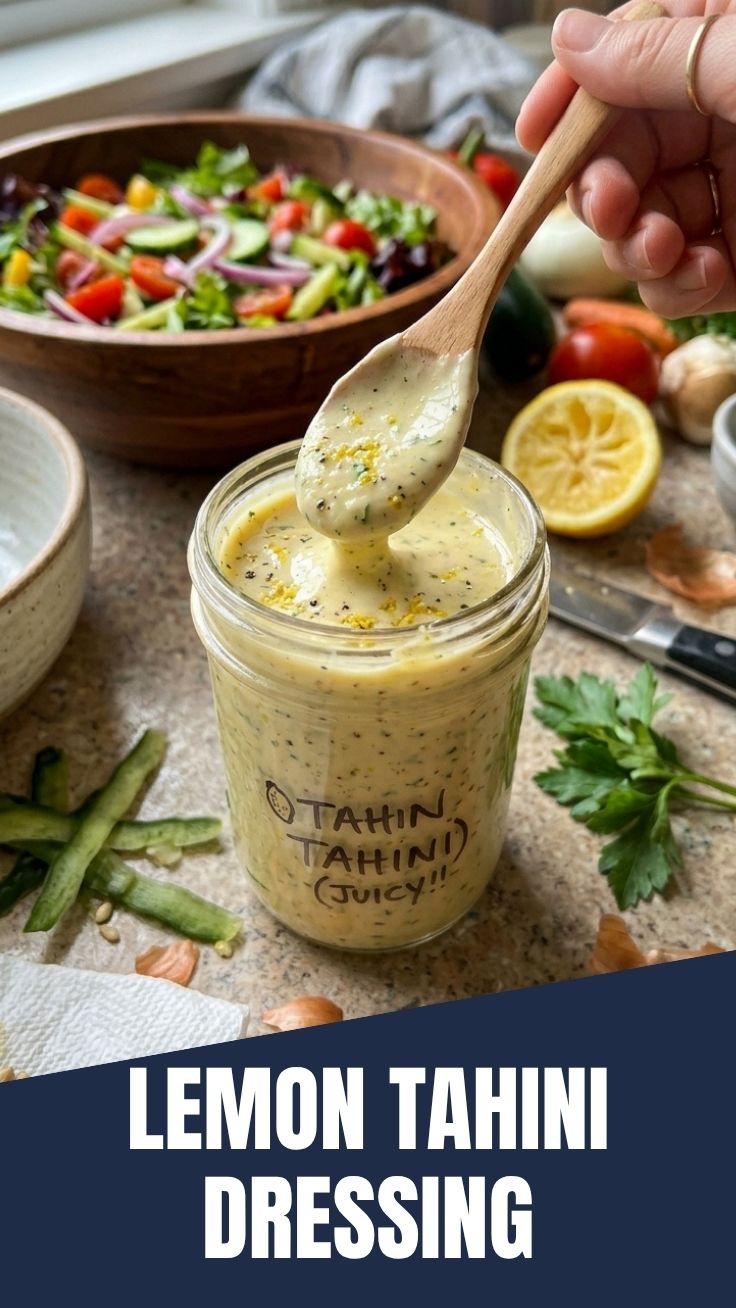
Follow these steps to achieve perfectly balanced, creamy results every time.
Step 1: Whisk the Tahini and Lemon Juice
Place the tahini and fresh lemon juice in your mixing bowl. Whisk vigorously. At first, the mixture will look thick and grainy—this is normal! Keep whisking until it becomes pale, smooth, and slightly thickened. This initial emulsion is crucial.
Step 2: Add the Water and Oil
Add the cold water and extra-virgin olive oil. Continue whisking. You’ll see the dressing transform into a fluid, creamy sauce. If it seems too thick, add water one tablespoon at a time until it reaches your desired consistency (like a thick cream).
Step 3: Season and Finish
Stir in the minced garlic, salt, and ground cumin if using. Taste and adjust: more lemon for acidity, more salt for sharpness, or more water for a thinner pour. This is your signature Lemon Tahini Dressing.
Pro Tips for Texture and Temperature:
– Temperature control: If your tahini is cold from the fridge, let it sit at room temperature for 10 minutes first. Cold tahini is more likely to seize up.
– Texture cue: The final dressing should flow like heavy cream but coat the back of a spoon. If it separates after resting, whisk in a splash of warm water.
– Seasoning adjustment: Remember that this Mediterranean sauce will mellow as it sits. Season slightly less aggressively if you’re making it ahead.
—
Nutritional Benefits & Advantages
This dressing isn’t just delicious—it’s a powerhouse of nutrition.
– Healthy fats: Tahini is made from sesame seeds, which are rich in heart-healthy unsaturated fats and antioxidants like sesamin.
– Plant-based protein: A two-tablespoon serving of tahini provides about 5 grams of protein, making this dressing a satiating addition to any meal.
– Vitamin C: Fresh lemon juice offers a boost of immune-supporting vitamin C.
– Calcium and iron: Sesame seeds are excellent sources of calcium and iron, essential for bone health and energy production.
– Dietary advantages: Naturally vegan, gluten-free, dairy-free, and paleo-friendly. Perfect for Whole30 diets when paired with compliant ingredients.
—
Tips Variations & Cooking Advice
Unlock endless flavor possibilities with these simple tweaks.
Flavor Variations:
– Herb-infused: Blend in a handful of fresh parsley, cilantro, or dill for a green, garden-fresh profile.
– Smoky twist: Add 1/4 teaspoon smoked paprika or chipotle powder for a spicy, smoky kick.
– Sweet & tangy: Stir in 1 teaspoon of maple syrup or honey (omit for strict vegan or Whole30) to balance the bitterness of raw tahini.
Ingredient Swaps:
– Swap the oil: Try avocado oil for a neutral flavor or toasted sesame oil for a deeper, nuttier note (use half the amount).
– Swap the acid: Replace half the lemon juice with orange juice for a sweeter, citrus-forward tang.
– Swap the base: Use this as a dip for raw veggies, a sauce for grain bowls, or a drizzle over roasted sweet potatoes.
Dietary Adaptations:
– Lower fat: Reduce olive oil to 1 tablespoon and add an extra tablespoon of water.
– Nut-free: Use seed-based tahini (sesame seeds are seeds, not nuts) as-is; ensure all other ingredients are nut-free.
—
Common Mistakes to Avoid
Steer clear of these pitfalls for flawless results.
1. Using un-stirred tahini: The separated oil at the top is liquid gold, but if you don’t mix it in, your dressing will be dry and clumpy. Stir your tahini thoroughly before measuring.
2. Adding too much water too fast: Pour water slowly. A runny dressing can’t be fixed, while a thick one can always be thinned.
3. Over-powering with garlic: Raw garlic’s pungency intensifies over time. Start with half a clove, taste, then add more.
4. Skipping the salt: Salt is a flavor amplifier; without it, the dressing can taste flat and bitter. Don’t skip it.
5. Making it too far ahead without adjusting: If you refrigerate for more than 2 days, the garlic flavor can become sharp. If meal-prepping, consider adding fresh garlic just before serving.
—
Storage & Meal Prep Tips
Keep your dressing fresh and vibrant for days.
– Refrigeration: Store in an airtight glass jar or container in the refrigerator for up to 5 days. Glass is best as plastic can absorb odors.
– Freezing: You can freeze this dressing for up to 3 months. Thaw overnight in the refrigerator and whisk thoroughly before using. The texture may be slightly less smooth but still delicious.
– Reheating: This dressing is served cold or at room temperature. If it thickens too much after chilling, place the jar in a bowl of warm water for 5 minutes, then shake or whisk vigorously.
– Texture maintenance: Always give it a good shake or stir before serving, as natural separation occurs.
—
Conclusion
Mastering a creamy, versatile, and healthy Lemon Tahini Dressing at home is a small skill that pays big dividends in your daily cooking. Whether you’re drizzling it over a hearty grain bowl, using it as a dip for fresh crudités, or pairing it as a Mediterranean sauce with roasted vegetables, this recipe delivers consistent, satisfying results every time. The balance of nutty tahini, bright lemon, and smooth olive oil is timeless, and the nutritional benefits make it a guilt-free indulgence. Now it’s your turn—grab your whisk, whip up a batch, and let us know how you used it in the comments below or tag us in your culinary creations!
—
FAQs
1. Can I use bottled lemon juice instead of fresh?
Yes, but fresh is strongly recommended for the brightest flavor. Bottled lemon juice tends to have a flat, slightly metallic taste. If you’re in a pinch, use the best quality bottled juice you can find and add a pinch of lemon zest (if available) to boost the flavor.
2. My dressing turned out bitter. How can I fix it?
Bitterness usually comes from tahini that was overheated during processing or from over-whisking. To fix it, add a small pinch of salt (it reduces bitterness perception) and a drop of maple syrup or honey (if dietary restrictions allow). If it’s still too bitter, dilute it with more water and a splash of lemon juice.
3. How long does this dressing last in the fridge?
Properly stored in an airtight container, it stays fresh for up to 5 days. After that, the garlic flavor may become overwhelming, and the tahini can develop a slightly off note.
4. Can I make this without a whisk or blender?
Absolutely! A jar with a tight-fitting lid works perfectly. Add all ingredients, close the lid tightly, and shake vigorously for 30-45 seconds. If the mixture looks clumpy, shake for another 15 seconds or add a tablespoon of water to help it emulsify.
5. Is this dressing keto or low-carb friendly?
Yes, it is naturally low in carbohydrates. Tahini has about 5 grams of net carbs per tablespoon, and lemon juice has negligible carbs. It’s an excellent choice for keto-friendly salads and bowls.
Lemon Tahini Dressing
Ingredients
Equipment
Method
- Combine all ingredients: In a small bowl, whisk together tahini, lemon juice, water, garlic powder, salt, and pepper.
- Adjust consistency: If the dressing is too thick, gradually add more water, one teaspoon at a time, until it reaches your desired consistency.
- Serve and store: Drizzle over your favorite salad immediately, or store in an airtight container in the refrigerator for up to 5 days.