Why Settle for Store-Bought? The Magic of Homemade Hummus
Have you ever tasted a spoonful of hummus so creamy, so perfectly balanced with tahini and lemon, that you wondered why you ever bought the plastic tubs? The truth is, Hummus (Homemade) isn’t just a condiment—it’s a canvas for fresh, wholesome ingredients that transform a simple chickpea puree into a culinary star. Whether you’re dipping veggies, spreading on sandwiches, or drizzling over bowls, making it yourself gives you control over texture, flavor, and nutrition. In this post, I’ll walk you through the best Hummus Recipe that delivers silky-smooth results every time, using pantry staples and a few pro tricks. Let’s get blending!
—
Ingredients & Kitchen Tools
Ingredients
– 1 can (15 oz) chickpeas – drained and rinsed; Reserve a few whole for garnish.
– ¼ cup tahini – well-stirred; adds nutty depth. Sub: cashew butter for nut-free.
– 3 tbsp lemon juice – fresh is best; brightens the flavor.
– 1 small garlic clove – minced; adjust to taste.
– 2–3 tbsp ice-cold water – helps achieve fluffiness.
– 2 tbsp extra-virgin olive oil – plus more for drizzling.
– ½ tsp salt – to taste.
– ¼ tsp cumin – optional; adds warmth.
– Pinch of paprika – for garnish.
Kitchen Tools
– Food processor – essential for ultra-smooth hummus.
– Fine-mesh strainer – to rinse chickpeas.
– Rubber spatula – scraping down sides.
– Small bowl – for lemon juice and tahini.
– Measuring spoons and cups – for accuracy.
—
Prep Time & Cooking Schedule
– Prep time: 10 minutes
– Active blending time: 2–3 minutes
– Chilling/resting time: 30 minutes (optional, but recommended for flavor melding)
– Total time: ~15 minutes active, 45 minutes including rest
Note: For the creamiest texture, let the hummus sit covered at room temperature for 30 minutes before serving. This allows the garlic and lemon to mellow and the tahini to infuse.
—
Step-by-Step Instructions
1. Prepare the chickpeas – Drain and rinse the canned chickpeas under cold water. For extra smoothness, gently rub them with your fingers under running water to remove the skins (optional, but worth the effort). Set aside a few whole for garnish.
2. Blend the base – In a food processor, combine the tahini and lemon juice. Process for 30 seconds until pale and thick. This emulsification is the secret to a creamy Hummus (Homemade). Scrape down the sides.
3. Add garlic and seasoning – Add the minced garlic, salt, cumin (if using), and olive oil. Pulse a few times.
4. Add chickpeas and water – Add the chickpeas and start processing while slowly pouring in the ice-cold water through the feed tube. Blend for 1–2 minutes, stopping to scrape sides, until the mixture is silky smooth. If too thick, add an extra tablespoon of water.
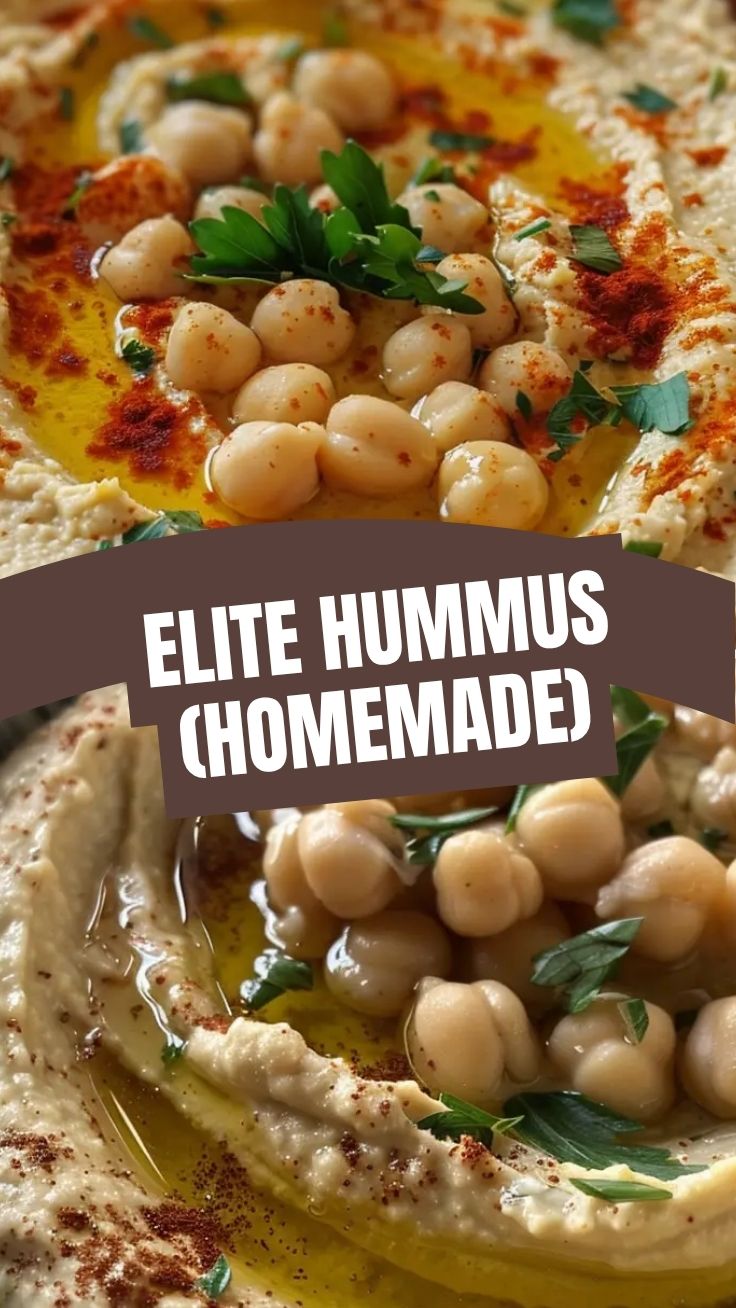
5. Adjust and serve – Taste and adjust salt or lemon juice. Transfer to a shallow bowl, swirl the top, drizzle with olive oil, sprinkle paprika, and top with reserved chickpeas. For the most authentic Hummus Recipe, serve at room temperature with warm pita or crunchy veggies.
—
Nutritional Benefits & Advantages
Homemade hummus is a nutritional powerhouse. Two tablespoons (about 30g) contain approximately:
– 70–80 calories
– 2g protein – thanks to chickpeas and tahini.
– 5g healthy fats – mostly unsaturated from olive oil and tahini.
– 3g fiber – supports digestion and satiety.
– Rich in iron, folate, and vitamin B6.
Because you control the ingredients, you can reduce sodium by 40% compared to many store-bought versions. The absence of preservatives makes it a clean, whole-food choice for plant-based eaters, gluten-free dieters, and anyone seeking a nutrient-dense snack.
—
Tips, Variations & Cooking Advice
– Flavor twists: Add roasted red peppers, sun-dried tomatoes, or a pinch of smoked paprika for a smoky version.
– Herb-forward: Blend in fresh parsley, cilantro, or basil for a green hummus.
– Lower fat: Replace half the tahini with plain Greek yogurt (not vegan) or silken tofu.
– Spicy: Toss in a chipotle pepper in adobo sauce or ¼ teaspoon cayenne.
– Dietary adaptations: Already vegan and gluten-free. For nut-free, ensure tahini is made only from sesame seeds.
—
Common Mistakes to Avoid
– Skipping the tahini-lemon whip – Not blending tahini and lemon first results in a grainy hummus. That initial 30-second whipping is non-negotiable.
– Using warm chickpeas – Cold, canned chickpeas straight from the fridge can make hummus pasty. Rinse with cold water, but let them sit at room temperature for 10 minutes before blending.
– Overlooking salt – Hummus can taste flat without enough salt. Add gradually, but taste after blending.
– Blending too little – Stop only when the mixture is completely smooth, which may take up to 2 full minutes in a standard food processor. Patience pays off.
—
Storage & Meal Prep Tips
– Refrigeration: Store in an airtight container for up to 5 days. Place a layer of plastic wrap directly on the surface to prevent a skin from forming.
– Freezing: Hummus freezes beautifully. Portion into ice cube trays, then transfer frozen cubes to a freezer bag for up to 3 months. Thaw overnight in the fridge and re-stir.
– Reheating: Bring to room temperature for best texture. If you prefer it warm, microwave in 10-second bursts, stirring each time. Do not overheat, as the tahini can separate.
– Reviving dry hummus: Stir in a teaspoon of olive oil or lemon juice to restore creaminess.
—
Conclusion
Making Hummus (Homemade) is a small shift in habit that yields outsized rewards: fresher taste, customizable flavor, and cleaner ingredients. This Hummus Recipe proves that with just a few pantry staples and a good food processor, you can create a dip that outshines any store-bought version. After you try it, share your creation on social media—tag it with #HomemadeHummus—and never look back at those plastic tubs again. Your taste buds (and your body) will thank you.
—
FAQs
1. Can I use dried chickpeas instead of canned?
Yes. Soak ½ cup dried chickpeas overnight, then boil for 1–1½ hours until tender. Drain and proceed as directed. The texture will be even silkier.
2. My hummus is too thick. How do I fix it?
Add ice-cold water, one tablespoon at a time, while the processor runs, until you reach a smooth, dippable consistency. A drizzle of olive oil also helps.
3. Why is my hummus bitter?
Bitter taste usually comes from over-toasted tahini or too much garlic. Try using a milder tahini, or reduce garlic to half a small clove.
4. Can I make hummus without tahini?
Yes. Substitute with sunflower seed butter (sunbutter), or use 2 tbsp plain Greek yogurt and 1 tbsp olive oil for a tangy, lower-fat version.
5. How long does homemade hummus stay fresh on the counter?
To be safe, do not leave hummus out for more than 2 hours (1 hour if above 90°F/32°C). Always refrigerate leftovers promptly.
Quick way to grow your Hummus (Homemade) garden
Ingredients
Equipment
Method
- Combine chickpeas, tahini, lemon juice, garlic, and cumin in a food processor.
- Process the mixture until smooth, adding cold water gradually until desired consistency is reached.
- Season with salt to taste and pulse a few more times to combine.
- Transfer the hummus to a serving bowl.
- Drizzle with olive oil and sprinkle with paprika and fresh parsley, if desired.
- Serve immediately with pita bread, vegetables, or your favorite dippers.