The Ultimate Guide to Making the Perfect Meatloaf: A Comfort Food Classic Reimagined
Meta Description: Discover how to make a juicy, flavorful meatloaf that stays moist every time. This comprehensive guide covers ingredients, step-by-step instructions, and expert tips for the perfect meatloaf using ground beef.
Have you ever pulled a meatloaf out of the oven only to find it dry, crumbly, or bland? You’re not alone. The humble Meatloaf has suffered a reputation crisis—often dismissed as a boring weeknight dinner or a relic of 1950s home cooking. But when done right, this dish transforms into something spectacular: juicy, savory, deeply satisfying, and endlessly customizable. In this guide, we’ll walk you through every step to ensure your meatloaf becomes a showstopper. Using high-quality ground beef as the foundation, we’ll explore techniques to lock in moisture, build layers of flavor, and avoid common pitfalls. Whether you’re a beginner or a seasoned cook, this recipe will elevate your meatloaf game—and your family will thank you.
—
Ingredients & Kitchen Tools
Core Ingredients
– ground beef (80/20 ratio): The fat content ensures juiciness; leaner cuts (90/10) can result in dryness.
– Breadcrumbs (1 cup): Acts as a binder; use panko for a lighter texture or gluten-free breadcrumbs.
– Eggs (2 large): Helps bind the mixture together.
– Milk (½ cup): Adds moisture; substitute with buttermilk for tanginess.
– Onion (1 medium, finely diced): Sauté first to avoid raw crunch; use shallots for a milder flavor.
– Garlic (3 cloves, minced): Essential for savory depth.
– Ketchup (½ cup for glaze + ¼ cup in mix): Adds sweetness and acidity; try BBQ sauce for a smoky twist.
– Worcestershire sauce (2 tbsp): Umami booster; soy sauce works too.
– Salt, black pepper, and optional herbs (thyme, parsley, oregano).
Kitchen Tools & Utensils
– Large mixing bowl: For combining ingredients without splattering.
– Loaf pan (9×5 inch) or baking sheet (for free-form loaf—better browning).
– Parchment paper: Prevents sticking and eases cleanup.
– Meat thermometer: The single most important tool for doneness (target: 160°F/71°C).
– Chef’s knife and cutting board for prep.
– Pastry brush for glaze application.
Optional Substitutions
– Ground turkey or chicken: Leaner; add ¼ cup olive oil to maintain moisture.
– Oats instead of breadcrumbs: For gluten-free needs; pulse in a food processor.
– Egg substitute: Flax eggs (1 tbsp ground flax + 3 tbsp water per egg) for vegan versions.
—
Prep Time & Cooking Schedule
– Prep Time: 20 minutes (includes chopping, sautéing, and mixing).
– Cook Time: 55–60 minutes at 350°F (175°C).
– Resting Time: 10 minutes (critical for juiciness—slicing too early loses all the juices).
– Total Time: 1 hour 30 minutes.
Tip: Plan ahead—meatloaf tastes even better the next day as flavors meld. You can mix the ingredients the night before, store covered in the fridge, and bake when ready.
—
Step-by-Step Instructions
1. Preheat oven to 350°F. Line a baking sheet with parchment paper (free-form method) or grease a loaf pan.
2. Sauté aromatics: In a small pan over medium heat, cook diced onion and garlic in 1 tbsp olive oil until softened (3–4 minutes). Let cool—this prevents cooking the raw ground beef prematurely.
3. Make the panade: In a large bowl, combine breadcrumbs and milk; let sit 2 minutes until absorbed. This ensures a tender meatloaf texture—a classic baker’s trick.
4. Mix the base: Add sautéed aromatics, eggs, ¼ cup ketchup, Worcestershire sauce, 1 tsp salt, and ½ tsp black pepper to the panade. Stir gently.
5. Incorporate the meat: Fold in the ground beef using your hands—work quickly and lightly to avoid overmixing (which makes the meatloaf tough).
6. Shape and glaze: Transfer mixture to prepared pan or shape into a free-form loaf (about 8×4 inches). Spread remaining ½ cup ketchup evenly over the top.
7. Bake at 350°F for 55 minutes, until internal temperature reaches 160°F. Pro tip: Place a foil-lined baking sheet beneath the loaf pan to catch drips for easy cleanup.
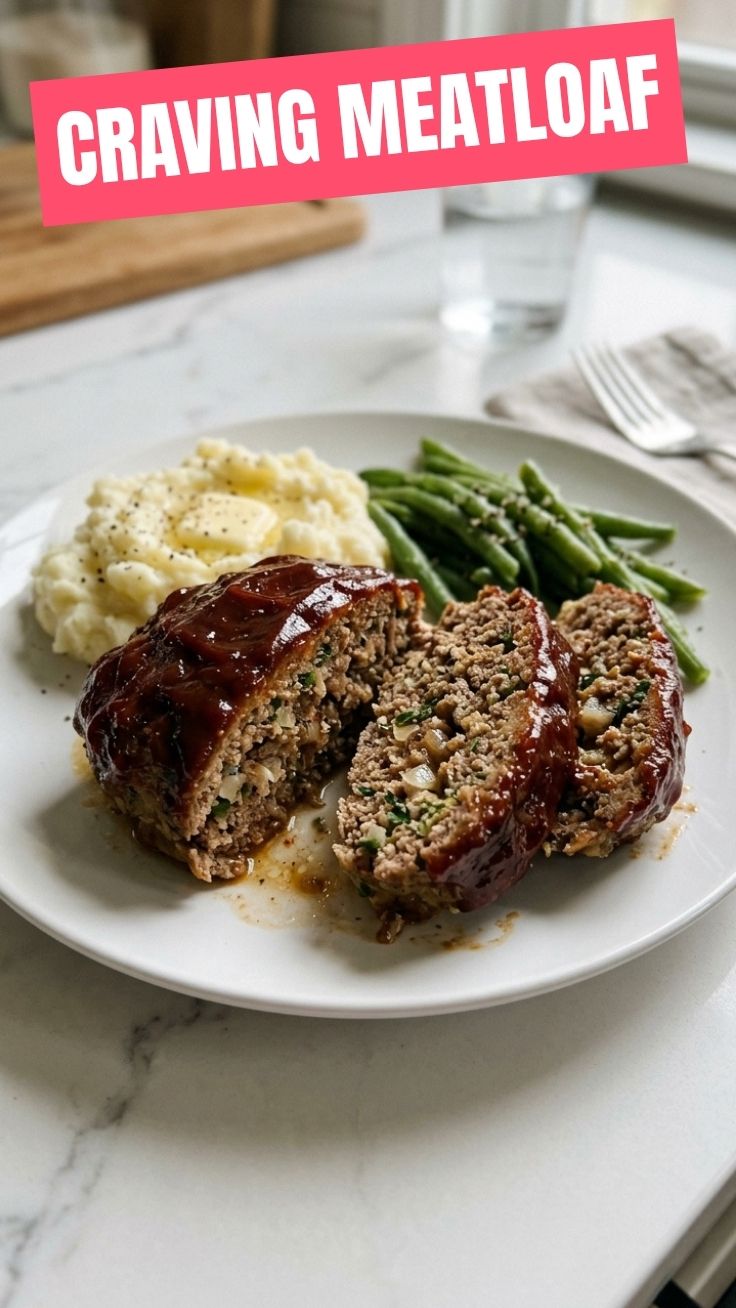
8. Rest and serve: Let rest 10 minutes on a cutting board. Slice with a serrated knife for clean cuts. Pair with mashed potatoes, green beans, or a crisp salad.
Temperature & texture cues: The loaf should feel firm but spring back slightly when pressed. If the glaze darkens too quickly, tent loosely with foil after 40 minutes.
—
Nutritional Benefits & Advantages
This meatloaf provides a balanced meal with high-quality protein from ground beef (rich in iron and B12). Using 80/20 ground beef delivers essential fats for satiety and brain function. Eggs add choline and vitamin D, while onions and garlic provide antioxidants like allicin and quercetin, known for immune support.
Approximate nutritional breakdown per serving (6 servings):
– Calories: 380
– Protein: 28g
– Fat: 22g
– Carbs: 12g
– Fiber: 1g
Health tip: Boost nutritional density by mixing in finely grated carrots or zucchini (squeeze out excess moisture) for vitamins A and C without compromising flavor.
—
Tips, Variations & Cooking Advice
– Flavor variations: Swap ketchup glaze with tomato paste + brown sugar + smoked paprika for a BBQ-style twist. Add crumbled feta or shredded cheddar for cheesy layers.
– Dietary adaptations: Use gluten-free breadcrumbs or almond flour (add 1 extra egg). For low-carb, replace breadcrumbs with crushed pork rinds or grated Parmesan.
– Cooking method alternatives: Air-fry at 360°F for 35 minutes (smaller portions); slow-cooker version: shape and cook on low for 6–7 hours (less browning but ultra-tender).
– Portion changes: Make mini meatloaves in a muffin tin for 25 minutes—perfect for meal prep or freezing individual portions.
—
Common Mistakes to Avoid
1. Overmixing the meat: This develops gluten and compresses the texture, resulting in a dense loaf. Fix: Mix until just combined.
2. Skipping the panade: Without milk-soaked breadcrumbs, the loaf will be dry and crumbly. Fix: Always soak breadcrumbs for 2 minutes.
3. Baking directly in a loaf pan: The meat sits in its own fat, leading to a soggy bottom. Fix: Use free-form method or prop the pan on a baking sheet with space for airflow.
4. Not pre-cooking onions: Raw onions release moisture unevenly and can burn. Fix: Always sauté until translucent.
5. Cutting too soon: Slicing before resting causes juice loss. Fix: Wait a full 10 minutes.
—
Storage & Meal Prep Tips
– Refrigeration: Wrap cooled slices tightly in plastic wrap or airtight container—stays fresh for 3–4 days.
– Freezing: Portion into individual servings, wrap in foil, then place in freezer bag. Thaws well for up to 3 months.
– Reheating: For best texture, reheat in a 300°F oven for 10–12 minutes (covered with foil to prevent drying). Microwave on low power in 30-second bursts if pressed for time.
– Meal prep strategy: Double the batch and freeze one unbaked loaf (wrapped well) for up to 3 months—thaw overnight in fridge before baking.
—
Conclusion
Creating a standout meatloaf isn’t about complex processes—it’s about mastering a few key techniques: using the right ground beef, building a moist panade, and resisting the urge to overmix. This recipe proves that comfort food can be both nostalgic and nutritionally thoughtful, with endless room for creative variations. We encourage you to try this method, share your results on social media (tag us!), or explore our other classic comfort recipes like shepherd’s pie or stuffed peppers. Your perfect meatloaf journey starts now—happy cooking!
—
FAQs
1. Can I use ground turkey instead of ground beef for this meatloaf?
Yes, but choose 93/7 lean turkey and add 2 tbsp olive oil or grated zucchini to counteract dryness. Reduce cooking time by 5–10 minutes (target internal temp 165°F).
2. Why is my meatloaf mushy and falling apart?
This usually happens from too much moisture—either too many eggs, oversized onion chunks, or over-soaked breadcrumbs. Adjust by reducing liquid ingredients slightly; ensure your panade absorbs fully.
3. How do I get a glazed crust that isn’t burnt?
Apply the glaze in the last 20 minutes of baking rather than at the start. If using sugar-heavy ketchup, choose low-sugar brands or mix with a splash of apple cider vinegar to balance.
4. Can I make this meatloaf dairy-free?
Absolutely—replace milk with unsweetened almond or oat milk, and use dairy-free breadcrumbs (most are naturally vegan). The texture remains identical.
5. Is it safe to eat meatloaf with pink center?
Pink doesn’t always indicate undercooking—myoglobin retains color even at safe temps. Always use a meat thermometer to check 160°F (ground beef) or 165°F (poultry).
Quick way to grow your best classic Meatloaf in 1 panMeatloaf
Ingredients
Equipment
Method
- Preheat your oven to 350°F (175°C) and lightly grease a baking sheet or a 9x5 inch loaf pan.
- In a large bowl, combine the lean ground beef, egg, milk, bread crumbs, chopped yellow onion, 1/4 cup ketchup, 1 tablespoon Worcestershire sauce, 1 teaspoon garlic powder, 1 teaspoon salt, and 1/2 teaspoon black pepper.
- Mix the ingredients gently until just combined, being careful not to overmix, as this can make the meatloaf tough.
- Shape the meat mixture into a loaf on the prepared baking sheet or press it evenly into the loaf pan.
- In a small bowl, whisk together the glaze ingredients: 1/2 cup ketchup, brown sugar, Dijon mustard, 1 teaspoon Worcestershire sauce, and 1/2 teaspoon garlic powder.
- Spread about half of the glaze evenly over the top of the meatloaf.
- Bake for 45 minutes, then remove from the oven, spread the remaining glaze over the meatloaf, and return to the oven.
- Continue baking for another 15-20 minutes, or until the internal temperature reaches 160°F (71°C).
- Once baked, remove the meatloaf from the oven and let it rest for 10 minutes before slicing and serving. This allows the juices to redistribute for a more tender meatloaf.