Discover the Ultimate Freshness: Why Homemade Greek Salad Beats Restaurant Versions Every Time
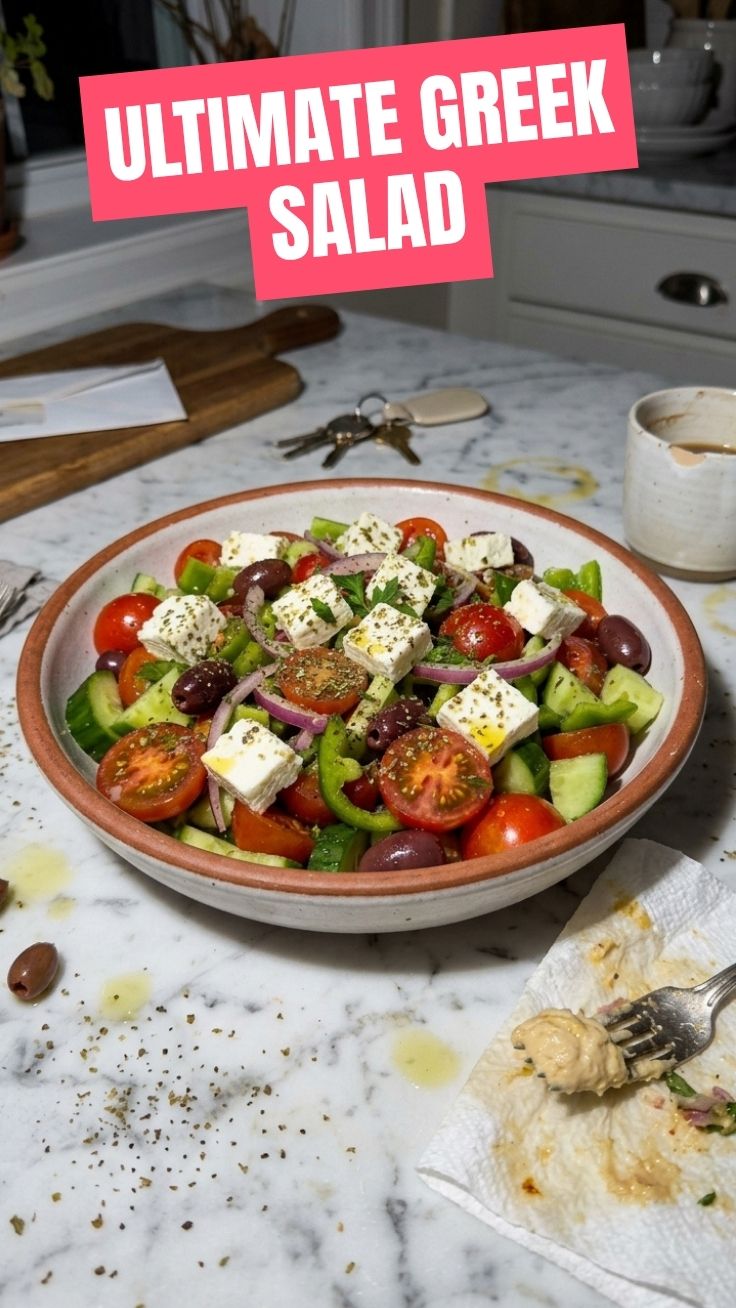
Have you ever wondered why the vibrant flavors of a classic Greek salad taste so much better when you prepare them yourself? The secret lies in the quality of fresh produce, the balance of tangy feta, and the simplicity of a well-made vinaigrette. In this post, I’ll show you exactly how to craft an authentic Greek salad that bursts with Mediterranean sunshine, plus a creative variation on a Mediterranean salad that adds chickpeas for extra protein. By making this dish at home, you control every ingredient—no stale olives or watery tomatoes—and save money while enjoying a nutrient-dense meal ready in under 15 minutes.
Ingredients & Kitchen Tools
Required Ingredients
– 4 large ripe tomatoes – Use Roma or vine-ripened for firm texture and sweetness.
– 1 English cucumber – Crisp, seedless variety holds up well; peel partially for color contrast.
– 1 red onion – Thinly sliced; soak in cold water 5 minutes to mellow sharpness.
– 1 green bell pepper – Seeded and chopped into bite-sized pieces.
– 1/2 cup Kalamata olives – Pit them for convenience; briny flavor is essential.
– 6 oz block feta cheese – Not pre-crumbled; slice into thick slabs or cubes.
– 3 tbsp extra virgin olive oil – A robust, fruity oil ties everything together.
– 2 tbsp red wine vinegar – Authentic acidity; adjust to taste.
– 1 tsp dried oregano – Greek oregano preferred for its earthy aroma.
– Salt and black pepper – Freshly ground to season layers.
Optional Substitutions
– Swap feta for vegan feta (soy‑based) or omit for dairy‑free.
– Add 1 can (15 oz) chickpeas, drained, to turn this into a heartier Mediterranean salad.
– Use lemon juice instead of red wine vinegar for a brighter tang.
Kitchen Tools
– Large mixing bowl
– Sharp chef’s knife
– Cutting board
– Measuring spoons
– Small bowl for dressing (optional but handy)
– Salad spinner (to dry lettuce if you decide to add leaves)
Prep Time & Cooking Schedule
| Time | Activity |
|——|———-|
| 10 minutes | Wash, chop, and arrange vegetables. |
| 5 minutes | Prepare dressing and toss everything. |
| 0 minutes | No cooking required – serve immediately. |
| Optional resting | For deeper flavor, let sit 10–15 minutes before tossing again. |
This recipe is perfect for busy weeknights or last‑minute gatherings. The total active time is only 15 minutes with zero heat needed. Resting time is minimal; the vegetables release juices that blend with the dressing, so a short rest (even while you set the table) enhances the taste.
Step-by-Step Instructions
1. Prep the vegetables – Core and chop tomatoes into 1‑inch chunks. Halve the cucumber lengthwise, then slice into half‑moons about 1/2‑inch thick. Thinly slice the red onion – if you find raw onion too intense, soak slices in ice water while you chop the rest.
2. Combine base ingredients – In a large bowl, add tomatoes, cucumber, red onion, green bell pepper, and Kalamata olives. For a twist, stir in a can of drained chickpeas to create a protein‑packed Mediterranean salad variation that turns this side into a main course.
3. Season and dress – Drizzle with olive oil and red wine vinegar. Sprinkle dried oregano, a pinch of salt (go light – olives and feta are salty), and a few cracks of black pepper. Toss gently with your hands or a large spoon.
4. Add the feta – Place the feta slab or cubes on top of the salad – do not toss again, as feta crumbles can become mushy. The creamy, salty cheese contrasts with the crunchy vegetables.
5. Taste and adjust – Check acidity and salt. If using the Greek salad as a standalone dish, you may want a little extra oregano or a squeeze of lemon. For a more pronounced tang, add another splash of vinegar.
6. Serve – Transfer to a platter or individual bowls. Garnish with extra oregano and a drizzle of olive oil. Enjoy immediately for maximum crunch.
Temperature tip: Chilled vegetables (refrigerate tomatoes and cucumber 15 minutes before chopping) make the salad extra refreshing on hot days, but never ice‑cold – it numbs the flavors.
Nutritional Benefits & Advantages
A classic Greek salad is a powerhouse of nutrition without sacrificing taste. Here’s why your body will thank you:
– Tomatoes are rich in lycopene, an antioxidant linked to reduced heart disease risk. Cooking? No need – raw tomatoes retain the highest lycopene availability when paired with olive oil.
– Cucumber provides hydration and vitamin K, essential for bone health.
– Olive oil delivers heart‑healthy monounsaturated fats and anti‑inflammatory polyphenols.
– Feta cheese offers calcium and probiotics (if unpasteurized), though it’s lower in fat than many aged cheeses.
– Kalamata olives contribute iron and vitamin E.
By omitting heavy dressings and processed ingredients, this dish is naturally gluten‑free, low‑carb (about 8g net carbs per serving), and fits perfectly into keto and Mediterranean diets. The optional chickpea addition boosts fiber and plant‑based protein, making the Mediterranean salad version a complete meal.
Tips Variations & Cooking Advice
– Herb swap – Replace dried oregano with fresh oregano, mint, or basil for a different flavor profile.
– Protein boost – Add grilled chicken, shrimp, or canned tuna for a main‑course salad.
– Dairy‑free – Omit feta and add avocado chunks for creaminess; use a lemon‑tahini dressing.
– Crunch factor – Toss in toasted pine nuts or walnuts right before serving.
– Dressing shortcut – Whisk olive oil, vinegar, oregano, and minced garlic in a jar; shake and pour.
– Batch prep – Chop vegetables up to 2 days ahead (store separately from dressing and feta). Assemble only before serving to avoid sogginess.
Common Mistakes to Avoid
1. Using pre‑crumbled feta – It’s drier, less flavorful, and turns into salty dust. Buy a block and cut it yourself for superior texture.
2. Overdressing – The vegetables release water, diluting the dressing. Start with 3 tbsp oil and 2 tbsp vinegar; you can always add more.
3. Adding feta too early – Tossing feta with the salad turns it into a paste. Place it on top just before serving.
4. Skipping the salt – But go easy! Olives and feta provide plenty; taste first.
5. Ignoring ripeness – Meal‑y, under‑ripe tomatoes ruin the dish. Choose fragrant, heavy tomatoes with deep red color.
Storage & Meal Prep Tips
– Refrigeration – Store the undressed salad (without feta) in an airtight container for up to 2 days. Keep dressing and feta separate.
– Freezing – Not recommended. High‑water vegetables become limp and watery after thawing.
– Reheating – None needed. If salad has been dressed and leftover, it will be softer but still enjoyable the next day – just drain excess liquid and add a splash of fresh olive oil.
– Meal prep – Chop veggies, make dressing, and keep feta whole. Combine only the portion you eat each day to maintain crunch.
Conclusion
A homemade Greek salad is proof that simple ingredients, handled with care, create unforgettable flavor. Whether you stick to the classic version or experiment with chickpeas for a hearty Mediterranean salad, this recipe delivers freshness, nutrition, and versatility. I encourage you to try it today and share your creation – tag a friend who loves bright, healthy food. And don’t forget to check the links above for more inspiration: the authentic Greek salad and the protein‑packed Mediterranean salad are just clicks away.
Frequently Asked Questions
Can I make a Greek salad ahead of time for a party?
Yes – prepare all chopped vegetables and dressing separately up to 24 hours ahead. Assemble and add feta just before serving to maintain crunch.
What if I don’t have red wine vinegar?
Lemon juice or white balsamic vinegar are excellent substitutes. Use a 1:1 ratio.
Why is my salad watery?
Tomatoes release liquid when salted too early. Lightly salt them 10 minutes before assembling, then drain excess liquid, or only add salt right before serving.
Can I use dried herbs other than oregano?
Absolutely – thyme, marjoram, or a pinch of dried mint work well. For a bold twist, try za’atar.
How do I make this a low‑sodium dish?
Rinse canned olives and use a reduced‑sodium feta (or half the usual amount). Skip the added salt entirely.
How to grow Greek Salad with 4 key tipsGreek Salad
Ingredients
Equipment
Method
- Wash all vegetables thoroughly and pat them dry.
- Chop tomatoes, cucumbers, bell peppers, and red onion into bite-sized pieces.
- Crumble the feta cheese and set aside. Ensure olives are ready for use.
- In a large bowl, combine the chopped tomatoes, cucumbers, bell peppers, red onion, and Kalamata olives.
- Drizzle generously with extra virgin olive oil and red wine vinegar.
- Season with salt and black pepper to taste, then gently toss all ingredients together.
- Top the salad with crumbled feta cheese and fresh oregano sprigs just before serving.