The Ultimate Guide to Perfectly Juicy Roast Turkey for Thanksgiving
Is there anything more iconic than a golden, succulent bird at the center of a holiday table? Yet so many home cooks struggle with dry meat, uneven cooking, or simply feeling overwhelmed by the process. Preparing a show-stopping Roast Turkey at home doesn’t have to be intimidating. With the right techniques and a little patience, you can create a memorable Thanksgiving dinner that rivals any restaurant. This guide breaks down every step, from brining to carving, ensuring your bird stays juicy, flavorful, and beautifully browned. You’ll save money, impress your guests, and gain the confidence to make this celebratory dish your own.
Ingredients & Kitchen Tools
For the turkey (12–14 lbs):
– 1 whole turkey (12–14 lbs), thawed if frozen – fresh or thawed works best; avoid pre-stuffed birds.
– 1 cup unsalted butter, softened – use salted butter if you reduce added salt.
– 2 tbsp olive oil – helps crisp the skin.
– 1 tbsp kosher salt – or 2 tsp fine salt; adjust per bird weight.
– 1 tsp black pepper – freshly ground.
– 1 tbsp garlic powder – increases depth without overpowering.
– 1 tbsp dried thyme – or 2 tbsp fresh.
– 1 tbsp dried rosemary – or 2 tbsp fresh.
– 1 lemon, halved – adds brightness.
– 1 onion, quartered – for cavity aromatics.
– 4 garlic cloves, smashed – optional but recommended.
– 4 cups low-sodium chicken broth – for basting and pan drippings.
Kitchen tools:
– Roasting pan with rack – essential for even heat circulation.
– Instant-read thermometer – the #1 tool for doneness.
– Basting brush or spoon.
– Kitchen twine – to truss legs (optional but helps shape).
– Aluminum foil – to tent the breast if browning too fast.
– Carving knife and fork.
Optional substitutions: Use ghee for a dairy-free butter swap; replace chicken broth with vegetable broth; try a dry brine instead of wet brine for even crispier skin.
Prep Time & Cooking Schedule
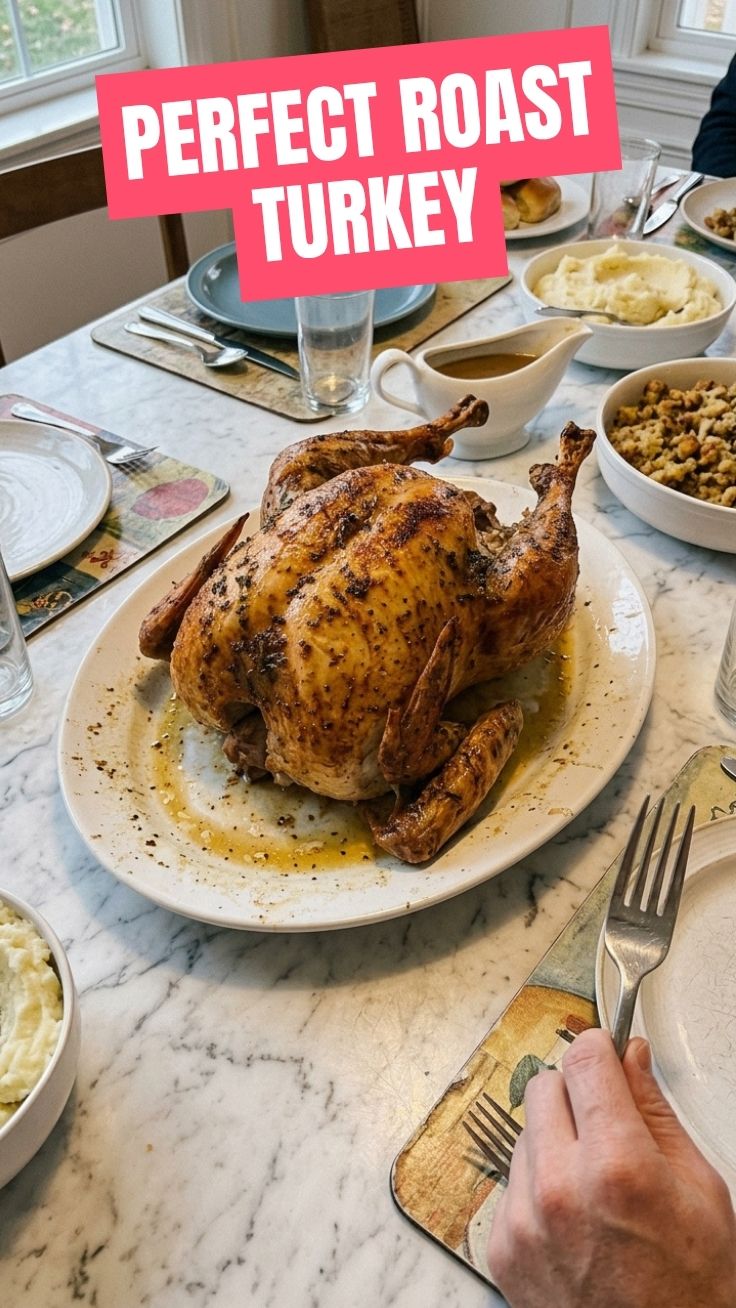
– Thawing time: 24 hours per 4–5 lbs in the refrigerator (plan 2–3 days ahead).
– Brining (optional): 12–24 hours for wet brine; 24–48 hours for dry brine.
– Resting time at room temperature: 1 hour before roasting – essential for even cooking.
– Roasting time: Approximately 13–15 minutes per pound at 325°F (for a 12–14 lb bird, that’s ~2.5–3.5 hours).
– Resting time after roasting: 30–45 minutes tented with foil – this locks in juices.
Schedule tip: Start brining two days before serving. On roasting day, remove turkey from fridge 1 hour before oven time. Roast, rest, then carve just before serving. The resting period also gives you time to make gravy.
Step-by-Step Instructions
1. Prep the turkey: Remove giblets and neck. Pat the turkey completely dry with paper towels – moisture prevents crispy skin. Let it sit at room temperature for 1 hour.
2. Season generously: In a small bowl, mix softened butter, olive oil, salt, pepper, garlic powder, thyme, and rosemary. Rub this mixture all over the turkey, including under the skin (gently separate skin from breast with your fingers). Don’t forget the thighs and drumsticks.
3. Stuff the cavity: Place lemon halves, onion quarters, and smashed garlic inside the cavity. This imparts aroma without overcooking the aromatics.
4. Truss (optional): Tie the legs together with kitchen twine and tuck wing tips under the bird to prevent burning.
5. Preheat oven to 325°F. Place turkey breast-side up on the rack in the roasting pan. Pour 2 cups of chicken broth into the pan (not over the bird).
6. Roast uncovered for the first hour. Then reduce heat to 300°F (if skin is browning too fast, tent breast loosely with foil). Continue roasting, basting every 30 minutes with pan juices. Total time: about 2.5–3 hours for a 12–14 lb bird.
7. Temperature check: Insert thermometer into the thickest part of the thigh without touching bone. Target 165°F. Also check the breast – it’s done at 160°F (it will carryover cook to 165°F). A perfectly cooked Roast Turkey is the centerpiece of any Thanksgiving dinner, so don’t rely on time alone – use the thermometer!
8. Rest: Remove turkey from oven, tent loosely with foil, and let rest 30–45 minutes. This redistributes juices.
9. Carve: Slice against the grain for tender pieces. Reserve pan drippings for gravy.
Pro tips: For crispy skin, pat dry thoroughly and don’t baste too often – basting only the breast can soften skin. If you prefer extra-crispy, increase oven to 425°F for the last 10–15 minutes.
Nutritional Benefits & Advantages
Turkey is a lean protein powerhouse – a 3-ounce serving (skinless) provides about 25g of protein, only 2g of fat, and essential B vitamins like B6 and B12. It’s also rich in selenium, which supports immune function. When prepared without heavy butter, this recipe can be adapted for lower-calorie needs (use olive oil instead of butter). The herbs provide antioxidants, and the slow roasting method preserves nutrients better than high-heat frying. A carefully executed Roast Turkey fits into balanced meal plans and offers a satisfying, nutrient-dense centerpiece.
Tips Variations & Cooking Advice
– Flavor variations: Use a spice paste with smoked paprika, cumin, and coriander for a Southwest twist; add orange zest and chipotle for a smoky‑sweet profile. For a classic herb butter, try sage, parsley, and marjoram.
– Alternative methods: Spatchcock (butterfly) the turkey for faster, more even cooking (reduce time by ~30%). You can also smoke the turkey at 225°F for 4–5 hours for deep smoky flavor.
– Dietary adaptations: For gluten-free, skip any gravy made with flour; use cornstarch slurry instead. Dairy-free? Replace butter with dairy-free margarine or avocado oil. Keto? Serve with roasted low‑carb veggies instead of stuffing.
– Portion changes: For a smaller gathering, use a turkey breast (bone-in) instead of whole bird – roast at 325°F until 160°F internal, about 1.5–2 hours.
Common Mistakes to Avoid
– Not thawing completely – a partially frozen bird cooks unevenly and can be unsafe. Thaw in the fridge, not on the counter.
– Overcooking – the #1 culprit of dry meat. Use a thermometer, don’t rely on pop-up timers.
– Skipping the rest – cutting into a hot turkey releases all juices. Rest at least 30 minutes.
– Basting too often – opening the oven causes heat loss and can dry out the breast. Baste every 30 minutes max.
– Washing the turkey – this spreads bacteria. Simply pat dry.
– Roasting at too high a temperature – 325°F is ideal; 350°F may brown the skin before the inside is done.
Storage & Meal Prep Tips
Refrigeration: Remove leftover meat from the bones within 2 hours of cooking. Store in airtight containers for up to 4 days. Keep the carcass for stock – freeze if not using immediately.
Freezing: Shredded or sliced turkey freezes well for up to 3 months. Wrap tightly in plastic wrap and then foil or use freezer bags. Thaw overnight in the fridge.
Reheating: To avoid dryness, reheat in a covered dish with a splash of broth at 300°F for 15–20 minutes, or in a microwave with a damp paper towel. Avoid high heat. For crispy leftovers, pan‑sear slices in a hot skillet with a little oil.
Meal prep: Roast extra turkey to use in salads, sandwiches, soups, or casseroles. Shredded turkey freezes perfectly for quick midweek meals.
Conclusion
Mastering a Roast Turkey is one of the most rewarding kitchen skills – it transforms a simple bird into a celebration-worthy centerpiece. With careful seasoning, proper temperature management, and that all‑important resting period, you’ll consistently achieve moist meat and crackling skin. Whether it’s for a Thanksgiving dinner or a Sunday family meal, this recipe delivers confidence and delicious results. Try it, share your golden‑brown masterpiece, and don’t forget to explore more poultry dishes like our healthy chili or stir‑fry for creative leftovers.
FAQs
Can I use a frozen turkey without thawing?
No – roasting a frozen turkey is unsafe and leads to uneven cooking. Thaw completely in the fridge (24 hours per 4–5 lbs).
How do I keep the breast from drying out?
Tenting with foil halfway through roasting helps, as does basting with pan juices. Use a thermometer and remove the bird when the breast hits 160°F – carryover cooking will finish it.
My turkey skin is pale – what went wrong?
Make sure the bird is patted bone‑dry before applying oil/butter. Also, roast uncovered for at least the first hour. If still pale, increase oven to 425°F for the final 15 minutes.
Can I stuff the turkey with stuffing?
Yes, but it increases cooking time and risk of undercooked stuffing. It’s safer to bake stuffing separately. If stuffing the cavity, ensure the stuffing reaches 165°F.
How long can leftovers stay in the fridge?
Cooked turkey is safe for 3–4 days in the refrigerator. For longer storage, freeze within that window. Reheat to 165°F.
Quick way to grow Roast Turkey in 3 easy steps
Ingredients
Equipment
Method
- Preheat your oven to 375°F (190°C). Remove the giblets and neck from the turkey, then pat the turkey dry with paper towels.
- Rub the softened butter all over the turkey, then season generously with salt and black pepper. Place the quartered onions, chopped celery, and carrots inside the turkey cavity.
- Place the turkey in a large roasting pan and roast for 2 to 2.5 hours, or until a meat thermometer inserted into the thickest part of the thigh reads 165°F (74°C). Allow the turkey to rest for 15 minutes before carving and serving.