Why You Should Master Homemade Lasagna (And Never Buy Frozen Again)
Have you ever pulled a sad, watery frozen lasagna from the oven and wondered why it never tastes like the one from your favorite Italian restaurant? The truth is, there is a profound difference between mass-produced versions and a dish made with care in your own kitchen. Preparing Lasagna from scratch is not just about following a recipe; it’s about mastering a cornerstone of Italian cuisine. When you build this dish layer by layer, you control the quality of the meat, the richness of the sauce, and the texture of the pasta. This beef lasagna recipe is designed to give you that “wow” factor every single time, transforming a time-consuming project into a rewarding culinary experience that fills your home with an irresistible aroma.
Ingredients & Kitchen Tools
For the Meat Sauce (Ragù):
– 1 lb (450g) Ground Beef (80/20): The fat content is crucial for flavor and moisture. Leaner meat (90/10) can result in a dry texture.
– 1 onion (diced): Adds a savory base.
– 3 cloves garlic (minced): Provides pungent depth.
– 28 oz (800g) Crushed Tomatoes: Use San Marzano if possible for low acidity and natural sweetness.
– 2 tbsp Tomato Paste: Concentrates the umami flavor.
– 1 tsp Dried Oregano & Basil: Essential herb profile for Italian cuisine.
– Salt & Black Pepper: Season generously to draw out flavor.
– Olive Oil: For sautéing.
For the Cheese & Pasta:
– 12 Oven-Ready Lasagna Noodles: These require no boiling, saving you a massive cleanup step. (Standard noodles are fine, boil them 2 minutes less than package directions).
– 15 oz (425g) Whole Milk Ricotta: Full-fat is non-negotiable for creaminess.
– 1 Large Egg: Binds the ricotta and prevents it from turning grainy.
– 3 cups (340g) Shredded Low-Moisture Mozzarella: This melts perfectly without making the lasagna watery.
– 1 cup (100g) Freshly Grated Parmesan Cheese: Pre-grated lacks the nutty, salty punch.
Kitchen Tools Needed:
– 9×13 Baking Dish: Standard size for 3-4 layers.
– Large Skillet or Dutch Oven: For simmering the meat sauce.
– Medium Mixing Bowl: For the ricotta mixture.
– Ladle: For spooning sauce.
– Aluminum Foil: For covering during baking.
– Sharp Knife & Cutting Board.
Prep Time & Cooking Schedule
– Prep Time: 30 minutes (chopping onions, mixing ricotta).
– Cooking Time (Sauce): 45 minutes to 1 hour. The sauce needs time to concentrate flavors.
– Assembly: 15 minutes.
– Bake Time: 45 minutes covered + 10 minutes uncovered.
– Resting Time: Critical! 15-20 minutes after baking. If you cut it immediately, it will slide into a soupy mess. This rest allows the starches to set.
– Total Time: Approximately 2 hours 15 minutes.
Pro Tip: Make the meat sauce a day ahead. It tastes better after the flavors meld overnight in the fridge.
Step-by-Step Instructions
1. Make the Ragù: Heat olive oil in a large skillet over medium-high heat. Add the ground beef and cook, breaking it into small crumbles, until deeply browned (about 8 minutes). Don’t rush this step—browning equals flavor. Using a slotted spoon, remove the beef, leaving 1 tbsp of fat in the pan. Sauté the onion until soft (5 minutes), add garlic for 30 seconds. Return beef to the pan. Stir in tomato paste, oregano, and basil for 1 minute. Pour in crushed tomatoes and ½ cup of water. Season with salt and pepper. Reduce heat to low, cover partially, and let it simmer for 45 minutes (stir occasionally).
2. Mix the Ricotta: In your bowl, combine the ricotta cheese, egg, ½ cup of Parmesan, 1 cup of mozzarella, and a pinch of salt and black pepper. Mix until smooth. This is the binder that creates creamy layers. A common mistake here is skipping the egg; without it, the ricotta becomes dry and grainy.
3. Preheat & Prep Pan: Preheat your oven to 375°F (190°C) . Spread a thin layer of meat sauce on the bottom of your 9×13 dish (this prevents the noodles from sticking).
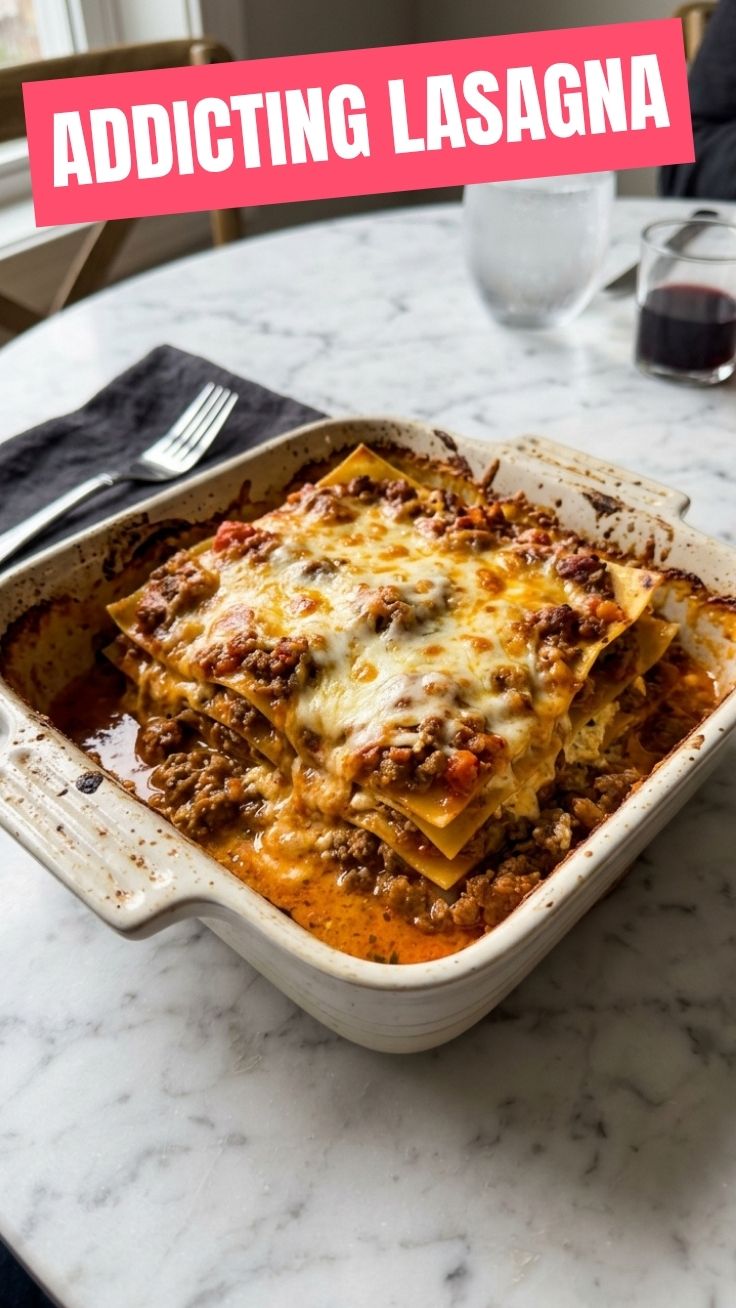
4. Create the Layers: Start with a layer of noodles (3-4, slightly overlapping). Spread ⅓ of the ricotta mixture over the noodles. Spoon ⅓ of the remaining meat sauce over the ricotta. Sprinkle ½ cup of mozzarella. Repeat this process two more times (noodles, ricotta, sauce, mozzarella). For the final top layer, finish with the remaining sauce, the rest of the mozzarella, and the last of the Parmesan cheese. This final beef lasagna layer is the crown jewel of the dish. The rich, bubbling cheese is a signature of Italian cuisine at its finest.
5. Bake: Cover the dish tightly with aluminum foil. Bake for 45 minutes. Remove the foil and bake for an additional 10 minutes, or until the cheese is bubbly and the edges are golden brown.
6. Rest: Let the lasagna sit on a wire rack for at least 15 minutes before slicing. Use a sharp knife for clean cuts.
Nutritional Benefits & Advantages
This dish is a balanced source of energy. The ground beef provides high-quality protein (approx. 25g per serving), essential for muscle repair and satiety. The tomatoes are rich in lycopene, a powerful antioxidant linked to heart health, which is better absorbed when cooked. Ricotta and mozzarella deliver calcium for bone health, while the egg in the ricotta adds additional protein. By preparing it at home, you reduce sodium content by up to 50% compared to frozen versions and avoid preservatives. For a lighter option, use part-skim mozzarella and lean ground turkey.
Tips Variations & Cooking Advice
– Flavor Boost: Add ½ cup of red wine to the sauce after browning the meat for extra depth.
– Vegetarian Swap: Substitute beef with 1 lb of sautéed mushrooms (cremini or portobello) and 1 cup of cooked lentils.
– Gluten-Free: Use gluten-free oven-ready noodles (they work perfectly).
– Dairy-Free: Use a plant-based ricotta, mozzarella shreds, and coconut cream in place of the egg.
– Shortcut: Use a high-quality jarred marinara (Rao’s or similar) for the base, but always add fresh herbs and browned beef.
Common Mistakes to Avoid
1. Watery Lasagna: This is the #1 issue. Solution: Don’t overcook the sauce. If it’s too thin, simmer it uncovered for 10 minutes to reduce. Also, do not boil standard noodles fully—they will overcook in the oven.
2. Dry Lasagna: Solution: Ensure your sauce is rich and moist. Covering the pan with foil for the first 45 minutes steams the noodles.
3. Grainy Ricotta: Solution: Always use full-fat ricotta and mix in an egg. The protein in the egg stabilizes the cheese.
4. Burnt Cheese: Solution: If the cheese is browning too fast in the last 10 minutes, tent a piece of foil loosely over the top.
Storage & Meal Prep Tips
– Refrigeration: Store leftovers in an airtight container for up to 4 days. Reheat slices in a 350°F oven for 15 minutes (or microwave on 70% power for 2 minutes).
– Freezing: Lasagna freezes beautifully. Assemble the entire dish (but don’t bake it) in a disposable foil pan. Wrap tightly in plastic wrap, then foil. Freeze for up to 3 months. To bake from frozen: Remove plastic, cover with foil, and bake at 375°F for 1 hour 30 minutes. Remove foil for the last 15 minutes.
– Reheating Tip: For a crispy edge, reheat leftovers in a non-stick skillet over medium heat with a lid on for 5 minutes, then remove the lid for 2 minutes.
Conclusion
Mastering this beef lasagna is about more than following a recipe—it’s about creating a comforting, layered masterpiece that delights everyone at the table. By taking the time to build rich flavors in the sauce and handling the ricotta correctly, you bypass the mediocrity of store-bought options. This dish is a perfect example of how Italian cuisine prioritizes simple ingredients cooked with intention. We encourage you to try this method, tweak the seasoning to your taste, and share a photo of your golden, cheesy creation. You’ll never go back to frozen again.
FAQs
1. Can I use ground turkey instead of beef?
Yes! Ground turkey (93% lean) works well. Be sure to add a tablespoon of olive oil when browning to prevent dryness. The flavor will be milder, so increase the garlic and herbs.
2. Can I make this gluten-free?
Absolutely. Use gluten-free oven-ready lasagna noodles. Ensure your tomato paste and crushed tomatoes are certified gluten-free. The rest of the ingredients (meat, cheese, egg) are naturally gluten-free.
3. Why is my ricotta mixture runny after baking?
This usually happens if the ricotta is too wet (some brands are higher in moisture) or if you didn’t mix in the egg properly. For a fix, drain the ricotta in a cheesecloth for 30 minutes next time.
4. How do I prevent the noodles from sliding when I serve?
The secret is the resting time. 15-20 minutes is non-negotiable. Also, ensure your sauce is thick enough—if it’s watery, it won’t support the noodles.
5. Can I skip the egg in the ricotta?
Not recommended. The egg is the binder that prevents the ricotta from becoming a dry, crumbly layer. For an egg-free version, use 2 tablespoons of cornstarch mixed with 3 tablespoons of water as a slurry.
Best way to grow perfect Lasagna in 7 stepsLasagna
Ingredients
Equipment
Method
- Prepare your conceptual garden by mixing the conceptual soil with the water of wisdom in a large pot.
- Plant the seeds of flavor evenly spaced in the prepared conceptual soil.
- Place the pot in a sunny location, ensuring it receives at least 8 hours of sunlight of patience daily.
- Water regularly with the water of wisdom, keeping the conceptual soil consistently moist.
- Once the lasagna sprouts, apply a pinch of fertilizer of creativity to encourage robust growth.
- Continue to nurture your lasagna with sunlight and water until it reaches its full, perfect size.
- Harvest your perfect lasagna and prepare for a delicious, imaginary meal.