Sizzling Steak Fajitas: The Ultimate Guide to Restaurant-Quality Results at Home
Have you ever craved the sizzle, the aroma, and the bold flavors of a classic fajita platter but hesitated to try making it yourself? You’re not alone. Many home cooks assume that achieving that perfect char and tender, juicy strips of beef requires a professional kitchen. But the truth is, with the right technique and a few insider tips, you can create restaurant-worthy Steak Fajitas in under 30 minutes. Not only is this dish a crowd-pleaser for weeknight dinners or festive gatherings, but it also unlocks a world of authentic flavors while giving you complete control over quality and spice. In this guide, we’ll walk through every step—from marinating to sizzling—so you can confidently serve fajitas that rival your favorite taquería. And if you’re inspired to explore more authentic dishes, you’ll definitely want to check out this collection of Mexican steak recipes for even more flavor-packed meals.
—
Ingredients & Kitchen Tools
Before firing up the skillet, gather the essentials. Each ingredient plays a role in building that signature fajita flavor.
For the Steak & Marinade
– 1½ lbs flank steak or skirt steak – Best cuts for fajitas; skirt steak has more beefy flavor, flank is leaner.
– 3 tbsp lime juice – Fresh is non‑negotiable for brightness.
– ¼ cup olive oil – Helps carry flavors and prevents sticking.
– 4 cloves garlic, minced – Adds savory depth.
– 1 tsp ground cumin – Earthy, warm note.
– 1 tsp smoked paprika – For subtle smokiness.
– 1 tsp chili powder – Mild heat; adjust to taste.
– 1 tsp salt + ½ tsp black pepper
– Optional: 1 tbsp soy sauce or Worcestershire – Boosts umami.
For the Vegetables
– 1 large red bell pepper, sliced
– 1 large green bell pepper, sliced
– 1 large yellow onion, sliced into half‑moons
– 2 tbsp avocado oil or vegetable oil – High smoke point for searing.
Toppings & Serving
– Flour or corn tortillas – Warm them for pliability.
– Sour cream, guacamole, salsa, shredded cheese, fresh cilantro, lime wedges
Kitchen Tools
– Cast‑iron skillet or heavy‑bottomed pan – Retains high heat for perfect char.
– Tongs – For flipping steak and vegetables.
– Sharp knife – Essential for slicing steak against the grain.
– Large bowl – For marinating.
– Cutting board
—
Prep Time & Cooking Schedule
Planning your timing ensures everything comes together hot and fresh.
– Marinating time: Minimum 30 minutes, up to 8 hours (overnight yields deepest flavor).
– Prep time: 15 minutes (slice vegetables, mix marinade).
– Cook time: 8–10 minutes total (steak + vegetables).
– Resting time: 5–10 minutes for steak before slicing.
– Total active time: about 30–35 minutes.
Tip: Start marinating the steak first, then prep vegetables while it sits. Warm tortillas during the last 2 minutes of cooking.
—
Step-by-Step Instructions
1. Marinate the steak. In a bowl, whisk together lime juice, olive oil, minced garlic, cumin, smoked paprika, chili powder, salt, and pepper. Place the steak in a resealable bag or dish, pour the marinade over, and massage to coat. Refrigerate for at least 30 minutes.
2. Preheat your skillet. Place a cast‑iron skillet over high heat for 3–4 minutes until smoking hot. A good sear locks in juices and creates that iconic crust.
3. Cook the steak. Remove steak from marinade and pat dry with paper towels (excess moisture prevents browning). Lay it in the hot skillet – you should hear a loud sizzle. Cook 3–4 minutes per side for medium‑rare (internal temp 130–135°F). Adjust time for thicker cuts or desired doneness. Do not overcrowd the pan; cook in batches if needed.
4. Rest the steak. Transfer steak to a cutting board, tent loosely with foil, and let rest 5–10 minutes. This redistributes juices so every bite stays tender.
5. Sauté vegetables. In the same skillet, add a splash of oil, then toss in sliced peppers and onions. Cook over high heat, stirring occasionally, for 3–4 minutes until charred but still crisp. Season with a pinch of salt.
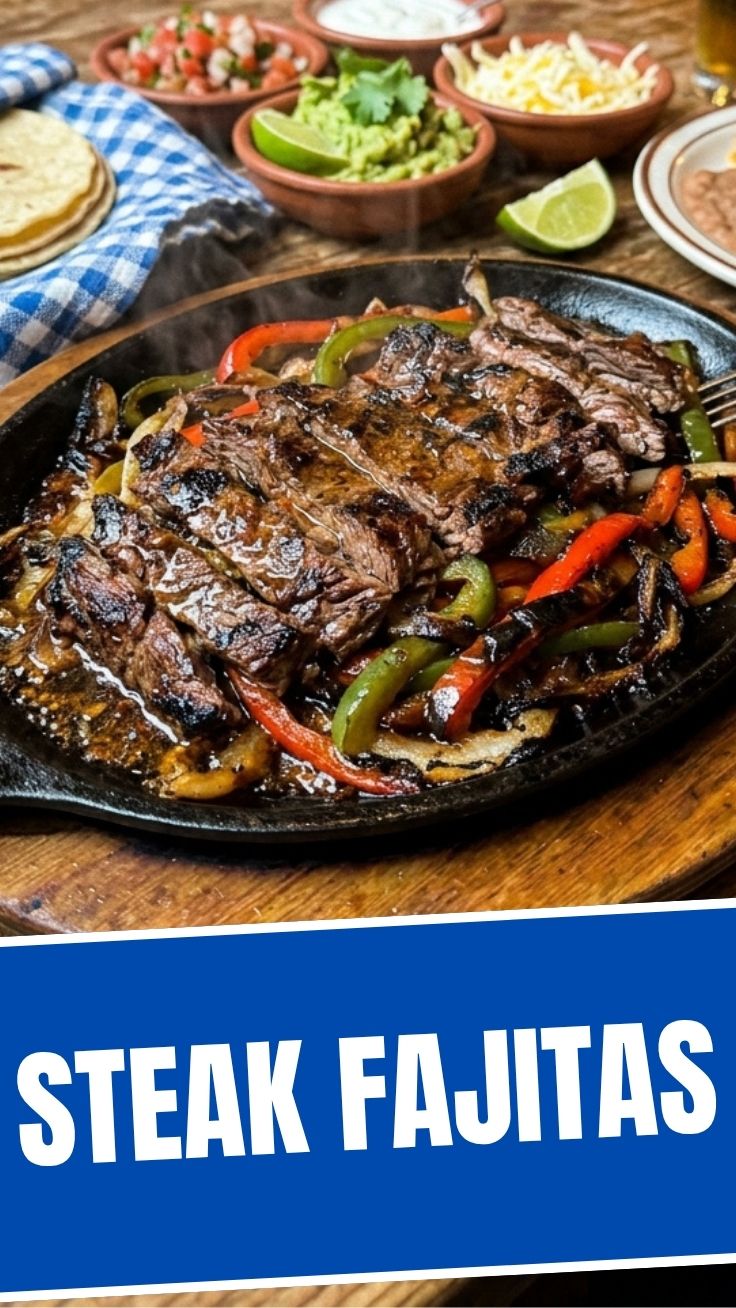
6. Slice and serve. Slice the rested steak thinly against the grain (crucial for tenderness). Return the sliced meat to the skillet with the vegetables for a final sizzle. Serve immediately on warm tortillas with toppings.
During this step, you are perfecting the technique that makes Steak Fajitas a weeknight favorite. For even more variety, you can draw inspiration from traditional Mexican steak recipes that often use similar marinades or salsas.
—
Nutritional Benefits & Advantages
This fajita meal is packed with protein (about 35–40g per serving from steak) and fiber from bell peppers and onions. Flank steak is also a good source of iron, zinc, and B vitamins, while lime juice adds a dose of vitamin C that enhances iron absorption. By controlling the oil and toppings, you can easily keep it low‑carb, gluten‑free (use corn tortillas), or Whole30‑friendly. The high‑heat cooking method uses minimal fat, making it a lean yet satisfying option.
—
Tips, Variations & Cooking Advice
– Flavor variations: Add sliced jalapeños for extra heat; swap steak for chicken thighs or shrimp; use a dry rub instead of marinade for a quicker prep.
– Alternative cooking methods: Grill over medium‑high heat for a smoky taste, or use a grill pan indoors. For a sheet‑pan version, broil steak and vegetables on separate trays.
– Portion changes: Serve fajita bowls over cilantro‑lime rice or cauliflower rice for a lighter meal.
– Dietary adaptations: Use tamari instead of soy sauce for gluten‑free; substitute dairy toppings with cashew crema or vegan sour cream.
—
Common Mistakes to Avoid
– Overcooking the steak: Fajita cuts toughen quickly past medium‑rare. Use an instant‑read thermometer.
– Skipping the rest: Cutting steak immediately releases juices – always rest.
– Crowding the pan: Too many vegetables or too much meat lowers the pan temperature, causing steaming instead of charring. Cook in batches.
– Not slicing against the grain: This makes even the best steak chewy. Identify the direction of muscle fibers and cut perpendicular to them.
– Using cold tortillas: Warm them directly on a gas burner or in a dry skillet for 30 seconds per side.
—
Storage & Meal Prep Tips
– Refrigeration: Store leftover steak and vegetables separately in airtight containers for up to 4 days. Keep tortillas at room temperature.
– Freezing: Cooked steak and veggies freeze well for up to 3 months. Thaw overnight in the fridge.
– Reheating: For best texture, reheat in a hot skillet with a splash of water to revive moisture. Avoid microwaving, which can make steak rubbery.
– Meal prep: Marinate steak up to 24 hours in advance. Slice vegetables and store in a bag. When ready, cook everything fresh in under 10 minutes.
—
Conclusion
Mastering Steak Fajitas at home rewards you with a vibrant, customizable, and surprisingly quick dinner that beats takeout any day. From the sizzling skillet to the fresh toppings, each element comes together to deliver bold, authentic flavor. Don’t stop here – exploring authentic Mexican steak recipes will open up even more delicious traditions in your kitchen. Try this recipe tonight, share your sizzling results, and feel free to experiment with your own twists. Happy cooking!
—
FAQs
1. Can I use a different cut of beef for fajitas?
Absolutely. Skirt steak is classic, but flank, sirloin flap, or even top round (thinly sliced) work well. Just adjust cooking time based on thickness and slice against the grain.
2. How long should I marinate the steak?
At least 30 minutes, but 2–4 hours is ideal. Over‑marinating (more than 12 hours) with acidic lime juice can break down the meat too much, making it mushy.
3. Why are my fajita vegetables soggy instead of charred?
Two common reasons: the pan wasn’t hot enough, or you added too many vegetables at once. Use high heat and cook in a single layer.
4. Can I make this dairy‑free or gluten‑free?
Yes! Skip cheese/sour cream or use dairy‑free alternatives. For gluten‑free, use corn tortillas and ensure your soy sauce or Worcestershire is gluten‑free.
5. What’s the best way to reheat leftover fajitas?
Reheat the steak and vegetables in a hot skillet with a splash of water or broth, covered, for about 2 minutes. Warm tortillas separately. Avoid microwaving.
Proven Steak Fajitas
Ingredients
Equipment
Method
- Thinly slice the steak against the grain to ensure tenderness.
- In a bowl, combine the sliced steak with 1 tablespoon of olive oil and fajita seasoning; allow it to marinate for at least 15 minutes.
- Slice the bell peppers and onion into thin, uniform strips.
- Heat the remaining 1 tablespoon of olive oil in a large skillet or cast-iron pan over medium-high heat until shimmering.
- Add the marinated steak to the hot skillet and cook for 2-3 minutes per side until seared and cooked to your desired doneness, then remove and set aside.
- Add the sliced bell peppers and onions to the same skillet, cooking for 5-7 minutes, stirring occasionally, until they are tender-crisp.
- Return the cooked steak to the skillet with the vegetables, squeeze fresh lime juice over everything, and toss to combine.
- Warm the tortillas according to their package directions.
- Serve the steak fajitas immediately with the warm tortillas and your preferred toppings.