The Ultimate Guide to Perfect Blackened Salmon: A Restaurant-Quality Meal at Home
Have you ever wondered why restaurant Blackened Salmon tastes so impossibly good—crispy, smoky crust on the outside, tender and flaky inside—while your homemade attempts often end up dry, burnt, or bland? The secret isn’t a fancy grill or chef’s knife; it’s mastering the technique of high-heat searing with a well-balanced spice blend. Preparing this iconic dish at home is not only cost-effective but also lets you control the heat level, sodium, and quality of fish. Whether you’re a weeknight warrior or a weekend entertainer, mastering the art of Blackened Salmon will elevate your cooking game. And if you love bold flavors, you’ll fall for Cajun Salmon as a close cousin—equally fiery but with a slightly different spice profile. Let’s dive into the science and soul of this iconic dish.
—
Ingredients & Kitchen Tools
Ingredients
– 4 salmon fillets (6 oz each), skin on or off – skin helps protect from direct heat.
– 2 tbsp unsalted butter (or ghee for dairy-free) – used for searing and basting.
– Blackening seasoning (store-bought or homemade): 1 tsp each paprika, garlic powder, onion powder, cayenne, dried thyme, oregano, black pepper, and ½ tsp salt – adjust cayenne for spice tolerance.
– Optional: Lemon wedges, fresh parsley, or a dollop of remoulade sauce.
Kitchen Tools
– Cast-iron skillet – retains high, even heat essential for blackening.
– Tongs – for flipping without piercing the fish.
– Paper towels – to pat fillets dry.
– Instant-read thermometer – ensures perfect doneness (125°F for medium).
– Small bowl – for mixing seasoning.
—
Prep Time & Cooking Schedule
– Prep time: 10 minutes
– Cook time: 8–10 minutes
– Resting time: 3 minutes
– Total: ~20 minutes
Tip: Bring fillets to room temperature for 15 minutes before cooking. This ensures even cooking. Pat dry thoroughly—moisture is the enemy of a good crust.
—
Step-by-Step Instructions
1. Season generously: Pat salmon dry. In a small bowl, mix spices. Coat all sides of each fillet thickly—press the seasoning into the flesh. Let rest 5 minutes.
2. Heat the skillet: Place cast-iron skillet over medium-high heat for 3–4 minutes until smoking hot. Add butter and let it melt, swirling to coat.
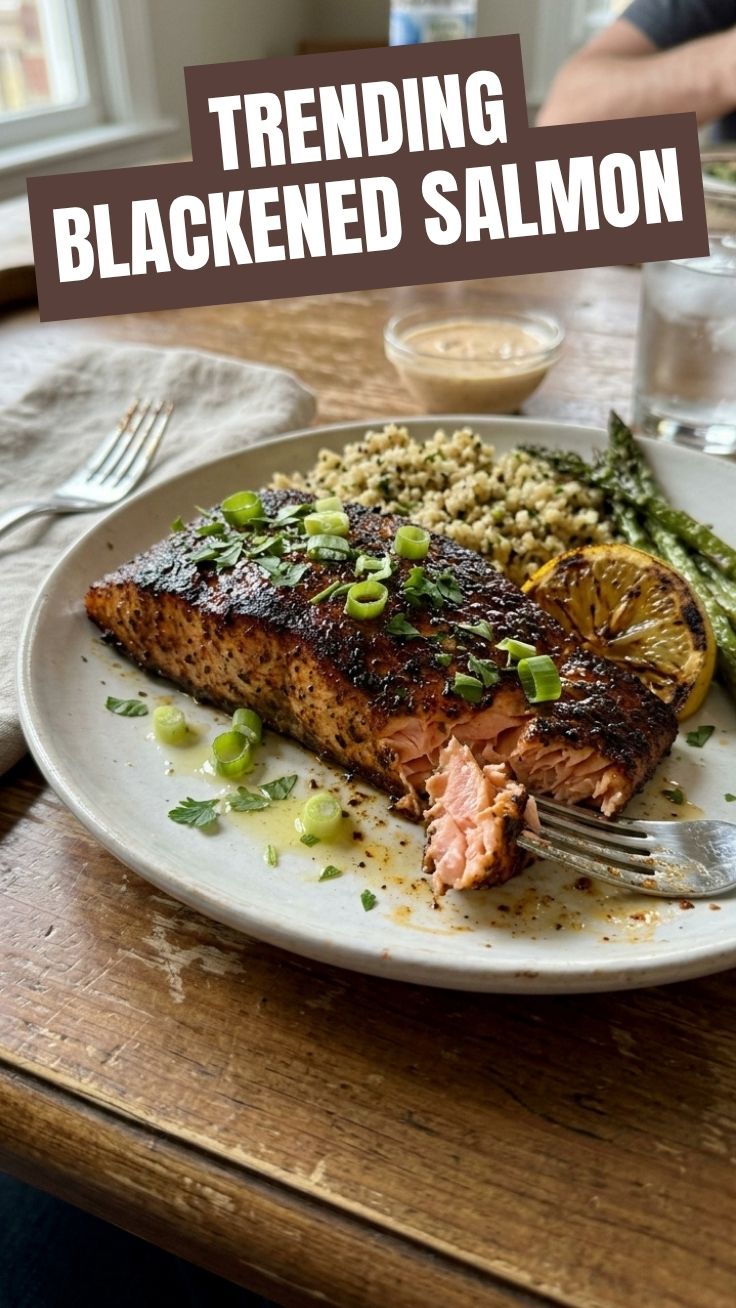
3. Sear the fish: Place fillets skin-side down (if skin is on) or presentation side down. Cook 3–4 minutes without moving. You’ll hear a sizzle—that’s the magic of Blackened Salmon. The crust should turn deep mahogany, not burnt black.
4. Flip and finish: Turn carefully with tongs. Cook another 3–4 minutes for medium (125°F internal). For Cajun Salmon, you want a slightly thicker crust and a hint of char—add 30 seconds each side.
5. Rest on a plate for 3 minutes. The carryover heat will finish cooking while juices redistribute.
Pro tip: If the seasoning starts smoking excessively, lower heat slightly. Blackening is about controlled char, not incineration.
—
Nutritional Benefits & Advantages
Salmon is a superstar of omega-3 fatty acids (EPA and DHA), supporting heart and brain health. A 6-ounce fillet provides about 40g protein, 22g fat (mostly healthy), and only ~350 calories. The blackening spice blend adds antioxidants from paprika and oregano, while cayenne boosts metabolism. This dish fits low-carb, keto, and paleo lifestyles. Compared to fried fish, blackening uses minimal fat—just a touch of butter for browning.
—
Tips Variations & Cooking Advice
| Variation | Swap |
|———–|——|
| Dairy-free | Use avocado oil or ghee instead of butter. |
| Gluten-free | The seasoning is naturally gf. |
| Milder heat | Reduce cayenne to ¼ tsp, add smoked paprika. |
| Cajun twist | Add ½ tsp file powder and extra thyme for authentic Cajun Salmon. |
| Air fryer method | Preheat 400°F, cook 8 minutes, flip halfway. No cast iron needed. |
Pro move: For extra depth, finish with a squeeze of lemon and a pat of cold butter right before serving.
—
Common Mistakes to Avoid
| Mistake | Fix |
|———|—–|
| Wet fish | Pat dry thoroughly. Season only when dry. |
| Skillet not hot enough | Wait until butter froths and sizzles. |
| Overcrowding | Cook in batches if needed. Steam ruins crust. |
| Overcooking | Use a thermometer; salmon continues cooking off heat. |
| Burnt seasoning | If spices burn, reduce heat and wipe skillet clean between batches. |
—
Storage & Meal Prep Tips
– Refrigerate: Store cooled fillets in an airtight container for up to 3 days. Place a paper towel underneath to absorb moisture.
– Freeze: Wrap individually in plastic wrap, then foil, for up to 2 months. Thaw overnight in fridge.
– Reheat: Best in a hot skillet with a splash of water and covered for 2 minutes, or air fryer at 350°F for 3 minutes. Avoid microwave—it turns the crust soggy.
Meal prep: Make the spice blend in bulk. Season fillets and freeze raw. Cook straight from frozen, adding 2 minutes per side.
—
Conclusion
Now you hold the recipe for Blackened Salmon that rivals any restaurant—those crispy, smoky edges, the juicy center, and the bold spice that dances on your tongue. By following the high-heat searing technique and using a quality cast-iron skillet, you’ll achieve that coveted crust every time. And if you’re craving a Louisiana-style kick, try the sister recipe of Cajun Salmon for an even bolder, earthier flavor. Give this recipe a spin this week, snap a photo of your masterpiece, and share it with friends—or leave a comment below with your own twist. Happy blackening!
—
FAQs
Q1: Can I use frozen salmon for blackening?
A: Yes, but thaw completely and pat very dry. Frozen fish releases more water, which can prevent crust formation.
Q2: Why is my blackening seasoning bitter?
A: Over-toasted spices. Reduce heat slightly and use a light hand with cayenne and thyme. Also, never add sugar—it burns and becomes acrid.
Q3: How do I make it less spicy without losing flavor?
A: Replace cayenne with smoked paprika or ancho chili powder. The blackened effect comes from heat, not necessarily heat—smoke works too.
Q4: Can I use salmon with the skin on?
A: Absolutely. Skin-side down first helps protect the flesh and renders delicious crispy skin. Just ensure skin is dry before seasoning.
Q5: How long can I store the leftover spice blend?
A: In an airtight jar, away from light, up to 6 months. Make a double batch—it’s also great on chicken, shrimp, or tofu.
Proven way to grow a perfect Blackened Salmon meal
Ingredients
Equipment
Method
- Pat the salmon fillets dry with paper towels to ensure a crispy crust during cooking.
- Generously season both sides of the salmon fillets with blackening seasoning, pressing it gently to adhere.
- Heat olive oil in a heavy-bottomed skillet or cast iron pan over medium-high heat until shimmering and almost smoking.
- Carefully place the seasoned salmon fillets skin-side down in the hot skillet.
- Cook for 3-5 minutes on each side, or until a dark, crusty blackening has formed and the salmon is cooked through and flakes easily with a fork.
- Remove the salmon from the skillet and serve immediately with your favorite sides like roasted vegetables or a fresh salad.