Why This Sticky, Savory, and Fast Teriyaki Salmon Will Become Your Weeknight Hero
Have you ever craved restaurant-quality Asian flavors but felt too tired to tackle a complicated recipe? You are not alone. The secret to a perfect balance of salty, sweet, and umami lies in a dish that takes less than 30 minutes from start to finish. Preparing Teriyaki Salmon at home not only saves you money but also gives you full control over the quality of ingredients, sodium levels, and doneness. By mastering this recipe, you unlock a versatile technique that works for busy weeknights and impromptu dinner parties alike. Plus, if you are looking for more inspiration, a collection of easy salmon recipes will keep your meal rotation fresh and exciting.
—
Ingredients & Kitchen Tools
Main Ingredients
– 4 salmon fillets (6 oz each) – Skin-on preferred; the skin crisps up beautifully and helps lock in moisture.
– ½ cup low-sodium soy sauce – Use tamari for gluten-free.
– ¼ cup honey – Balances the saltiness; substitute with maple syrup or brown sugar.
– 2 tablespoons rice vinegar – Adds mild acidity.
– 1 tablespoon sesame oil – Offers a nutty aroma.
– 1 tablespoon fresh ginger (grated) – Do not substitute with dried; fresh gives the signature zing.
– 2 cloves garlic (minced) – Adjust to taste.
– 2 tablespoons cornstarch + 2 tablespoons water – For thickening the glaze.
– 1 tablespoon sesame seeds – Optional garnish.
– Sliced green onions – For freshness.
Kitchen Tools
– Medium bowl – For mixing the marinade.
– Whisk – To emulsify the sauce.
– Non-stick skillet – Cast iron or well-seasoned carbon steel works best.
– Tongs – For flipping the fillets without breaking.
– Spatula – If you need to loosen the skin.
– Basting brush – Optional but helpful for layering glaze.
Optional Substitutions
– Protein swaps – Chicken thighs or firm tofu work if you cut them to similar thickness.
– Sweetness control – Use coconut sugar or monk fruit for a lower glycemic option.
– No soy sauce? – Use coconut aminos for a soy-free version.
—
Prep Time & Cooking Schedule
– Marinating time: 10–15 minutes (do not exceed 20 minutes or the salt will start to “cook” the fish).
– Prep time: 5 minutes to mix the sauce and slice garnishes.
– Cook time: 8–10 minutes total (4–5 minutes per side).
– Resting time: 2 minutes off the heat before serving.
Plan ahead: If you are super tight on time, you can skip the marination and simply brush the sauce on while cooking — the flavor will still be satisfying, though slightly less deep.
—
Step-by-Step Instructions
1. Mix the teriyaki glaze: In your medium bowl, whisk together soy sauce, honey, rice vinegar, sesame oil, ginger, and garlic. Reserve ¼ cup for later basting.
2. Prepare the salmon: Pat the fillets dry with paper towels — moisture is the enemy of a good sear. Place them in a shallow dish and pour the remaining marinade over them. Let sit for 10–15 minutes at room temperature, flipping once.
3. Search for the perfect sear: Heat your skillet over medium-high heat. Add a tiny splash of oil. Place the fillets skin-side down first. Let them cook undisturbed for 4 minutes. The skin will turn golden brown and release easily.
4. Flip and glaze: Using your tongs, gently flip the fillets. Brush with the reserved marinade. Cook for another 3–4 minutes until the flesh flakes easily but is still translucent in the center (internal temperature reaches 125°F for medium, 135°F for well done).
5. Thicken the sauce: In a tiny bowl, mix cornstarch and water into a slurry. Remove the salmon from the pan and set aside. Pour the leftover pan juices and the slurry into the skillet. Whisk over low heat for 1 minute until glossy and thickened.
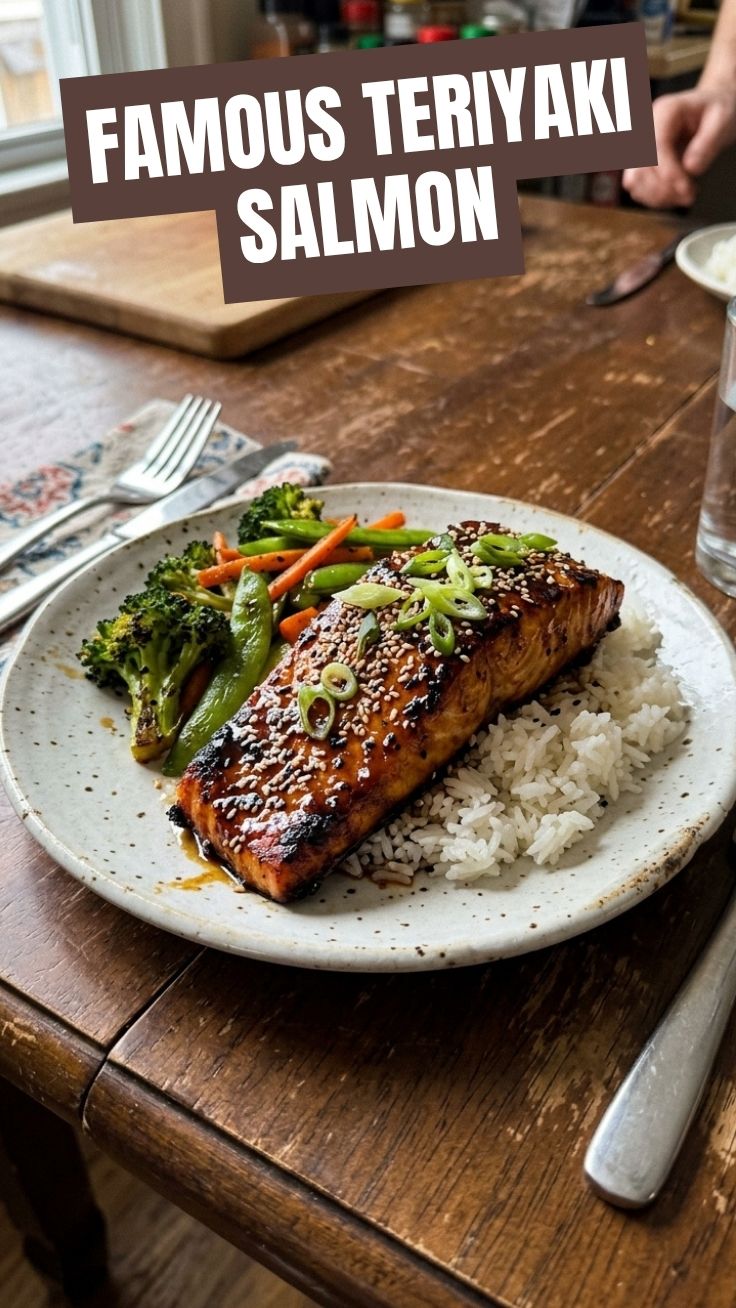
6. Finish and serve: Pour the thickened glaze over the salmon. Sprinkle with sesame seeds and green onions.
Tip: If you prefer a more intense caramelization, you can crank the heat for the last 30 seconds of cooking, but watch closely to avoid burning.
—
Nutritional Benefits & Advantages
This dish is a powerhouse of high-quality protein, healthy omega-3 fatty acids, and essential vitamins like B12 and D. A single 6-ounce serving provides roughly 35 grams of protein and only 300–400 calories depending on the exact honey ratio. The ginger and garlic offer anti-inflammatory properties, while the sesame oil contributes heart-healthy monounsaturated fats. Compared to deep-fried alternatives, pan-seared Teriyaki Salmon is a smarter, nutrient-dense choice that keeps you full longer.
—
Tips Variations & Cooking Advice
– Spicy twist: Add 1 teaspoon sriracha or red pepper flakes to the marinade.
– Air fryer method: Cook at 390°F for 8 minutes, flipping halfway — no need to flip if using parchment.
– Gluten-free: Swap regular soy sauce with tamari or coconut aminos.
– Dairy-free: The recipe is naturally dairy-free — just double-check your honey source.
– For bigger fillets: Increase each side by 1 minute and check doneness earlier.
—
Common Mistakes to Avoid
– Over-marinating: 20 minutes maximum, or the fish will become mushy.
– Crowding the pan: Give each fillet space — steaming ruins the caramelization.
– Flipping too early: If the skin sticks, wait another 30 seconds. It releases once a crust forms.
– Skipping the pat-dry step: Damp flesh steams instead of sears.
—
Storage & Meal Prep Tips
– Refrigeration: Store in an airtight container for up to 3 days. The glaze will thicken further.
– Freezing: Wrap each fillet individually in plastic wrap and freeze for up to 2 months. Thaw overnight in the fridge.
– Reheating: Heat a skillet over medium-low heat with a splash of water. Cover and steam for 3 minutes. This revives the moisture without burning the glaze. Avoid microwaving if possible — it dries out the fish.
—
Conclusion
We have just demystified the art of glossy, restaurant-caliber Teriyaki Salmon that you can replicate in your own kitchen with ease. This recipe proves that bold flavors do not require long simmering or exotic equipment. By sticking to the simple steps above — and pairing it with easy salmon recipes for future inspiration — you are set to enjoy a versatile, healthy protein that fits any schedule. I encourage you to try this tonight, snap a picture, and share your results. Your taste buds will thank you, and your dinner guests will ask for the recipe.
—
FAQs
1. Can I use frozen salmon for this recipe?
Yes, but thaw it completely in the refrigerator overnight. Pat it very dry before marinating to prevent excess water from diluting the sauce.
2. How do I prevent the teriyaki glaze from burning in the pan?
Keep the heat at medium-high rather than high, and do not leave the pan unattended while the glaze cooks down. You can also add the glaze in the final 2 minutes of cooking.
3. Can I make the sauce ahead of time?
Absolutely. Mix the base of soy sauce, honey, vinegar, ginger, and garlic up to 3 days ahead. Only add the cornstarch slurry right before you cook.
4. What if I do not have rice vinegar?
Apple cider vinegar or white wine vinegar are acceptable substitutes. Start with half the amount, taste, and adjust.
5. Why is my salmon dry and overcooked?
The most common culprit is cooking too long. Use a meat thermometer to remove the fish at 125°F (medium) and let carry-over cooking finish the process while it rests.
Proven way to grow 3 Teriyaki Salmon dishes
Ingredients
Equipment
Method
- Pat the salmon fillets dry with paper towels to ensure a crispier skin.
- In a bowl, whisk together teriyaki sauce, soy sauce, and honey to create the marinade.
- Place salmon in a shallow dish, pour marinade over, and let it marinate for at least 15 minutes, or up to 30 minutes in the refrigerator.
- Preheat your oven to 400°F (200°C) and line a baking sheet with parchment paper.
- Remove salmon from marinade, place on the prepared baking sheet, and bake for 12-18 minutes until cooked through and flaky.
- For the standard teriyaki salmon, simply garnish with sesame seeds and sliced green onions.
- For a ginger teriyaki variation, add grated ginger to the marinade for one fillet.
- For a spicier option, add a pinch of red pepper flakes to the marinade for a third fillet.
- Serve the salmon immediately with your favorite side dishes, like rice and steamed vegetables.