Master the Art of Texas BBQ Brisket at Home
Ever dreamt of that melt-in-your-mouth, smoky flavor of authentic Texas BBQ Brisket, but felt intimidated by the thought of making it at home? You’re not alone! Many home cooks shy away from tackling this iconic dish, believing it’s best left to the pitmasters. However, with the right guidance, techniques, and a dash of patience, you can absolutely create a show-stopping BBQ Brisket (Texas Style) in your own backyard. Preparing this culinary masterpiece yourself not only fills your home with an irresistible aroma but also allows you to control the quality of ingredients and personalize the flavor profile, ensuring a truly unforgettable dining experience. Forget expensive restaurant bills; the satisfaction of serving your very own perfectly cooked smoked brisket is priceless.
Ingredients & Kitchen Tools
To embark on your Texas BBQ Brisket journey, gather the following:
- Brisket (Full Packer, 12-15 lbs): Look for a well-marbled cut, often found at specialty butcher shops. The “fat cap” is crucial for moisture.
- Coarse-Ground Black Pepper (1/2 cup): The backbone of Texas brisket rub, providing a bold, peppery crust.
- Kosher Salt (1/4 cup): Balances the pepper and helps create a savory bark.
- Chili Powder (2 tbsp): Adds a subtle warmth and depth.
- Garlic Powder (1 tbsp): Enhances the savory profile.
- Onion Powder (1 tbsp): Contributes to the overall umami.
- Beef Broth or Apple Cider Vinegar (1 cup): For spritzing, maintaining moisture during the long cook.
- Wood Chunks/Pellets (Oak or Pecan recommended): Essential for that signature smoky flavor.
- Large Roasting Pan: To catch rendered fat and facilitate wrapping.
- Heavy-Duty Aluminum Foil or Butcher Paper: For the “Texas Crutch” – wrapping the brisket.
- Instant-Read Meat Thermometer: Crucial for accurate temperature readings and doneness.
- Sharp Carving Knife: For slicing against the grain.
- Gloves (Optional): For handling the hot brisket.
- Smoker (Pellet, Offset, or Electric): The primary cooking apparatus.
Prep Time & Cooking Schedule
- Prep Time: 30-45 minutes (Trimming & Rub Application)
- Cook Time: 10-16 hours (approximately 1 hour per pound at 225°F)
- Resting Time: 2-4 hours (absolutely essential for tender, juicy results)
Planning Your Cook: Brisket is a marathon, not a sprint. Start your cook well in advance, ideally the day before you plan to serve. Overnight smoking is common. The long resting period also needs to be factored in, so resist the urge to cut into it too soon!
Step-by-Step Instructions
1. Trim the Brisket: Carefully trim excess hard fat from the fat cap, leaving about 1/4 to 1/2 inch evenly across the surface. Remove any silver skin from the lean side. This helps the rub penetrate and prevents the fat from becoming rubbery.
2. Apply the Rub: In a small bowl, combine coarse-ground black pepper, kosher salt, chili powder, garlic powder, and onion powder. Generously coat all sides of the brisket with the rub, pressing it gently to adhere.
3. Preheat Your Smoker: Set your smoker to a consistent 225-250°F (107-121°C). Once preheated, add your wood chunks or pellets.
4. Smoke the Brisket (Phase 1 – The Stall): Place the brisket fat-side up (or towards the primary heat source) in the smoker. Smoke for approximately 6-8 hours, or until the internal temperature reaches 150-165°F (65-74°C). This is often when the “stall” occurs, where the temperature plateaus. Spritz with beef broth or apple cider vinegar every 60-90 minutes to keep it moist.
5. The Texas Crutch (Wrap): Once the stall hits and the bark has set (it should be dark and firm), remove the brisket. Wrap it tightly in heavy-duty aluminum foil or butcher paper. This helps push it through the stall and retain moisture. For a truly authentic BBQ Brisket (Texas Style), butcher paper is often preferred as it allows some airflow, maintaining a better bark.
6. Continue Smoking (Phase 2 – Finishing): Return the wrapped brisket to the smoker. Continue cooking at 225-250°F (107-121°C) until the internal temperature reaches 200-205°F (93-96°C) and it feels “probe tender” – the thermometer should slide in with little resistance, like soft butter. This usually takes another 4-8 hours. Patience is key for a truly tender smoked brisket.
7. Resting Period: This is perhaps the most critical step. Remove the brisket from the smoker and, still wrapped, place it in an empty cooler or oven (turned off) to rest for at least 2-4 hours. The internal temperature will continue to rise slightly, and the juices will redistribute, resulting in an incredibly juicy and tender cut.
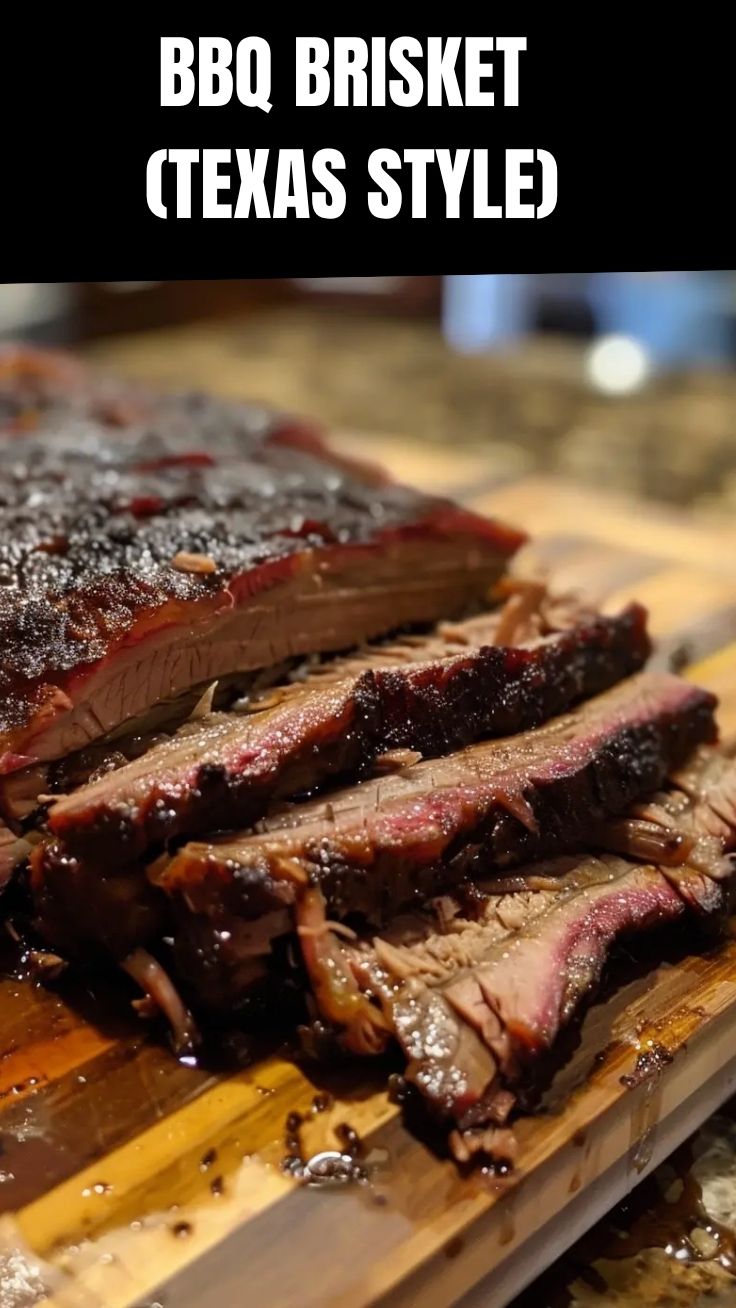
8. Slice and Serve: Carefully unwrap the brisket. Separate the “point” (fatty section) from the “flat” (leaner section) if desired, as they are often sliced differently. Slice against the grain, about pencil-thickness. Serve immediately!
Nutritional Benefits & Advantages
Brisket, while rich in flavor, can also offer nutritional benefits when consumed in moderation. As a red meat, it’s an excellent source of protein, essential for muscle repair and growth, and provides vital iron and B vitamins (especially B12), which are crucial for energy production and nerve function. The slow smoking process can also reduce the need for excessive fats in preparation compared to frying, and the absence of sugars often found in commercial BBQ sauces makes this Texas-style preparation a more naturally flavorful choice without added sweetness.
Tips, Variations & Cooking Advice
- Flavor Boost: For deeper flavor, consider injecting the brisket with beef broth or a seasoned marinade before applying the rub.
- The Rendered Fat: Don’t discard the rendered fat from the foil/butcher paper after resting! It’s liquid gold for making amazing gravies, chili, or even frying potatoes.
- Smoker Temperature Consistency: Maintaining a stable smoker temperature is vital. Invest in a good quality wireless thermometer for monitoring if your smoker doesn’t have a reliable built-in one.
- Varying Wood: While oak and pecan are traditional, cherry or apple wood can add a slightly sweeter, fruitier smoke profile.
- Spice Level: Adjust the chili powder to your preference for more or less heat.
Common Mistakes to Avoid
- Not Trimming Properly: Too much fat can prevent bark formation, too little can lead to dry brisket.
- Not Resting Long Enough: Impatience is the enemy of tender brisket. The resting period is non-negotiable.
- Slicing with the Grain: Always slice against the grain to maximize tenderness. Slicing with the grain results in stringy, tough meat.
- Opening the Smoker Too Often: “If you’re lookin’, you ain’t cookin’!” Each time you open the smoker, you lose heat and extend the cooking time.
- Over-Smoking: Too much smoke, especially early on, can lead to a bitter taste. Use wood sparingly, especially in the first few hours.
Storage & Meal Prep Tips
Leftover BBQ Brisket is a treasure! Store tightly wrapped slices in an airtight container in the refrigerator for up to 3-4 days. For longer storage, vacuum seal individual portions and freeze for up to 3 months. When reheating, it’s best to warm gently in a pan with a splash of beef broth, or low and slow in a foil packet in the oven, to prevent drying out. Brisket makes fantastic sandwiches, chili, tacos, or even a hearty breakfast hash.
Conclusion
Crafting a perfect BBQ Brisket (Texas Style) at home is a rewarding culinary journey that elevates your grilling game to pitmaster levels. With patience, attention to detail, and this comprehensive guide, you can confidently transform a challenging cut of meat into an incredibly tender, flavorful, and unforgettable meal. The rich, smoky essence of a well-prepared smoked brisket is a testament to the art of low-and-slow cooking. Don’t let the cook time intimidate you; the results are absolutely worth every minute. Try this recipe, share your magnificent creations with us in the comments below, and prepare to impress your family and friends with your newfound BBQ prowess!
FAQs
Q1: My brisket hit the stall at 155°F and won’t budge. What should I do?
A1: This is perfectly normal! The stall is caused by evaporative cooling. This is the ideal time to implement the “Texas Crutch” – wrap your brisket tightly in foil or butcher paper and return it to the smoker.
Q2: How do I know if my brisket is truly “probe tender”?
A2: Insert an instant-read thermometer or a thin skewer into various parts of the flat and point. It should slide in and out with very little resistance, similar to pushing it into room-temperature butter or a jar of warm peanut butter.
Q3: Can I make this a day in advance?
A3: Absolutely! Brisket is often even better the next day after it’s had more time for the flavors to meld. Cook and rest it fully, then let it cool before wrapping tightly and refrigerating. Reheat gently following the instructions above.
Q4: I don’t have a smoker. Can I make brisket in an oven or slow cooker?
A4: While you won’t achieve the authentic smoky flavor of a smoker, you can adapt the brisket for an oven (low and slow, often incorporating liquid smoke or smoked paprika in the rub) or a slow cooker. However, the texture and crust will be different.
Proven way to grow your BBQ Brisket (Texas Style) in 3 steps
Ingredients
Equipment
Method
- Trim the brisket of excess hard fat, leaving about 1/4 inch of fat on the flat for moisture, then generously season all surfaces with the coarse black pepper and kosher salt. Allow the brisket to sit at room temperature for about an hour before smoking.
- Preheat your smoker to a consistent temperature between 225-275°F (107-135°C), using oak wood for a traditional Texas flavor. Place the seasoned brisket fat-side up on the grates and smoke for approximately 6-8 hours, or until a dark, flavorful bark has formed.
- Once the bark is set, wrap the brisket tightly in unbuttered butcher paper or heavy-duty foil to retain moisture and continue cooking until it reaches an internal temperature of 200-205°F (93-96°C) and is probe-tender. After removing from the smoker, rest the wrapped brisket in an insulated cooler for at least 2-4 hours before unwrapping and slicing against the grain for serving.