Savory Balsamic Chicken: A Restaurant-Quality Dinner Made Simple
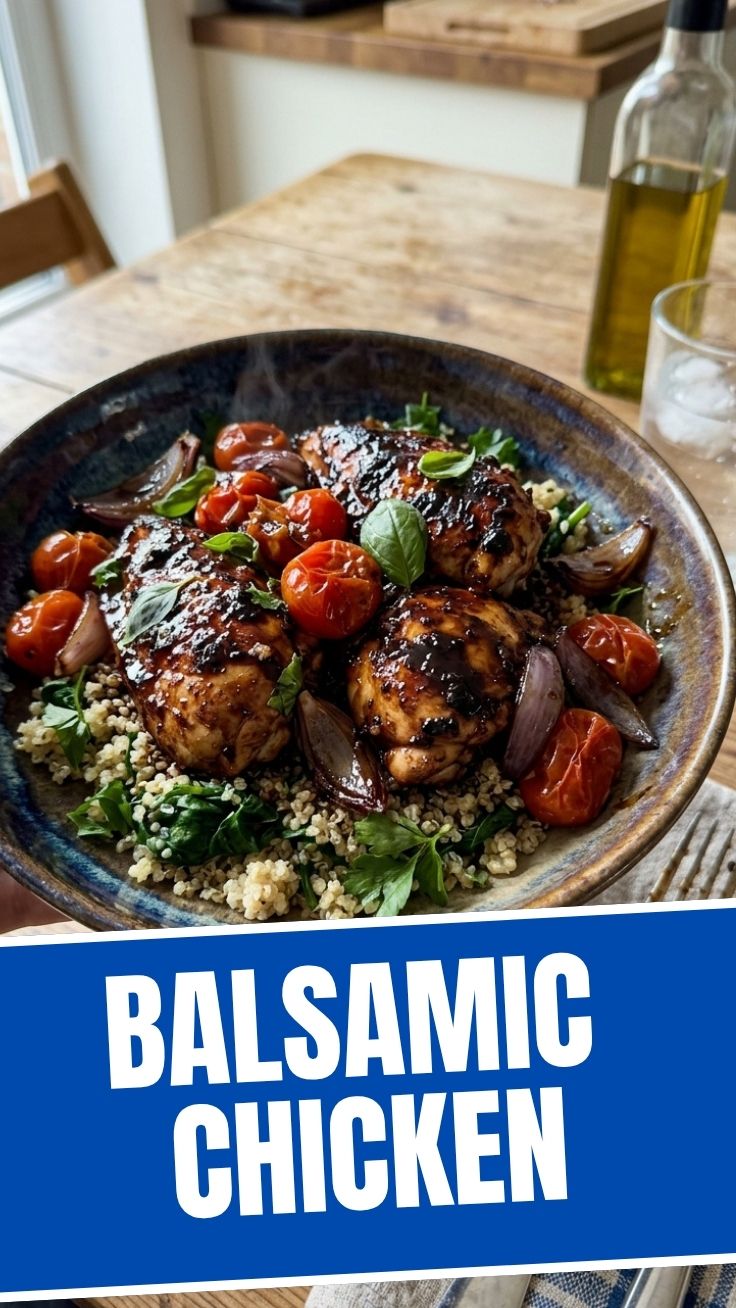
Have you ever craved a meal that feels both elegant and effortless—something that tastes like it simmered for hours but comes together in under 30 minutes? That’s exactly what this Balsamic Chicken delivers. By balancing sweet, tangy, and savory notes, this dish transforms humble chicken thighs into a showstopper. Preparing it at home not only saves money but lets you control the quality of every ingredient, from the olive oil to the balsamic glaze. Plus, the aroma alone will draw your family to the table. Let’s dive into the simple steps that make Balsamic Chicken a weeknight hero—and how a drizzle of balsamic glaze elevates it to company-worthy status.
Ingredients & Kitchen Tools
For the chicken:
– 4 boneless, skinless chicken thighs (or breasts—just adjust cook time)
– 2 tbsp olive oil (helps sear and prevents sticking)
– 3 garlic cloves, minced (fresh is best; pre-minced works in a pinch)
– 1/2 cup chicken broth (low-sodium gives you control over salt)
– 1/3 cup balsamic vinegar (choose a quality brand for deeper flavor)
– 2 tbsp honey (or maple syrup for a milder sweetness)
– 1 tsp dried oregano (or 1 tbsp fresh)
– Salt and black pepper, to taste
– Fresh basil or parsley for garnish
For the balsamic glaze (optional but recommended):
– 1/2 cup balsamic vinegar
– 2 tbsp brown sugar (or honey)
Kitchen tools:
– Large skillet or sauté pan (preferably nonstick or stainless steel)
– Tongs (for flipping chicken)
– Measuring cups and spoons
– Small saucepan (if making glaze from scratch)
– Meat thermometer (optional but ensures perfect doneness)
Substitutions: Swap chicken for pork chops or firm tofu; use tamari instead of salt for a gluten-free low-sodium twist. The balsamic glaze can be store-bought to save time.
Prep Time & Cooking Schedule
– Total time: 25 minutes
– Prep time: 5 minutes (mince garlic, measure liquids)
– Cook time: 15–18 minutes (sear + simmer)
– Resting time: 3–5 minutes after cooking (keeps juices intact)
– Optional marinating: 30 minutes to overnight for deeper flavor
Plan this dish for a busy weeknight: while the chicken simmers, you can boil pasta or steam green beans. The balsamic glaze can be made ahead and refrigerated for a week.
Step-by-Step Instructions
1. Pat the chicken dry with paper towels. Season both sides generously with salt and pepper. Drying ensures a golden crust.
2. Heat olive oil in a large skillet over medium-high heat. When it shimmers, add the chicken thighs skin-side down (if skin-on). Cook 4–5 minutes per side until browned. Do not crowd the pan—work in batches if needed.
3. Reduce heat to medium. Push chicken to one side, add garlic, and sauté 30 seconds until fragrant. Stir in chicken broth, balsamic vinegar, honey, and oregano. Scrape up any browned bits (they add flavor).
4. Return chicken to the center of the skillet. Bring the sauce to a gentle simmer, then reduce heat to low. Cover and cook 10–12 minutes until internal temperature reaches 165°F (74°C). For Balsamic Chicken that’s tender but not dry, avoid boiling the sauce too vigorously.
5. During the last 2 minutes, drizzle in balsamic glaze (store-bought or homemade) for a glossy finish. Taste sauce and adjust salt, pepper, or extra vinegar. If sauce is thin, remove chicken and let it reduce on high 2–3 minutes.
6. Rest the chicken on a cutting board for 3 minutes. Spoon pan sauce over each piece, garnish with fresh basil, and serve.
Pro tip: Use a meat thermometer to guarantee juicy results. The sauce should coat a spoon lightly—if too thick, add a splash of broth.
Nutritional Benefits & Advantages
– Protein-rich: One chicken thigh provides about 25g of protein, supporting muscle repair.
– Bone health: Balsamic vinegar contains polyphenols that may aid mineral absorption.
– Low-carb friendly: With zero grains, this dish fits keto and paleo lifestyles.
– Heart-healthy: Olive oil provides monounsaturated fats; the dish contains minimal saturated fat when using skinless poultry.
– Antioxidants: The balsamic glaze adds a dose of acetic acid compounds linked to reduced inflammation.
Compared to takeout versions, homemade Balsamic Chicken uses less sugar (about 6g per serving) and no artificial additives.
Tips, Variations & Cooking Advice
– Flavor twist: Add sun-dried tomatoes or capers with the garlic for a Mediterranean vibe.
– Ingredient swap: Replace honey with balsamic fig jam for a fruitier note.
– Cooking methods: Try the same recipe in an Instant Pot (10 minutes on high pressure, then natural release) or slow cooker (4 hours on low).
– Dietary adaptations: For gluten-free, use tamari instead of soy sauce (if added) and check broth label. Dairy-free by default.
– Portion changes: Halve the recipe for 2 servings—reduce liquid slightly (use 1/3 cup broth and 1/4 cup vinegar).
Common Mistakes to Avoid
– Skipping the sear: Without browning, chicken lacks depth. Pat it dry and don’t move it for 4 minutes.
– Overcooking: White meat breasts dry out fast; use a thermometer. Dark meat thighs can handle a few extra minutes but still monitor.
– Too much vinegar: Balance with honey; taste before adding extra acid.
– Burning the garlic: Add garlic after the chicken sears, not before, or it turns bitter.
– Sauce too thin: Let it simmer uncovered the last 2–3 minutes after removing chicken.
Storage & Meal Prep Tips
– Refrigeration: Store leftover Balsamic Chicken in an airtight container with sauce for up to 4 days.
– Freezing: Cool completely, then freeze in a zip-top bag (remove air) for up to 3 months. Thaw overnight in fridge.
– Reheating: Warm in a skillet over medium-low with 2 tbsp broth to restore moisture. Microwave is faster but may dry out the edges—cover with a damp paper towel.
– Meal prep: Cook a double batch on Sunday; serve with roasted vegetables and quinoa for weekday lunches. The balsamic glaze stays glossy even after reheating.
Conclusion
Bringing a restaurant-style dinner to your home kitchen is easier than you think. This Balsamic Chicken recipe proves that simple ingredients—when handled with care—yield extraordinary results. The tangy-sweet sauce, enhanced by a final drizzle of balsamic glaze, clings to each juicy bite, making every mouthful memorable. Whether you’re cooking for family or impressing guests, this dish delivers flavor without fuss. Give it a try this week, and don’t forget to share your results (or a photo!) in the comments. For more weeknight wonders, browse our other skillet chicken recipes.
FAQs
1. Can I use chicken breasts instead of thighs?
Yes, but reduce cooking time to 8–10 minutes after simmering, and use a meat thermometer to avoid dryness. Slice the breasts in half horizontally for even cooking.
2. How can I thicken the sauce without flour?
Let the sauce reduce uncovered after removing chicken. Alternatively, stir in 1 tsp cornstarch mixed with 1 tbsp cold water during the final 2 minutes.
3. Is balsamic glaze the same as balsamic vinegar?
No. Balsamic glaze is a reduced, sweetened syrup thicker than vinegar. You can make it by simmering 1/2 cup balsamic vinegar with 2 tbsp brown sugar until syrupy (5–7 minutes).
4. What side dishes pair well?
Creamy polenta, roasted asparagus, garlic mashed potatoes, or a simple arugula salad with lemon vinaigrette.
5. Can I make this dairy-free?
Absolutely—this recipe is naturally dairy-free as written. Just ensure your broth doesn’t contain milk solids.
Best way to grow 5-Star Balsamic ChickenBalsamic Chicken
Ingredients
Equipment
Method
- Season chicken breasts with salt and pepper on both sides.
- In a small bowl, whisk together balsamic vinegar, chicken broth, honey, and minced garlic.
- Heat olive oil in a large skillet over medium-high heat.
- Add chicken to the skillet and cook for 5-7 minutes per side, until golden brown and cooked through.
- Pour the balsamic mixture over the chicken, bring to a simmer, and cook for 5-7 minutes, flipping once, until the sauce thickens and coats the chicken.
- Remove chicken from skillet and let rest for a few minutes before slicing.
- Pour remaining sauce over the chicken and serve immediately.