Why Homemade Greek Salad Beats Every Restaurant Version
Have you ever wondered why the Greek Salad you order at a restaurant tastes impossibly fresh, yet somehow lacks that personal touch you crave? The secret isn’t in expensive ingredients or complex techniques—it’s about controlling quality, balancing flavors, and understanding the Mediterranean philosophy of simple, bold food. Preparing this iconic dish at home transforms a side note into a main-event meal that saves money, reduces waste, and lets you customize every bite. The Greek Salad Recipe you’ll master here isn’t just about chopping vegetables; it’s about unlocking a flavor profile that’s simultaneously tangy, briny, creamy, and herbaceous.
—
Ingredients & Kitchen Tools
Fresh Produce
– 3 large ripe tomatoes – Use Roma or vine-ripened; avoid mealy winter tomatoes
– 1 English cucumber – Partially peeled (striped) to reduce bitterness
– 1 red onion – Thinly sliced; soak in cold water 10 minutes to mellow sharpness
– 1 green bell pepper – Seeded and sliced into rings
– ¼ cup Kalamata olives – Pit them for safety; use Castelvetrano for a milder flavor
– 4 oz high-quality feta cheese – Block-style in brine, not pre-crumbled
Dressing Essentials
– 3 tbsp extra-virgin olive oil – Must be fruity, not grassy
– 1 tbsp red wine vinegar – Substitute lemon juice for brighter acidity
– 1 tsp dried oregano – Rub between palms to release oils
– Salt and black pepper – Sea salt flakes preferred
Tools
– Large mixing bowl – Wooden or ceramic to avoid metallic taste
– Sharp chef’s knife – Dull blades crush tomato cells
– Cutting board – Non-porous material prevents staining
– Salad spinner – Dries lettuce (if adding) for dressing adhesion
– Mandoline slicer – Optional for paper-thin onion rings
> Substitution Note: Dairy-free? Omit feta and add ½ cup marinated white beans for creaminess.
—
Prep Time & Cooking Schedule
– Active prep time: 15 minutes
– Resting time (optional): 10 minutes (allows flavors to meld)
– Total: 25 minutes
Plan this salad after your main dish is almost ready—it’s best served within 30 minutes of assembling. If you’re prepping for a party, chop vegetables up to 6 hours ahead but never dress until serving. The tomatoes release juice that waters down the dressing, turning crisp ingredients soggy.
—
Step-by-Step Instructions
1. Prepare the vegetables
Cut tomatoes into 1.5-inch wedges – smaller pieces release too much liquid. Halve cucumber lengthwise, then slice into half-moons about ½-inch thick. Place both in your mixing bowl.
2. Handle the onion
Slice red onion into thin rings, then submerge in ice water for 10 minutes. This removes harsh sulfur compounds while keeping crunch. Drain well and pat dry before adding to the bowl.
3. Assemble the salad elements
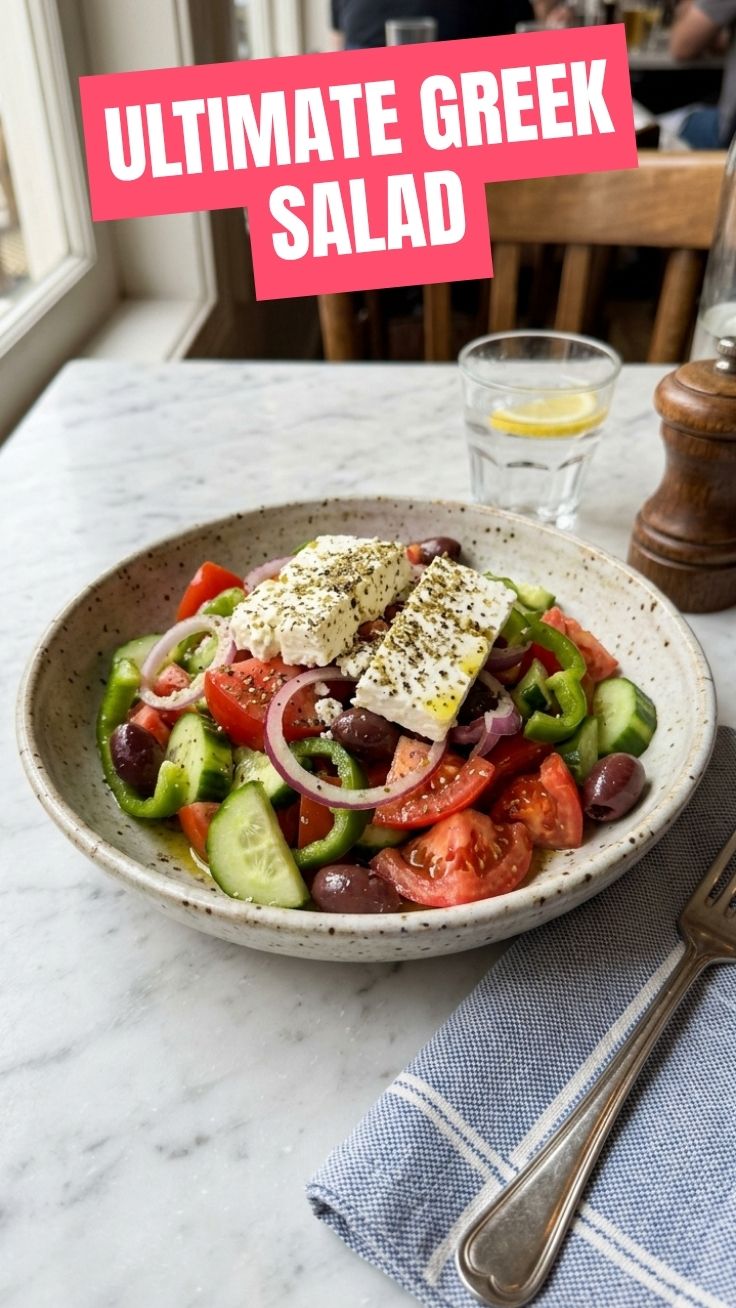
Add bell pepper rings and Kalamata olives. Do not crumble the feta – cut it into ½-inch cubes or place a thick slab on top. This preserves its texture and creates visual contrast.
4. Make the dressing
Whisk olive oil, red wine vinegar, oregano, salt, and pepper in a small bowl. Taste and adjust – the dressing should make you pucker slightly from acidity. The classic Greek Salad Recipe relies on this balance; too much oil masks the vegetables.
5. Toss and serve
Pour dressing over vegetables, then gently fold with your hands (not a spoon – hands distribute dressing evenly without bruising). Garnish with extra oregano. Serve immediately. The Greek Salad achieves perfection when the feta is still cold and the tomatoes are at room temperature – a deliberate contrast that wakes up your palate.
—
Nutritional Benefits & Advantages
This salad is a nutrient powerhouse without being heavy:
– Lycopene boost – Cooked tomatoes usually provide more lycopene, but raw tomatoes here offer vitamin C that cooking destroys. Eating them with olive oil increases absorption by 4x.
– Hydration support – Cucumbers are 96% water, making this salad ideal for hot weather or post-workout recovery.
– Bone health – Feta cheese provides 30% of your daily calcium per serving, plus phosphorus for bone density.
– Heart-friendly fats – Olive oil and olives deliver monounsaturated fats that lower LDL cholesterol.
– Low glycemic impact – Despite being low-carb, the fiber from peppers and cucumbers prevents blood sugar spikes.
> Dietary advantage: Naturally gluten-free, vegetarian, and keto-friendly when portioned appropriately.
—
Tips Variations & Cooking Advice
Flavor Twists
– Herb infusion – Add fresh dill or mint (not traditional but brightens winter tomatoes)
– Protein addition – Top with grilled chicken, seared tuna, or chickpeas for a complete meal
– Spice kick – Sprinkle crushed red pepper or sumac instead of oregano
Dietary Adaptations
– Dairy-free – Replace feta with marinated tofu or cashew cheese
– Low-sodium – Rinse olives before adding; use salt-free seasoning blends
– Nut-free – This recipe is naturally nut-free, but watch store-bought dressings for hidden nuts
Cooking Methodology
– Grilled version – Char pepper and onion slices on a grill pan for 3 minutes before assembling
– Deconstructed platter – Serve vegetables, feta, olives, and dressing separately for guests to build their own
—
Common Mistakes to Avoid
| Mistake | Consequence | Solution |
|———|————-|———-|
| Overchopping | Vegetables release too much water | Cut tomatoes into wedges, not dice |
| Dressing too early | Soggy texture within 20 minutes | Dress only when ready to serve |
| Pre-crumbled feta | Gummy texture, less flavor | Always buy block feta in brine |
| Skipping salt step | Flat, one-dimensional taste | Salt tomatoes and cucumbers directly before adding dressing |
> Pro tip: If your tomatoes are pale or out of season, add ½ teaspoon of sugar to the dressing – it mimics natural sweetness without overpowering the dish.
—
Storage & Meal Prep Tips
Refrigeration
– Store undressed vegetables in an airtight container for up to 48 hours. Keep feta separate in its brine.
– Dressed leftovers last 4–6 hours max – the cucumbers become limp, and tomatoes release water.
Can you freeze Greek salad?
No – freezing destroys the cellular structure of cucumbers and tomatoes. If you must preserve components, freeze only the diced vegetables (without dressing and feta) for use in cooked dishes like soups or stews.
Reheating
This salad is always served cold. Never microwave – it turns feta rubbery and vegetables mushy.
Meal prep strategy
Chop all vegetables Sunday, store in separate containers. Marinate olives in olive oil and oregano for extra flavor. On serving day, assemble and dress. This cuts active time to 3 minutes per serving.
—
Conclusion
Mastering this Greek Salad at home is about more than following steps – it’s understanding why each element matters: the cold feta against room-temp tomatoes, the briny pop of olives cutting through creamy olive oil, and the restraint of not over-seasoning. When you make this Greek Salad Recipe your own, you’re not just feeding yourself; you’re embracing a Mediterranean tradition where fewer ingredients, handled with care, produce exponentially more flavor. Try it tonight, taste the difference, and share your version with friends – they’ll never order another sad restaurant salad again.
—
FAQs
Can I use lemon juice instead of red wine vinegar?
Yes, but reduce the amount to 2 teaspoons. Lemon is more acidic and brighter, which pairs better if you’re adding fresh herbs like dill.
My feta broke apart when mixing. What went wrong?
You likely used pre-crumbled feta, which contains anti-caking agents that prevent melting but also create mushiness. Always buy block feta and add it as a large piece on top rather than mixing it in.
Is it okay to add lettuce?
Traditional Greek salad does not include lettuce – it’s considered an Italian influence. If you add romaine, double the dressing and serve immediately, as lettuce wilts fast.
How do I make this a complete meal?
Add 1 cup of quinoa or farro for grains, or 6 ounces of grilled chicken/salmon. The protein converts this from a side dish to a 30-minute dinner.
Can I prepare the dressing a day ahead?
Absolutely – it actually improves as oregano infuses the oil. Store in a sealed jar at room temperature (olive oil solidifies when cold). Shake vigorously before using.
Best way to grow with a perfect Greek Salad: 5 fresh twists
Ingredients
Equipment
Method
- Combine diced cucumber, tomato wedges, thinly sliced red onion, pitted Kalamata olives, and crumbled feta cheese in a large bowl. Gently toss to mix all the ingredients evenly.
- In a small bowl, whisk together extra virgin olive oil, lemon juice, dried oregano, salt, and black pepper until well combined. This creates a zesty and aromatic dressing for the salad.
- For Twist 1 (Mediterranean Chickpea), add rinsed and drained canned chickpeas to the salad. For Twist 2 (Spicy Feta), sprinkle red pepper flakes over the salad for a kick. For Twist 3 (Grilled Halloumi), grill sliced halloumi cheese until golden brown and add it to the salad. For Twist 4 (Sun-Dried Tomato & Arugula), mix in chopped sun-dried tomatoes and fresh arugula. For Twist 5 (Roasted Bell Pepper), incorporate roasted and sliced bell pepper into the salad.
- Pour the lemon-herb vinaigrette over the salad and toss gently to coat all ingredients. Serve immediately and enjoy your customized Greek salad with fresh twists.