Here is your professionally crafted, SEO-optimized blog post.
—
Have you ever wondered why the store-bought version of this iconic chilled soup tastes flat, metallic, or watery? The secret lies in the harmony of sun-ripened produce and quality olive oil—elements that shine only when you control the process. Preparing a Gazpacho (Classic) at home is not only cost-effective but also allows you to fine-tune the acidity, texture, and freshness to your exact palate. This Spanish recipe is a culinary staple that transforms simple raw vegetables into a symphony of flavor, making it a perfect make-ahead meal for busy weeknights or a refreshing starter for summer gatherings.
Ingredients & Kitchen Tools
Ingredients:
– 2 lbs ripe Roma or vine tomatoes (cored and roughly chopped): The backbone of the soup; use the ripest you can find for natural sweetness.
– 1 English cucumber (peeled and seeded): Adds a cool, grassy freshness.
– 1 green bell pepper (seeded and chopped): Provides a slightly bitter, herbaceous note.
– 1 small red onion (roughly chopped): For a gentle pungency.
– 2 cloves garlic (minced): Start with less if you prefer a milder finish.
– 3 oz stale crusty bread (crust removed, soaked in water): This thickens the soup and gives it a silky mouthfeel. For a gluten-free version, omit the bread and add half an avocado.
– 1/4 cup extra-virgin olive oil (preferably Spanish Picual or Arbequina): The primary fat source and flavor emulsifier.
– 2 tbsp sherry vinegar (or red wine vinegar): Balances the sweetness of the tomatoes.
– 1 tsp fine sea salt (plus more to taste).
– 1/2 tsp cumin (optional, for earthiness).
– Cold water (as needed for consistency).
Kitchen Tools:
– High-speed blender or food processor.
– Large mixing bowl.
– Fine-mesh strainer (if you prefer a silky, seedless texture).
– Chef’s knife and cutting board.
– Rubber spatula.
Prep Time & Cooking Schedule
– Prep time: 20 minutes (chopping and blending).
– Chilling time: Minimum 2 hours (preferably 4–6 hours or overnight).
– Total time: ~4 hours 20 minutes.
Context: Unlike a hot soup that cooks down flavors, this dish relies on infusion. The resting period is critical—it allows the garlic and vinegar to mellow, the olive oil to coat the particles fully, and the flavors to marry into a cohesive, velvety soup. Plan to make it early in the day and serve it after a trip to the pool or a long walk.
Step-by-Step Instructions
1. Soften the Bread: In a small bowl, soak the crustless bread in cold water for 5 minutes. Squeeze out the excess water and set aside. This step ensures the soup is creamy rather than gritty.
2. Base Blend: In a blender, combine the tomatoes, cucumber, bell pepper, onion, and garlic. Pulse until you have a chunky puree.
3. Emulsify: Add the squeezed bread, olive oil, sherry vinegar, salt, and cumin (if using). Blend on high for 2–3 minutes. For the most authentic Gazpacho (Classic), you want a smooth, emulsified texture that looks like a rich tomato sauce.
4. Adjust Seasoning: Taste the mixture. It should be slightly stronger in salt and vinegar than you expect—chilling will mute the flavors. Add a splash of cold water (about 1/4 cup) if it is too thick to flow like heavy cream.
5. Chill Transfer: Pour the soup into a glass or ceramic bowl (metal can add a metallic taste). Cover tightly and refrigerate for at least 2 hours. This traditional Spanish recipe demands patience; the transformation during chilling is where the magic happens.
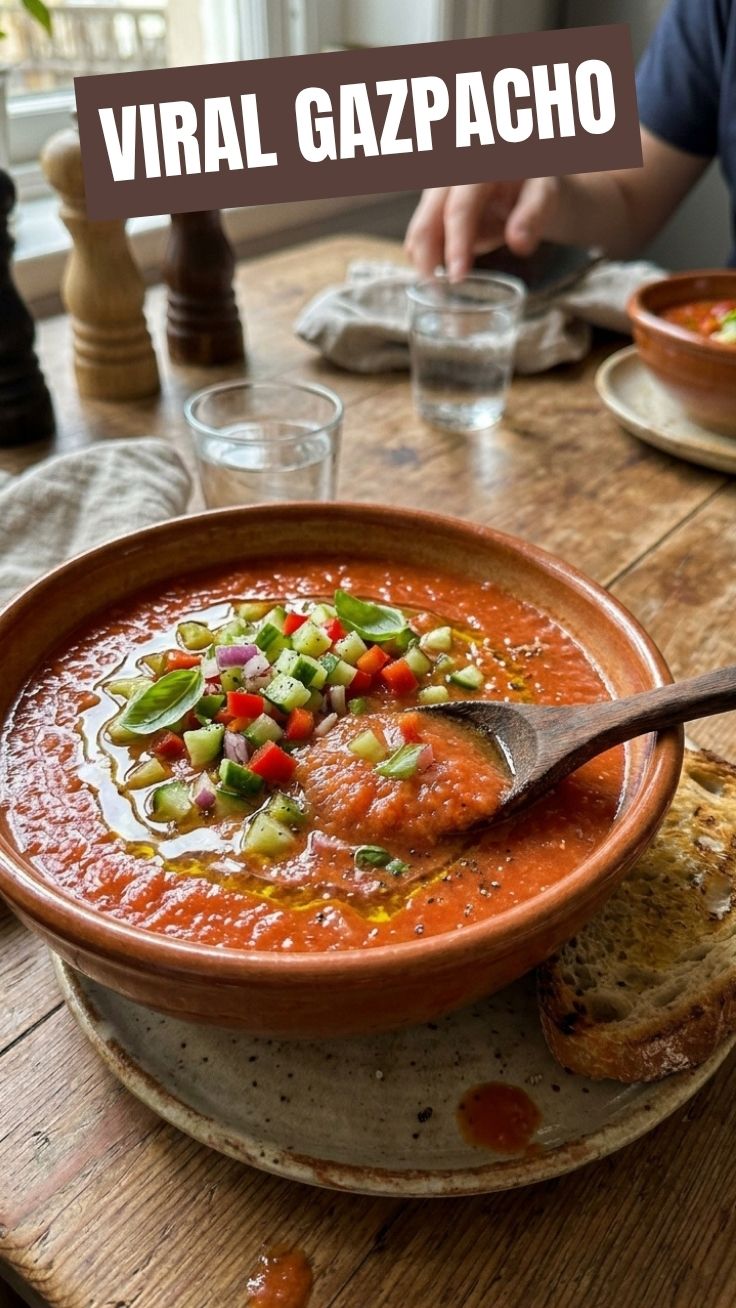
6. Final Serve: Serve the soup ice-cold in chilled bowls. Drizzle with a teaspoon of olive oil and top with finely diced cucumber and croutons.
Nutritional Benefits & Advantages
This dish is a powerhouse of nutrition because it is entirely raw. A single serving provides over 200% of the daily value for Vitamin C from the tomatoes and bell pepper, supporting immune health. The high water content (over 90%) makes it incredibly hydrating—ideal for summer. The monounsaturated fats from olive oil improve the absorption of lycopene, a potent antioxidant linked to heart health and reduced inflammation. It is also naturally gluten-free (if you omit the bread or swap for avocado), vegan, and low in calories yet deeply satiating.
Tips Variations & Cooking Advice
– Smoky Twist: Use fire-roasted tomatoes or add 1/2 teaspoon of smoked paprika.
– Spicy Kick: Include a small serrano or jalapeño pepper (seeded) in the blend.
– Texture Swap: For a chunkier “rustic” version, reserve 1/2 cup of the raw chopped vegetables and stir them in after blending.
– Dairy-Free Garnish: Instead of sour cream, garnish with a dollop of cashew cream or a sprinkle of toasted almonds.
– Dilution Warning: If you use very watery tomatoes, reduce the added water. The goal is a luscious, not watery, consistency.
Common Mistakes to Avoid
– Using unripe, watery tomatoes: This is the number one failure. Tomatoes should be red, fragrant, and slightly soft to the touch.
– Skipping the chill time: A warm gazpacho tastes flat and harsh. The cold is a necessary ingredient.
– Over-blending the olive oil: If you blend too aggressively for too long, the oil can become bitter and “broken.” Stop as soon as it is smooth.
– Measuring vinegar by eye: Use the sherry vinegar exactly. Too much makes it sour; too little makes it boring. Start with 2 tablespoons, taste, and add more only if needed.
– Adding too much garlic: Raw garlic can easily overpower. If you love garlic, start with 2 cloves and let the soup sit for an hour before deciding to add more.
Storage & Meal Prep Tips
– Refrigeration: Store in a sealed glass jar or airtight container. It stays fresh for 4–5 days. The flavor actually improves on day 2.
– Freezing: You can freeze gazpacho, but the texture may become slightly separated after thawing. If you do freeze, leave out the olive oil and blend it in fresh after thawing.
– Reheating: Do not reheat. Serve directly from the fridge. If it has separated slightly after storage, give it a quick whisk or shake in a jar to re-emulsify.
Conclusion
Mastering this effortless Spanish recipe is about respecting the raw ingredients and letting time do the work for you. With just 20 minutes of active effort, you unlock a deeply flavorful, nutrient-dense meal that feels luxurious. Whether you are looking for a quick lunch prepper or a sophisticated dinner party starter, this Gazpacho (Classic) delivers every time. I encourage you to try this recipe this week, snap a photo of your beautiful red soup, and share your results in the comments. Your blender and your taste buds will thank you.
Frequently Asked Questions
1. Can I use canned tomatoes?
Yes, in a pinch. Use high-quality fire-roasted canned tomatoes and reduce the vinegar slightly (canned tomatoes are often more acidic). The fresh texture will be less vibrant, but the flavor will still be solid.
2. Why is my gazpacho bitter?
Bitterness usually comes from the green bell pepper’s white pith or the olive oil. Ensure you remove all seeds and white membrane from the pepper. If the oil is old or low quality, switch to a fresh, fruity extra-virgin olive oil.
3. How can I thicken a watery gazpacho?
Stir in 1-2 tablespoons of almond flour or nutritional yeast, or add half an avocado and re-blend. The classic method is to add another small piece of soaked bread.
4. Can I make this without a blender?
A food processor works, but it will be more rustic. A traditional mortar and pestle (dorn) can be used, but it is labor-intensive. A high-speed blender is best for the silky emulsion.
5. How do I fix too much vinegar?
Stir in a pinch of sugar or a small piece of bread to absorb the sharpness. Let it sit for 15 minutes before tasting again. A tiny bit of raw honey works too.
Gazpacho (Classic)
Ingredients
Equipment
Method
- Combine roughly chopped tomatoes, peeled and chopped cucumber, seeded and chopped red bell pepper, minced garlic, and roughly chopped red onion in a large bowl. Add extra virgin olive oil, red wine vinegar, cold water, salt, and black pepper to the vegetables.
- Transfer the mixture to a blender and blend until completely smooth. If desired, pass the gazpacho through a fine-mesh sieve to remove any remaining pulp or seeds for a smoother consistency.
- Pour the blended gazpacho into a pitcher or a sealed container and refrigerate for at least 2 hours, or until thoroughly chilled. This allows the flavors to meld and intensify.
- Before serving, taste and adjust seasoning if necessary. Serve the gazpacho cold, garnished with a drizzle of olive oil, croutons, or finely diced vegetables.