The Ultimate Homemade Vegetable Soup: Nutritious, Easy & Delicious
Have you ever opened your fridge only to find a pile of wilting carrots, a lonely celery stalk, and an onion that’s seen better days? That’s exactly the moment when Vegetable Soup (Homemade) saves the day. There’s something profoundly satisfying about transforming humble leftovers into a steaming bowl of comfort—and doing it yourself is not only cheaper but also far healthier than store-bought versions. In fact, making from scratch lets you control every ingredient, reduce sodium, and pack in nutrients you actually enjoy. Whether you’re a seasoned cook or a kitchen beginner, this guide will walk you through creating a vibrant, flavorful soup that rivals any restaurant. And if you love exploring new kitchen ideas, check out our curated Soup Recipes for more inspiration.
—
Ingredients & Kitchen Tools
Essential Ingredients:
– 2 tbsp olive oil – for sautéing; use avocado oil if preferred.
– 1 medium onion, diced – builds the savory base.
– 3 garlic cloves, minced – adds aromatic depth.
– 2 large carrots, peeled and diced – natural sweetness and color.
– 2 celery stalks, diced – classic mirepoix crunch.
– 1 medium zucchini, diced – soft texture when cooked.
– 1 can (14 oz) diced tomatoes – fire-roasted for smokier flavor.
– 6 cups vegetable broth – low-sodium recommended; or use chicken broth.
– 1 cup green beans, trimmed and cut – tender bite.
– 1 cup frozen peas – add at end for freshness.
– 1 tsp dried thyme – earthy, warming.
– 1 tsp dried oregano – Italian herbal note.
– Salt and black pepper to taste.
– 2 bay leaves – remove before serving.
Optional substitutions: swap zucchini for bell pepper, add potatoes for heartiness, or use spinach instead of peas.
Kitchen Tools:
– Large soup pot or Dutch oven (5–6 quarts)
– Chef’s knife and cutting board
– Wooden spoon or silicone spatula
– Measuring cups and spoons
– Ladle
– Vegetable peeler (optional)
—
Prep Time & Cooking Schedule
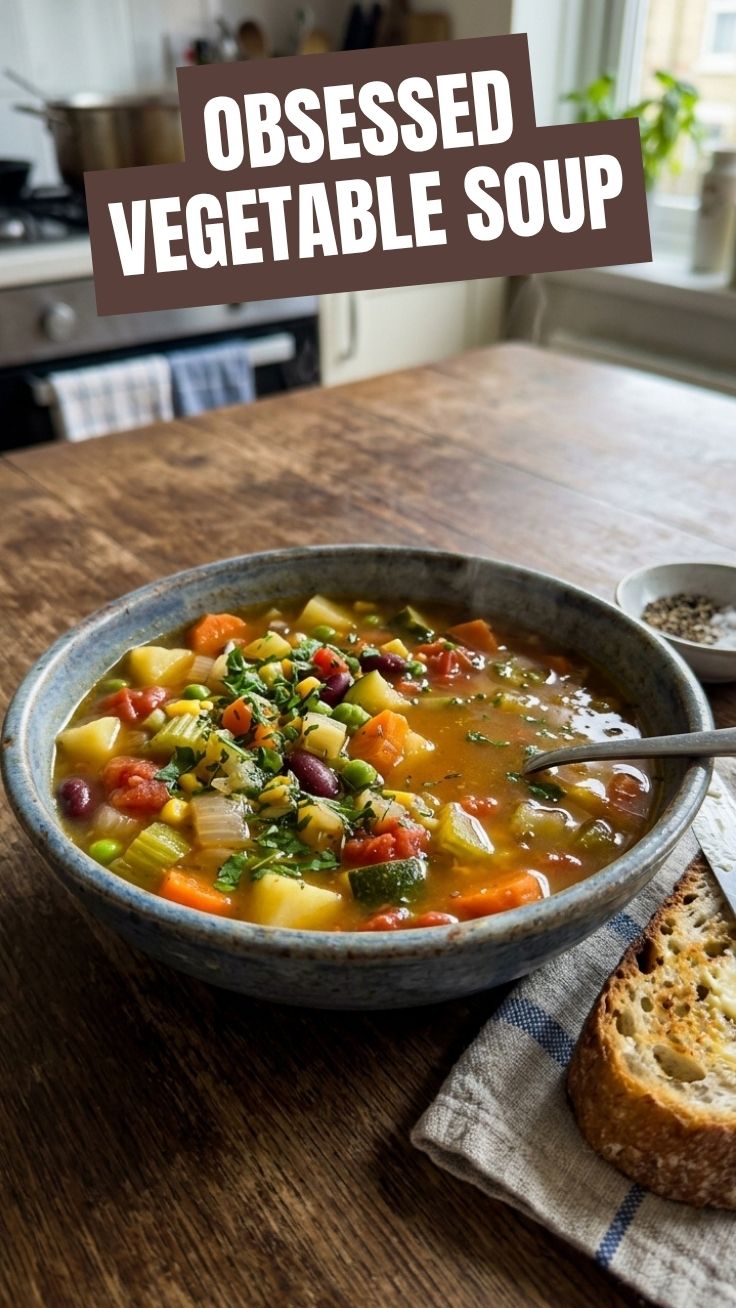
– Prep time: 15 minutes (wash, peel, chop all vegetables).
– Cook time: 30–35 minutes (sauté + simmer).
– Total time: ~50 minutes.
The soup needs about 10 minutes for flavors to meld after cooking, so plan accordingly. It’s perfect for a weeknight dinner—start chopping while the pot heats, and dinner is ready before you know it.
—
Step-by-Step Instructions
1. Sauté the aromatics: Heat olive oil in your pot over medium heat. Add onion, carrots, and celery. Cook 5–7 minutes until softened, stirring occasionally. This mirepoix forms the flavor backbone.
2. Add garlic and spices: Stir in garlic, thyme, and oregano for 30 seconds until fragrant.
3. Build the broth base: Pour in diced tomatoes (with juices) and vegetable broth. Add bay leaves. Bring to a boil, then reduce heat to low-medium.
4. Simmer the vegetables: Add zucchini and green beans. Simmer uncovered for 20 minutes, or until carrots are tender but not mushy.
5. Finish with peas: Stir in frozen peas and cook 2 minutes more. Season with salt and pepper to taste.
6. Rest and serve: Remove bay leaves. Let soup sit 5 minutes for flavors to deepen. Ladle into bowls and enjoy!
Temperature tip: Keep soup at a gentle simmer (small bubbles) to avoid overcooking vegetables. For a thicker broth, mash some of the cooked veggies with a fork before adding peas.
> Here, you’re mastering the art of Vegetable Soup (Homemade) —a recipe that’s both forgiving and rewarding. For more creative ideas, explore our Soup Recipes collection for global twists.
—
Nutritional Benefits & Advantages
This soup is a nutritional powerhouse. One bowl (approx. 1.5 cups) provides:
– Fiber: ~6g from carrots, green beans, and peas—supports digestion and fullness.
– Vitamin A: Over 100% DV from carrots, crucial for eye health.
– Vitamin C: ~25% DV from tomatoes and peas, boosting immunity.
– Low calorie: ~150–180 calories per serving, depending on oil and broth.
– Hydration: High water content keeps you refreshed.
The absence of heavy cream or excessive salt makes it heart-friendly, while the variety of phytonutrients (lycopene, beta-carotene) supports overall wellness. It’s naturally gluten-free and vegan—just ensure your broth is certified plant-based.
—
Tips Variations & Cooking Advice
– Flavor variations: Add a pinch of red pepper flakes for heat, or stir in a dash of smoked paprika for depth.
– Protein boost: Add cooked lentils, chickpeas, or shredded rotisserie chicken at the end.
– Herb swap: Use fresh basil or parsley instead of dried—stir in just before serving.
– Cooking methods: For an Instant Pot, sauté on Sauté mode, then pressure cook on High for 5 minutes with natural release. Slow cooker: sauté aromatics first, then cook on Low for 6–8 hours.
– Dietary adaptations: To make keto, omit carrots and peas; add cauliflower and mushrooms. For gluten-free, check broth label—most are safe.
—
Common Mistakes to Avoid
1. Overcooking vegetables – soggy soup. Solution: add softer veggies (zucchini, peas) later; keep simmer gentle.
2. Underseasoning – bland result. Solution: season layer by layer—salt the mirepoix, taste before serving, and add a squeeze of lemon for brightness.
3. Skipping the sauté – flat flavor. Solution: don’t rush this step; browning onions and carrots releases natural sugars.
4. Using too much liquid – watery soup. Solution: start with 6 cups broth; add more only if needed after cooking.
5. Forgetting bay leaves – they add subtle herbal notes. Remove before serving or eating.
—
Storage & Meal Prep Tips
– Refrigerate: Cool soup completely, then store in airtight containers for up to 5 days. Flavor often improves the next day.
– Freeze: Portion into freezer-safe bags or jars (leave 1-inch headroom). Freeze for up to 3 months. Thaw overnight in fridge.
– Reheat: Warm on stovetop over medium-low heat, stirring occasionally. If soup thickens after freezing, add a splash of broth or water. Avoid boiling to prevent vegetable breakdown.
– Meal prep: Double the batch and freeze half for busy weeks. The soup also works well in thermoses for packed lunches.
—
Conclusion
Crafting Vegetable Soup (Homemade) is about more than just following steps—it’s about embracing flexibility, using what you have, and enjoying a bowl packed with real nutrition and flavor. Whether you stick to this classic base or experiment with new ingredients, the result is always a comforting, satisfying meal. And don’t forget to browse our Soup Recipes for more ideas to expand your culinary repertoire. Now, grab your pot, chop those veggies, and let the simmering begin. Share your creations in the comments—we’d love to see your twist!
—
FAQs
1. Can I use frozen vegetables instead of fresh? Yes. Add frozen carrots and green beans directly to the pot during simmering; add frozen peas at the end as directed.
2. How can I make the soup more filling? Add 1 cup cooked quinoa, brown rice, or small pasta (like orzo) during the last 10 minutes of cooking.
3. My soup tastes bland. What went wrong? Likely under-seasoned. Add salt gradually, finish with a splash of lemon juice or apple cider vinegar to brighten flavors.
4. Can I make this soup in advance for a party? Absolutely. It actually tastes better the next day. Reheat gently and garnish with fresh herbs before serving.
5. Is this soup good for weight loss? Yes. It’s low-calorie, high-fiber, and nutrient-dense—perfect as a light meal or starter. Just watch portion sizes if you add high-calorie toppings like cheese or croutons.
Quick way to grow your Vegetable Soup (Homemade)
Ingredients
Equipment
Method
- Heat olive oil in a large pot or Dutch oven over medium heat.
- Add carrots, celery, and onion to the pot and sauté until softened, about 5-7 minutes. Stir in minced garlic and cook for another minute until fragrant.
- Pour in the vegetable broth and diced tomatoes. Add the diced potatoes, green beans, corn, basil, oregano, salt, and pepper. Bring the soup to a boil, then reduce heat and simmer for 20-25 minutes, or until the potatoes are tender.
- Taste and adjust seasonings as needed. Serve hot and enjoy!