The Ultimate Guide to Crispy Coconut Shrimp – Easy, Flavorful & Perfect Every Time
Have you ever ordered crispy coconut shrimp at a restaurant and wondered why it tastes so addictive—golden, sweet, and impossibly crunchy? The secret isn’t a deep fryer full of mystery oil; it’s the perfect balance of panko breadcrumbs, shredded coconut, and a quick pan-fry or air-fry technique that you can absolutely master at home. Preparing this tropical appetizer in your own kitchen not only saves money but lets you control the quality of ingredients and customize the spice level. Whether you’re hosting a party or craving a weeknight treat, mastering a reliable coconut shrimp recipe transforms simple shrimp into a showstopper. Let me walk you through every step for foolproof results.
—
Ingredients & Kitchen Tools
For the shrimp:
– 1 lb large raw shrimp (21–25 count), peeled and deveined, tails on for easy dipping
– ½ cup all-purpose flour (or gluten-free blend)
– 2 large eggs, beaten with 1 tbsp water
– 1 cup panko breadcrumbs (extra crunchy)
– ½ cup unsweetened shredded coconut (toasted for deeper flavor)
– ½ tsp salt, ¼ tsp black pepper, ¼ tsp garlic powder, ¼ tsp smoked paprika
For the dipping sauce (optional but recommended):
– ¼ cup sweet chili sauce
– 2 tbsp honey
– 1 tbsp fresh lime juice
Kitchen tools:
– Large mixing bowls (3)
– Whisk and fork
– Baking sheet lined with parchment or wire rack
– Deep skillet or air fryer
– Tongs or slotted spoon
– Paper towels for draining
Substitutions:
– Swap flour for cornstarch for extra crispiness.
– Use desiccated coconut if shredded isn’t available.
– For dairy-free, ensure panko is labeled dairy-free (most are).
—
Prep Time & Cooking Schedule
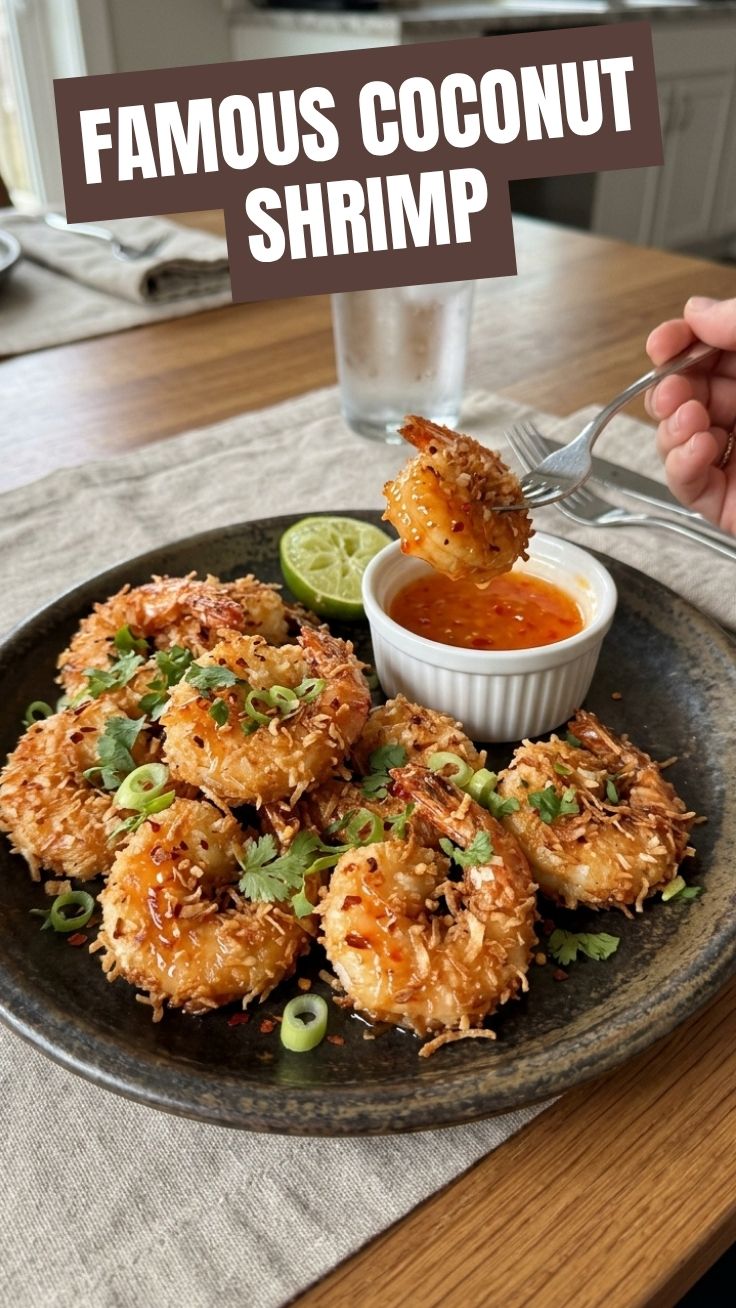
– Prep time: 15 minutes
– Cooking time: 8–10 minutes (pan-fry) or 10–12 minutes (air-fry)
– Resting time: 5 minutes on a wire rack after cooking to stay crispy
– Total time: ~30 minutes
Plan your schedule: Start by setting up your breading station and toasting the coconut if desired. While the oil heats (or the air fryer preheats), bread the shrimp. Cook in batches to avoid overcrowding. Serve immediately for peak crunch.
—
Step-by-Step Instructions
1. Prepare the shrimp: Pat shrimp dry with paper towels—moisture is the enemy of crispiness. Season lightly with salt and pepper.
2. Set up breading station:
– Bowl 1: Flour + garlic powder + smoked paprika
– Bowl 2: Beaten eggs + water
– Bowl 3: Panko + shredded coconut + a pinch of salt
3. Coat the shrimp: Dredge each shrimp first in flour (shake off excess), then dip into egg, then press firmly into the coconut-panko mixture. Ensure even coverage.
4. Cook using your preferred method:
– Pan-fry: Heat ½ inch vegetable oil in a deep skillet to 350°F (175°C). Fry shrimp in batches, 2–3 minutes per side until golden brown. Transfer to a wire rack.
– Air-fry: Preheat air fryer to 400°F (200°C). Lightly spray breaded shrimp with oil. Cook 10–12 minutes, flipping halfway.
5. Check for doneness: Shrimp turn opaque and curl slightly. Internal temperature should reach 120°F–130°F (soft texture) – avoid overcooking.
6. Make dipping sauce: Whisk sweet chili sauce, honey, and lime juice. Serve warm.
> Pro tip: For extra coconut flavor, toast the shredded coconut in a dry pan for 2 minutes before mixing with panko. This is a game-changer in any Coconut Shrimp recipe. A great coconut shrimp recipe always highlights that toasted note.
—
Nutritional Benefits & Advantages
Shrimp is a lean protein powerhouse: 20g protein per 3-ounce serving, low in calories (~84 calories), and rich in selenium, vitamin B12, and omega-3 fatty acids. Coconut provides medium-chain triglycerides (MCTs) that may support metabolism. Using unsweetened coconut keeps added sugar minimal. The panko adds crunch with less oil absorption than regular breadcrumbs. This dish fits into balanced diets (moderate carbs, high protein) and can be adapted for keto by using almond flour and unsweetened coconut.
—
Tips, Variations & Cooking Advice
– Flavor variations: Add ½ tsp curry powder or cayenne to the flour for a spicy kick. For a tropical twist, serve with mango salsa.
– Cooking methods: Oven-bake at 425°F (220°C) for 12–15 minutes, flipping once—spray generously with oil.
– Dietary swaps: Gluten-free: use gluten-free panko or crushed pork rinds. Dairy-free: already dairy-free as written. Keto: replace panko with crushed pork rinds and use almond flour.
– Portion changes: Double the recipe for parties; keep cooked shrimp warm in a 200°F oven on a wire rack.
—
Common Mistakes to Avoid
– Soggy breading: Ensure shrimp are dry and oil is hot enough (350°F). Too low = oil absorption.
– Overcrowding: Fry in small batches to maintain temperature.
– Overcooking: Shrimp cook fast; they’re done when pink and just curled. Remove from heat immediately.
– Uneven coating: Press the coconut-panko mixture firmly onto shrimp. Let them rest 5 minutes before frying for better adhesion.
—
Storage & Meal Prep Tips
– Refrigeration: Store leftover shrimp in an airtight container for up to 2 days. Reheat in an oven (350°F for 5–7 minutes) or air fryer—never microwave, which ruins crispiness.
– Freezing: Breaded uncooked shrimp can be frozen on a baking sheet, then transferred to a freezer bag for up to 3 months. Cook directly from frozen, adding 2–3 minutes to cooking time.
– Make-ahead: Bread shrimp up to 1 day in advance and refrigerate. Cook just before serving.
—
Conclusion
Whether you’re a seafood novice or a seasoned cook, this Coconut Shrimp method delivers restaurant-quality crunch every time. The toasted coconut, juicy shrimp, and sweet-spicy dipping sauce create a symphony of textures and flavors that’s surprisingly easy to replicate at home. I hope this guide empowers you to whip up a batch of this beloved coconut shrimp recipe for your next gathering or weeknight dinner. Try it once, and you’ll never go back to takeout. Share your results in the comments—I’d love to hear how it turned out!
—
FAQs
1. Can I use frozen shrimp?
Yes. Thaw completely in the refrigerator overnight or under cold running water. Pat very dry before breading to avoid soggy coating.
2. What oil is best for frying?
Use a neutral oil with a high smoke point like vegetable, canola, or avocado oil. Avoid olive oil—it burns at high temperatures.
3. Why did my breading fall off during frying?
Most likely because the shrimp were too wet, or you didn’t press the breading firmly enough. Also, letting the breaded shrimp rest for 5 minutes helps the coating adhere.
4. Can I make this coconut shrimp recipe without eggs?
Yes. Use a buttermilk substitute (1 tbsp lemon juice + ½ cup milk, let sit 5 minutes) or a slurry of 2 tbsp cornstarch mixed with 3 tbsp water.
5. How do I get extra crispy results without deep frying?
Use panko and unsweetened coconut, spray generously with oil, and cook in an air fryer at 400°F. The circulating hot air creates an even, golden crust.
Proven way to grow 5 Coconut Shrimp
Ingredients
Equipment
Method
- Pat the shrimp dry with paper towels; this helps the coating stick better. Set up a breading station with three shallow dishes: one with flour, one with beaten eggs, and one with a mix of shredded coconut and Panko breadcrumbs.
- Dredge each shrimp in flour, shaking off any excess. Dip the floured shrimp into the beaten eggs, ensuring it is fully coated, then roll it in the coconut-Panko mixture, pressing gently to adhere.
- Heat vegetable oil in a deep skillet or pot to 350°F (175°C). Carefully place the coated shrimp into the hot oil, frying in batches to avoid overcrowding.
- Fry each shrimp for 2-3 minutes per side, or until golden brown and cooked through. Remove the shrimp with a slotted spoon and place them on a wire rack lined with paper towels to drain excess oil.