Unlock the Secret to Perfect Homemade Sourdough Bread
Have you ever savored the irresistible aroma of freshly baked bread, so tantalizing you wished you could recreate it in your own kitchen? Crafting your own homemade Sourdough Bread isn’t just about baking; it’s an art form, a sensory journey that transforms simple ingredients into a deeply satisfying masterpiece. Beyond the incredible flavor, mastering this classic not only elevates your culinary skills but also offers a wholesome alternative to store-bought loaves, free from artificial additives. The magic truly begins with a vibrant Sourdough Starter, the living foundation that gives this bread its characteristic tangy flavor and airy crumb.
Ingredients & Kitchen Tools
To embark on your sourdough adventure, gather these essentials:
- Bread Flour (500g): High-protein flour essential for proper gluten development, giving your loaf structure. All-purpose flour can be substituted, but may result in a slightly less chewy texture.
- Active Sourdough Starter (100g): Fed and bubbly, indicating it’s ready to leaven your dough efficiently.
- Warm Water (350g): Roughly 90-95°F (32-35°C), crucial for activating the yeast in the starter and forming the dough.
- Fine Sea Salt (10g): Enhances flavor and regulates fermentation. Do not omit.
- Large Mixing Bowl: For combining ingredients and bulk fermentation.
- Dough Scraper: Handy for handling sticky dough and cleaning surfaces.
- Banneton (Proofing Basket) or Bowl with a Floured Towel: Supports the dough during its final proof, helping it maintain shape.
- Dutch Oven or Baking Stone with a Cover: Creates a steamy environment for a beautiful crust and oven spring.
- Kitchen Scale: Essential for accurate measurements, especially for baking.
- Parchment Paper: Prevents sticking and makes transferring dough easier.
- Lame or Sharp Knife: For scoring the dough before baking, allowing for controlled expansion.
Prep Time & Cooking Schedule
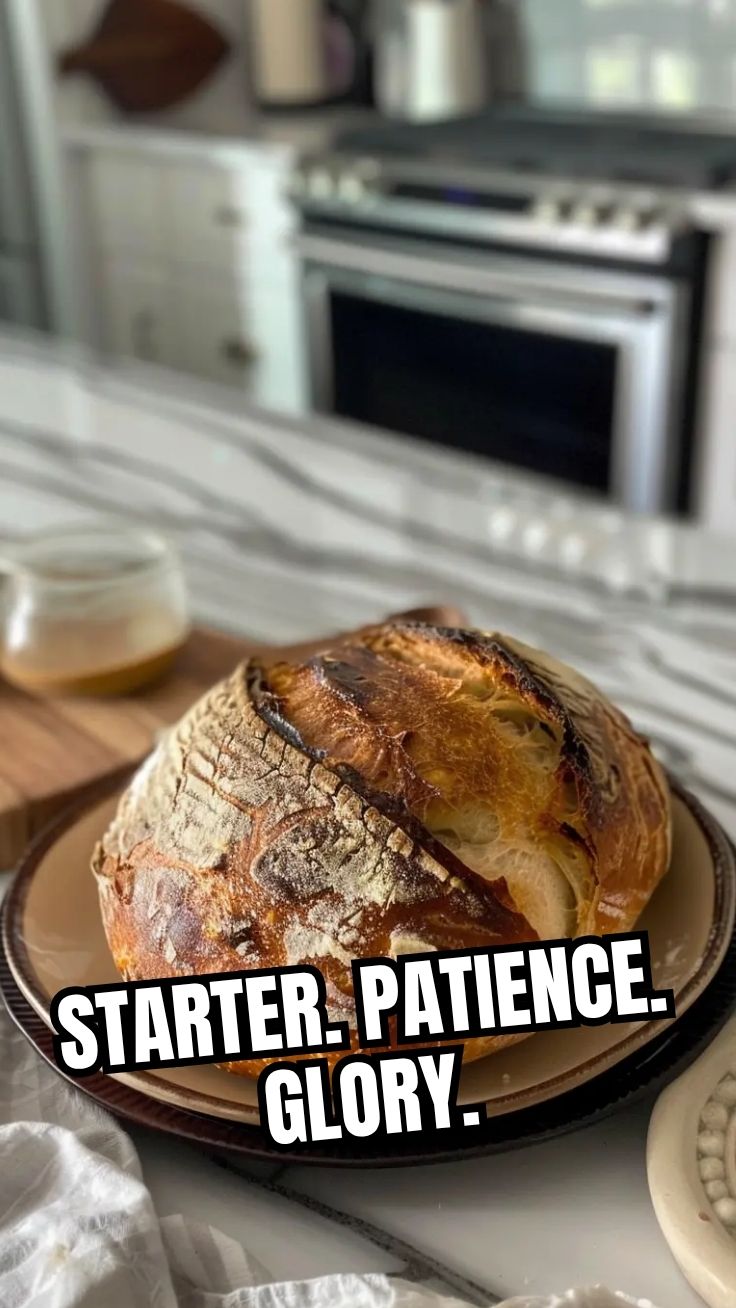
Making Sourdough Bread is a multi-stage process, requiring patience and a good schedule.
- Active Prep Time: 30 minutes (mixing, folding)
- Bulk Fermentation (Resting Time): 4-6 hours (at room temperature, depending on ambient temp and starter activity)
- Cold Proof (Resting/Refrigeration Time): 12-18 hours (or up to 24 hours)
- Baking Time: 40-50 minutes
This timeline allows the dough to develop complex flavors and a beautiful structure. Plan to start the day before you want to bake to accommodate the long cold proof.
Step-by-Step Instructions
1. Feed Your Starter: The evening before you plan to mix your dough, feed your Sourdough Starter. It should be active, bubbly, and pass the float test (a small spoonful floats in water) within 4-6 hours.
2. Autolyse (Optional but Recommended): In a large bowl, combine the flour and warm water. Mix until no dry spots remain, then cover and let rest for 30-60 minutes. This pre-hydrates the flour, making the dough easier to work with.
3. Mix in Starter & Salt: Add the active starter to the flour-water mixture. Mix gently until fully incorporated. Then, sprinkle the salt over the dough and knead lightly for 5 minutes, ensuring the salt is evenly distributed.
4. Bulk Fermentation & Folds: Cover the bowl and let the dough rest. Over the next 3-4 hours, perform 3-4 sets of “stretch and folds” every 30-45 minutes. To do this, gently stretch a portion of the dough up and fold it over itself the center. Rotate the bowl and repeat until all sides have been folded. This builds strength in the dough. After the folds, let the dough rest until it has increased in volume by about 30-50% and feels airy. The environment plays a huge role; warmer kitchens speed up fermentation.
5. Pre-shape: Gently turn the dough out onto a lightly floured surface. Using a dough scraper, gently shape it into a round or oval. Cover and let rest for 20 minutes.
6. Final Shape: Lightly flour your banneton or a bowl lined with a floured kitchen towel. Shape the dough tightly into your desired form (boule or batard). Place it seam-side up in the banneton.
7. Cold Proof: Cover the banneton with plastic wrap or a kitchen towel and refrigerate for 12-18 hours. This slow, cold proof develops deeper flavor and makes the dough easier to handle.
8. Preheat Oven & Dutch Oven: When you’re ready to bake your beautiful Sourdough Bread, preheat your oven to 450°F (232°C) with your Dutch oven inside for at least 30 minutes. This ensures the pot is scorching hot.
9. Score & Bake: Carefully remove the hot Dutch oven. Gently invert the cold dough onto parchment paper and lift it into the Dutch oven. Using a lame or sharp knife, score the top of the dough. Cover and bake for 30 minutes.
10. Uncover & Finish Baking: Remove the lid, reduce the oven temperature to 425°F (218°C), and bake for another 15-20 minutes, or until the crust is deeply golden brown.
11. Cool: Transfer the bread to a wire rack to cool completely before slicing (at least 1-2 hours). This prevents a gummy interior.
Nutritional Benefits & Advantages
Homemade Sourdough Bread offers several nutritional advantages. The long fermentation process, driven by a vibrant Sourdough Starter, breaks down complex carbohydrates and gluten, making the bread easier to digest for some individuals. It also increases the bioavailability of nutrients like iron, magnesium, and zinc. Sourdough’s lower glycemic index can help regulate blood sugar levels, and its natural probiotics contribute to gut health. Plus, you control all the ingredients, opting for organic flours and avoiding unwanted additives.
Tips, Variations & Cooking Advice
- Flavor Boosts: Add seeds (sunflower, sesame, pumpkin) or chopped herbs (rosemary, thyme) during the final shaping for added texture and flavor.
- Whole Wheat Sourdough: Substitute up to 20-30% of the bread flour with whole wheat flour for a nuttier flavor and increased fiber. You might need a little extra water.
- Gluten-Free Sourdough: Requires specific gluten-free flour blends and a gluten-free starter. This is a more advanced technique.
- Hydration Adjustment: If your dough feels too stiff, add a tablespoon of water at a time during mixing. If too wet, a tablespoon of flour.
- Visual Cues: Don’t rely solely on timing. Watch your dough for signs of proper fermentation (bubbly, airy, increased volume).
Common Mistakes to Avoid
- Using an Inactive Starter: A sleepy starter won’t give your bread enough rise. Ensure it’s fed and vigorous.
- Under-proofing: Leads to a dense, gummy interior and a lack of oven spring. Dough should be visibly larger and airy.
- Over-proofing: Can make the dough collapse in the oven, resulting in a flat loaf. The dough will feel very gassy and weak.
- Cutting Too Soon: Slicing hot sourdough traps steam, making the crumb gummy. Always let it cool completely.
- Not Using A Kitchen Scale: Sourdough baking benefits greatly from precise measurements.
Storage & Meal Prep Tips
Once your Sourdough Bread has cooled, store it at room temperature in a breathable bread bag or wrapped in a clean kitchen towel for 2-3 days. Avoid airtight plastic bags, which can make the crust soggy. For longer storage, slice the cooled loaf and freeze slices in an airtight container or freezer bag for up to 3 months. Toasting frozen slices brings them back to life perfectly.
Conclusion
Baking Sourdough Bread is a truly rewarding experience, transforming simple flour, water, and an active Sourdough Starter into a loaves of artisanal perfection. Embrace the process, learn from each bake, and soon you’ll be creating loaves that rival your favorite bakery. We encourage you to try this recipe, share your baking successes (and learning moments!), and explore the wonderful world of homemade bread.
FAQs
Q1: How do I know if my Sourdough Starter is active enough?
A: Your starter should be bubbly and have increased in volume after feeding. The best test is the “float test”: drop a small spoonful into a glass of water. If it floats, it’s ready.
Q2: Can I bake Sourdough Bread without a Dutch oven?
A: Yes, you can. Place a pan of boiling water on the bottom rack of your oven to create steam, and bake the bread on a baking stone or preheated baking sheet. However, a Dutch oven typically yields the best crust and oven spring.
Q3: My dough is too sticky to handle. What should I do?
A: Resist the urge to add too much flour. Lightly wet your hands or use a dough scraper. Stickiness often indicates good hydration, which contributes to an open crumb. Cold proofing can also make the dough easier to handle.
Q4: How important is temperature control for sourdough?
A: Very important! Warmer temperatures speed up fermentation, while cooler temperatures slow it down. This directly impacts proofing times and flavor development. Adjust your resting times based on your kitchen’s ambient temperature.
Sourdough Bread
Ingredients
Equipment
Method
- Combine all starter ingredients in a jar, mix until smooth, and cover loosely.
- Feed the starter daily by discarding half and adding fresh flour and water, until it becomes active and bubbly.
- Gently mix warm water and active starter in a large bowl.
- Add bread flour and salt, then mix until a shaggy dough forms, cover, and let it rest for 30 minutes.
- Perform a series of stretch and folds every 30 minutes for 2-3 hours, allowing the dough to develop strength.
- Allow the dough to bulk ferment at room temperature until it doubles in size, typically 4-6 hours.
- For an overnight ferment, refrigerate the dough after bulk fermentation for 8-12 hours.
- Gently shape the dough into a round or oval and place it in a floured proofing basket.
- Proof the dough at room temperature for 1-2 hours or refrigerate overnight.
- Preheat your oven to 230°C (450°F) with a Dutch oven inside.
- Carefully transfer the dough to the hot Dutch oven, score the top, and bake covered for 20 minutes.
- Remove the lid and continue baking for another 20-30 minutes, or until the crust is golden brown.
- Transfer the baked bread to a wire rack and let it cool completely before slicing and serving.