The Ultimate Comfort Bowl: Mastering Vegetable Soup at Home
Have you ever wondered why a steaming bowl of Vegetable Soup tastes exponentially better when you make it from scratch compared to anything from a can? The secret lies in the alchemy of fresh vegetables, slow-simmered herbs, and the love you pour into the pot. In a world of quick fixes, preparing this Homemade Vegetable Soup at home is not just a meal—it’s a ritual of self-care. You gain complete control over ingredients, sodium levels, and flavor depth, ensuring every spoonful is nutrient-dense and deeply satisfying. This comprehensive guide will walk you through every step to create a soup that warms the soul and nourishes the body.
Ingredients & Kitchen Tools
Essential Ingredients
– 2 tablespoons olive oil – Use extra virgin for richer flavor; avocado oil works as a substitute.
– 1 large yellow onion, diced – Sweet onions can be swapped for shallots or leeks.
– 3 garlic cloves, minced – Fresh is best; avoid pre-minced for optimal aroma.
– 3 large carrots, chopped – Adds natural sweetness and beta-carotene.
– 2 celery stalks, chopped – Provides a savory backbone; fennel can substitute.
– 1 medium zucchini, diced – For tenderness; yellow squash works identically.
– 1 can (14.5 oz) diced tomatoes – Fire-roasted for depth; fresh plum tomatoes (3-4) work in season.
– 4 cups vegetable broth – Low-sodium preferred; mushroom broth adds umami.
– 1 teaspoon dried thyme – Rosemary or oregano are excellent alternatives.
– 1 bay leaf – Remove before serving; adds earthiness.
– 1 cup green beans, trimmed & cut – Frozen works if fresh isn’t available.
– Salt and black pepper to taste
– Fresh parsley for garnish – Cilantro or basil add bright finishes.
Kitchen Tools Required
– Large heavy-bottomed pot or Dutch oven – Ensures even heat distribution.
– Chef’s knife and cutting board – Sharp knife prevents bruising vegetables.
– Wooden spoon – For stirring without scratching non-stick surfaces.
– Measuring cups and spoons – Precision matters for seasoning balance.
– Vegetable peeler – Optional for carrots; scrubbing can replace peeling.
– Ladle – For serving without splashing.
– Airtight storage containers – Glass or BPA-free plastic for leftovers.
Prep Time & Cooking Schedule
| Stage | Duration | Details |
|——-|———-|———|
| Prep Time | 15–20 minutes | Wash, peel, and chop all vegetables. Mince garlic. |
| Active Cooking | 25–30 minutes | Sautéing aromatics, simmering stock, adding vegetables in stages. |
| Resting Time | 5 minutes | Let soup sit off heat to meld flavors before serving. |
| Total Time | Approximately 45–55 minutes | Perfect for a weeknight dinner or Sunday meal prep. |
Pro Tip: Chop vegetables in uniform sizes (½-inch cubes) to ensure even cooking. The soup tastes even better after sitting overnight in the fridge as flavors deepen.
Step-by-Step Instructions
1. Heat the olive oil in your large pot over medium heat. When it shimmers (about 1 minute), add the diced onion. Cook for 4–5 minutes until translucent.
2. Add minced garlic, carrots, and celery to the pot. Stir and cook for another 3 minutes until garlic is fragrant. Temperature Control: Keep heat medium-low to avoid burning garlic (which turns bitter).
3. Pour in the diced tomatoes and vegetable broth. Add the dried thyme and bay leaf. Increase heat to high, bring to a boil, then reduce to a simmer.
4. Add the zucchini and green beans when the broth reaches a gentle bubble. These cook quickly—about 8–10 minutes. Texture Cue: Zucchini should be tender but not mushy; test with a fork.
5. Season with salt and black pepper. Start with ½ teaspoon salt and ¼ teaspoon pepper, then adjust after 5 minutes of simmering. Seasoning Adjustment: Remember that broth already contains sodium—taste before adding more.
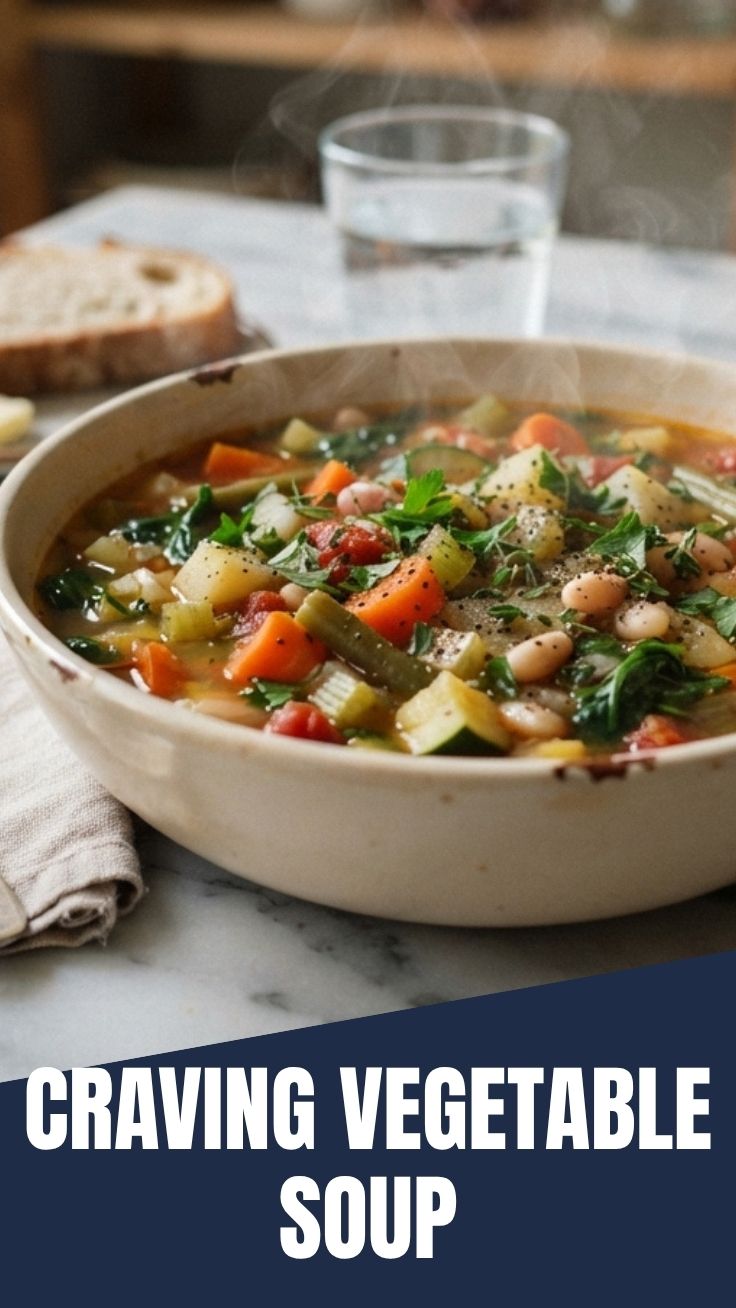
6. Remove the bay leaf and turn off the heat. Let the soup rest for 5 minutes. This final step creates a deeply satisfying Vegetable Soup that tastes like it simmered all day. Your Homemade Vegetable Soup now boasts layers of earthy sweetness and herbaceous warmth.
7. Ladle into bowls and garnish generously with fresh parsley. Serve with crusty bread or a simple side salad.
Nutritional Benefits & Advantages
A single serving of this soup (approximately 1.5 cups) provides:
– ~120 calories – Low-calorie density for weight management.
– 6g dietary fiber – Supports digestion and satiety; green beans and carrots are rich sources.
– 250% DV Vitamin A – From carrots and zucchini, critical for eye health and immunity.
– 15% DV Iron – Essential for oxygen transport; enhanced absorption when paired with vitamin C in tomatoes.
– Zero cholesterol – Plant-based eating supports heart health.
– Hydration boost – The broth base helps maintain fluid balance, especially during colder months.
Advantage: Cooking at home allows you to control sodium—canned versions often pack 700+mg per serving, whereas this recipe uses only 400mg or less.
Tips, Variations & Cooking Advice
Flavor Variations
– Italian-Inspired: Add 1 teaspoon dried basil and ½ teaspoon red pepper flakes. Stir in ½ cup cooked white beans for protein.
– Curried: Sauté 1 tablespoon curry powder with onions; garnish with cilantro and a squeeze of lime.
– Mexican Twist: Replace thyme with cumin and coriander—add 1 diced jalapeño (seed for less heat) and top with avocado.
Ingredient Swaps
– Gluten-Free: This recipe is naturally gluten-free; double-check broth labels for certification.
– Dairy-Free: Use olive oil and avoid adding cream; the soup is already dairy-free.
– Protein Boost: Add 1 cup cooked lentils or chickpeas during step 4.
– Low-Carb: Replace carrots with cauliflower florets and zucchini with bell peppers.
Cooking Methods
– Instant Pot: Sauté on “Sauté” mode, then pressure cook on high for 5 minutes with quick release.
– Slow Cooker: Sauté aromatics on stovetop first (non-negotiable for flavor), then transfer all ingredients to slow cooker. Cook on low 6–8 hours or high 3–4 hours.
– Immersion Blender: For a creamy texture, blend half the soup after cooking—return to pot and stir.
Dietary Adaptations
– Low-Sodium: Use homemade broth (simmer vegetable scraps in water) or unsalted store-bought; season with herbs instead.
– FODMAP-Friendly: Omit garlic and onion; use green tops of leeks and asafoetida powder for flavor.
Common Mistakes to Avoid
| Mistake | Solution |
|———|———-|
| Undercooking firm vegetables | Carrots and celery need at least 10 minutes in simmering broth; test with a fork before adding quick-cooking items. |
| Overcooking zucchini | Add zucchini and green beans only during the last 8 minutes—they cook rapidly and become soggy if simmered too long. |
| Not sweating aromatics | Onions and garlic need 4–5 minutes of gentle heat to release sweetness; rushing this step yields flat soup. |
| Oversalting early | Broth and canned tomatoes contain sodium; season at the end once flavors have concentrated. |
| Skipping the bay leaf | It adds a subtle, indispensable depth—remove it after cooking to avoid bitterness if bitten into. |
| Using too much water | Stick to the 4-cup broth ratio; too much liquid dilutes the natural sweetness of vegetables. |
Storage & Meal Prep Tips
Refrigeration
– How to store: Cool soup completely (within 2 hours of cooking) in shallow containers. Transfer to airtight containers and refrigerate.
– Shelf life: Consume within 4–5 days for peak freshness and texture.
– Reheating: Warm gently on the stovetop over medium-low heat, stirring occasionally. Avoid boiling rapidly, which can break down vegetables further.
Freezing
– Best for long-term storage: Freeze in portion-sized containers (1–2 cups each) or silicone freezer bags. Leave ½ inch headspace for expansion.
– Shelf life: Up to 3 months without significant quality loss.
– Thawing: Overnight in the refrigerator or using the defrost setting on microwave—then reheat as above.
Pro Meal Prep Tip: Cook a double batch on Sunday. Portion into jars for grab-and-go lunches all week. The Homemade Vegetable Soup holds up beautifully, especially when stored without delicate garnishes (add fresh herbs after reheating).
Conclusion
Making Vegetable Soup from scratch is one of the most rewarding kitchen endeavors you can master. Not only does this Homemade Vegetable Soup deliver unparalleled flavor and texture, but it also empowers you to customize every ingredient to your dietary needs and taste preferences. The process is forgiving, the ingredients are flexible, and the result is a bowl of pure comfort that nourishes from the inside out. Now, grab your knife and pot—your new favorite recipe is waiting. Share your creation in the comments below or tag us on social media with your unique twist!
FAQs
1. Can I use frozen vegetables instead of fresh?
Absolutely. Frozen vegetables are flash-frozen at peak ripeness, retaining nutrients. Add them directly to the simmering broth—no need to thaw. Note that frozen zucchini may release more water, so reduce liquid by ¼ cup.
2. Why is my soup bland even though I added salt?
Salt alone cannot fix flat soup. Try adding an acid like 1 tablespoon lemon juice or apple cider vinegar, which brightens flavors. A pinch of sugar can balance bitterness from tomatoes. Also, check your broth quality—homemade or low-sodium broths often need more herbs and umami boosters like a splash of tamari.
3. How can I thicken my soup?
For a heartier texture without cream, mash some of the cooked vegetables with a potato masher directly in the pot. Alternatively, blend 1 cup of the soup and stir it back in. Adding a tablespoon of tomato paste earlier in the sauté step also increases body.
4. Can I make this soup oil-free?
Yes. To sauté without oil, use 2 tablespoons water or vegetable broth instead. Add more liquid as needed to prevent sticking. The flavor may be slightly less rich, but you can compensate with extra herbs and a splash of balsamic vinegar at the end.
5. My vegetables are mushy—what went wrong?
This typically happens when you cook the soup too long on high heat or add quick-cooking vegetables (zucchini, green beans) too early. Follow the step-by-step timing and keep the soup at a gentle simmer, not a rolling boil. Cut vegetables in consistent sizes to ensure even cooking.