The Ultimate Fresh & Flavorful Homemade Greek Salad Recipe
Have you ever wondered why restaurant Greek Salad tastes so much more vibrant and satisfying than the sad, wilted versions you sometimes throw together at home? The secret isn’t just in the ingredients, but in the technique and the quality of the components. Preparing this classic dish from scratch is valuable because it allows you to control the freshness, the saltiness of the feta, and the intensity of the dressing—ensuring a restaurant-quality experience right in your own kitchen. In this guide, we will walk you through building the perfect Greek Salad from the ground up.
Ingredients & Kitchen Tools
Ingredients (Serves 4-6)
– Roma tomatoes (4 large): Firmer than beefsteak, they hold their shape and don’t turn the salad watery.
– English cucumber (1 large): Fewer seeds and a thinner skin make it ideal; no need to peel.
– Red onion (1 medium): Slice thinly to avoid overpowering the other flavors.
– Green bell pepper (1): Adds a sweet, crisp crunch.
– Kalamata olives (1/2 cup): Pitted for convenience; their briny, fruity flavor is essential.
– Feta cheese (8 oz block): Avoid pre-crumbled versions—get a block for superior creaminess and salt control.
– Extra virgin olive oil (1/4 cup): Use a high-quality, grassy Mediterranean olive oil for the dressing.
– Red wine vinegar (2 tbsp): The classic tangy base.
– Dried oregano (1 tsp): Rubbed between your palms to release oils.
– Salt & pepper: To taste.
Kitchen Tools
– Large wooden or glass bowl: Avoid metal which can react with vinegar.
– Sharp chef’s knife: For clean cuts that won’t bruise the veggies.
– Cutting board: Preferably non-porous for easy cleaning.
– Small whisk or fork: For emulsifying the dressing.
– Measuring spoons: For precise oil and vinegar ratios.
Optional Substitutions
– Swap red wine vinegar for lemon juice for a brighter, less sharp acidity.
– Use Persian cucumbers and skip the seeded English cucumber.
– Add capers or pepperoncini for extra brininess.
Prep Time & Cooking Schedule
Fresh ingredients ready for assembly
– Prep time: 15 minutes (washing, chopping, dressing)
– Resting time: 10–20 minutes (essential for flavor melding)
– Total time: 25–35 minutes
Planning tip: The salad should rest at room temperature (not refrigerated) for at least 10 minutes after dressing. This allows the salt to gently draw out the tomato juices, creating a light, flavorful “sauce” that coats every bite. Chilling will dull the flavors, so serve immediately after resting.
Step-by-Step Instructions
1. Prep the Vegetables: Cut the tomatoes into wedges (6 per Roma), quarter the cucumber lengthwise then slice into 1/2-inch half-moons, and thinly slice the red onion into rings. Core and dice the green bell pepper into 1-inch pieces.
2. Combine Base Ingredients: In your large bowl, add the tomatoes, cucumber, onion, bell pepper, and Kalamata olives. Toss gently to mix.
3. Dressing Preparation: In a small bowl, whisk together the extra virgin olive oil, red wine vinegar, oregano, a pinch of salt, and a few cracks of black pepper. Important: Do not emulsify too aggressively; a simple whisk is enough. The oil and vinegar should separate slightly over time, which is authentic.
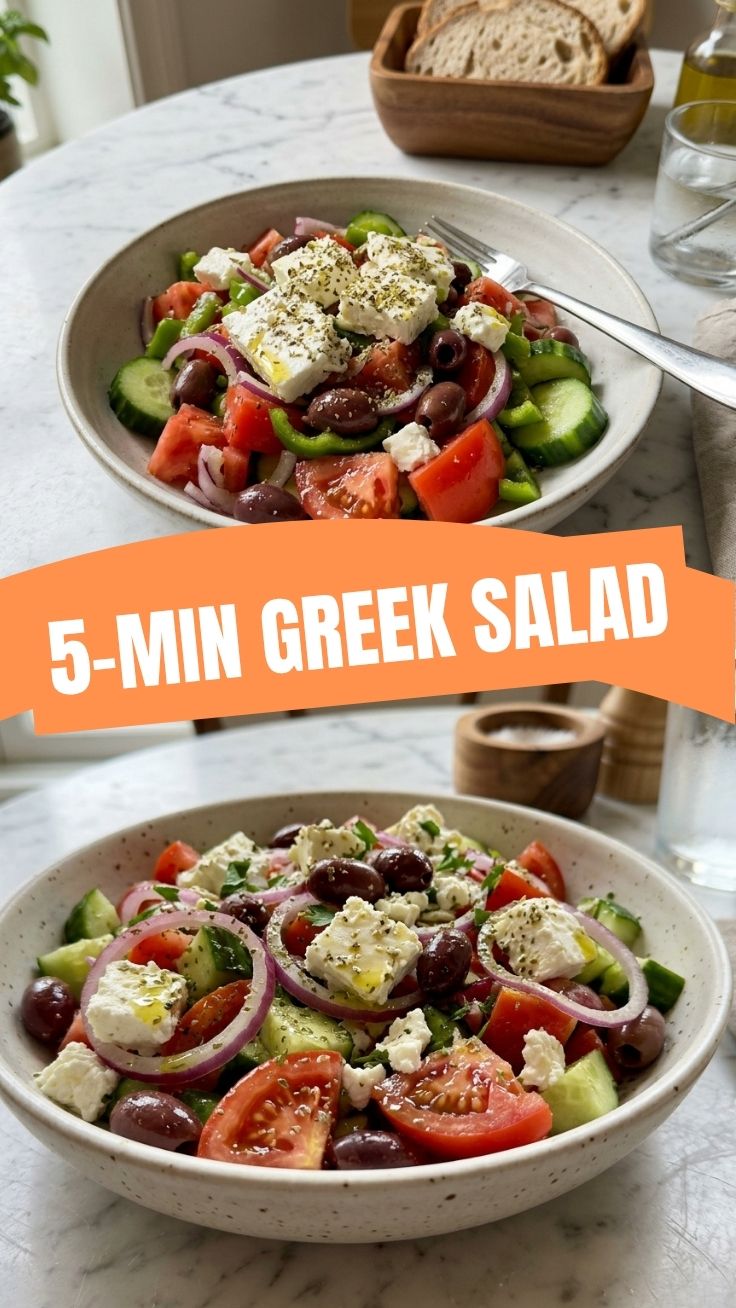
4. Final Assembly: Pour the dressing over the vegetables and toss gently with your hands or two large spoons. Let the salad rest for 10 minutes. Just before serving, crumble or slice the feta block on top. Do not mix in the feta—let it rest as a salty crown.
Technical note: The success of a Greek Salad hinges on texture. The Mediterranean tradition avoids over-dressing; you want the vegetables glistening, not swimming. Taste the tomato juice that pools at the bottom—it should taste bright and herbaceous.
Nutritional Benefits & Advantages
A classic Greek Salad is a powerhouse of nutrition. The fresh tomatoes provide lycopene, a potent antioxidant linked to heart health, while the olive oil (rich in monounsaturated fats) helps your body absorb it. Cucumbers and bell peppers offer hydration and vitamin C. Feta cheese, although salty, is lower in fat than many aged cheeses and provides calcium. This dish is naturally gluten-free and low-carb (with 8-10g net carbs per serving), making it an excellent choice for those monitoring their blood sugar or following a ketogenic lifestyle.
Tips Variations & Cooking Advice
– Herb Swap: Chop fresh mint or dill and stir it into the vegetables for a cool, summer-like twist.
– Spice It Up: Add a finely diced serrano chili to the dressing for heat.
– Dressing Hack: Whisk the vinegar and oregano together first, then slowly drizzle in the oil while whisking to create a temporary emulsion.
– Portion Control: Serve as a side (2 cups per person) or a main (4 cups with added chickpeas or grilled chicken).
– Dairy-Free: Omit the feta and add 1/4 cup of marinated artichoke hearts for creaminess without the dairy.
Common Mistakes to Avoid
– Soggy salad: Caused by cutting tomatoes too small or dressing too early. Cut them into wedges (not dices) and dress only 10 minutes before serving.
– Bitter onions: Red onions can be sharp. Soak the slices in cold water for 5 minutes, then pat dry. This mellows the bite without sacrificing texture.
– Clumpy feta: Always crumble cold feta. If it’s too soft, pop the block in the freezer for 10 minutes before slicing.
– Undressed vegetables: Dry vegetables won’t absorb flavor. Toss them with a pinch of salt 5 minutes before adding dressing to open up their pores.
Storage & Meal Prep Tips
– Refrigeration: Store undressed vegetables in an airtight container for up to 2 days. Do not dress until ready to serve.
– Dressing: Keep olive oil and vinegar mixture in a sealed jar at room temperature for up to 1 week. Shake before use.
– Leftover assembled salad: Remove feta and olives before refrigerating. The vegetables keep for 1 day but will soften noticeably.
– Freezing: Not recommended. The high water content of cucumbers and tomatoes will result in a mushy, watery mess upon thawing.
– Reheating: This is a cold salad; do not reheat. If you make it ahead, toss out the wilted cucumbers and replace with fresh ones.
Conclusion
With just 15 minutes of hands-on work, you can create a bright, crunchy, and deeply satisfying Greek Salad that rivals any taverna plate. The key is respecting the simplicity of the ingredients and letting them shine. By mastering this Mediterranean staple, you’ve unlocked a versatile base that can be adapted for any season or diet. We encourage you to experiment with different olives, herbs, or a splash of lemon juice next time. When you make it, snap a photo and share your creation with us—we’d love to see your twist on this timeless classic!
FAQs
Q: Can I use feta from a tub of brine instead of a block?
A: Absolutely. Brine-packed feta is actually superior in flavor. Just drain and pat dry before crumbling.
Q: How do I prevent the salad from becoming watery?
A: Use Roma tomatoes (less liquid) and salt the cucumbers lightly 10 minutes ahead, then pat them dry before adding to the bowl.
Q: Can I add chickpeas to make it a full meal?
A: Yes! Chickpeas (canned, rinsed and drained) transform this into a hearty lunch. This is a common Mediterranean bowl variation that adds protein and fiber.
Q: What if I don’t have red wine vinegar?
A: Lemon juice is the best substitute. Use 1.5 tablespoons juice to 1 tablespoon oil, as lemon is more acidic than vinegar.
Q: How long can I leave the dressed salad at room temperature?
A: No more than 2 hours for food safety, as the olive oil and vegetables can promote bacterial growth at room temperature. Refrigerate leftover dressed salad immediately.
Proven way to grow the perfect Greek Salad
Ingredients
Equipment
Method
- Select a sunny spot in your garden and prepare the soil by enriching it with compost.
- Plant tomato, cucumber, red onion, and bell pepper seeds or seedlings according to package directions, ensuring adequate spacing.
- Plant oregano and mint in a separate area or pots, as mint can spread aggressively.
- Water all plants regularly, especially during dry periods, and provide stakes for tomatoes and cucumbers as they grow.
- Monitor plants for pests and diseases, addressing any issues promptly with organic solutions if possible.
- Harvest vegetables and herbs when they are ripe and fragrant, typically after 60-90 days of growth.
- Wash and chop the freshly harvested tomatoes, cucumbers, red onion, and bell peppers into bite-sized pieces.
- Combine the chopped vegetables in a large salad bowl with Kalamata olives and crumbled feta cheese.
- In a small bowl, whisk together the olive oil, red wine vinegar, salt, and black pepper to create the dressing.
- Pour the dressing over the salad and gently toss to combine all the ingredients.
- Garnish the salad with fresh oregano and mint leaves before serving immediately.