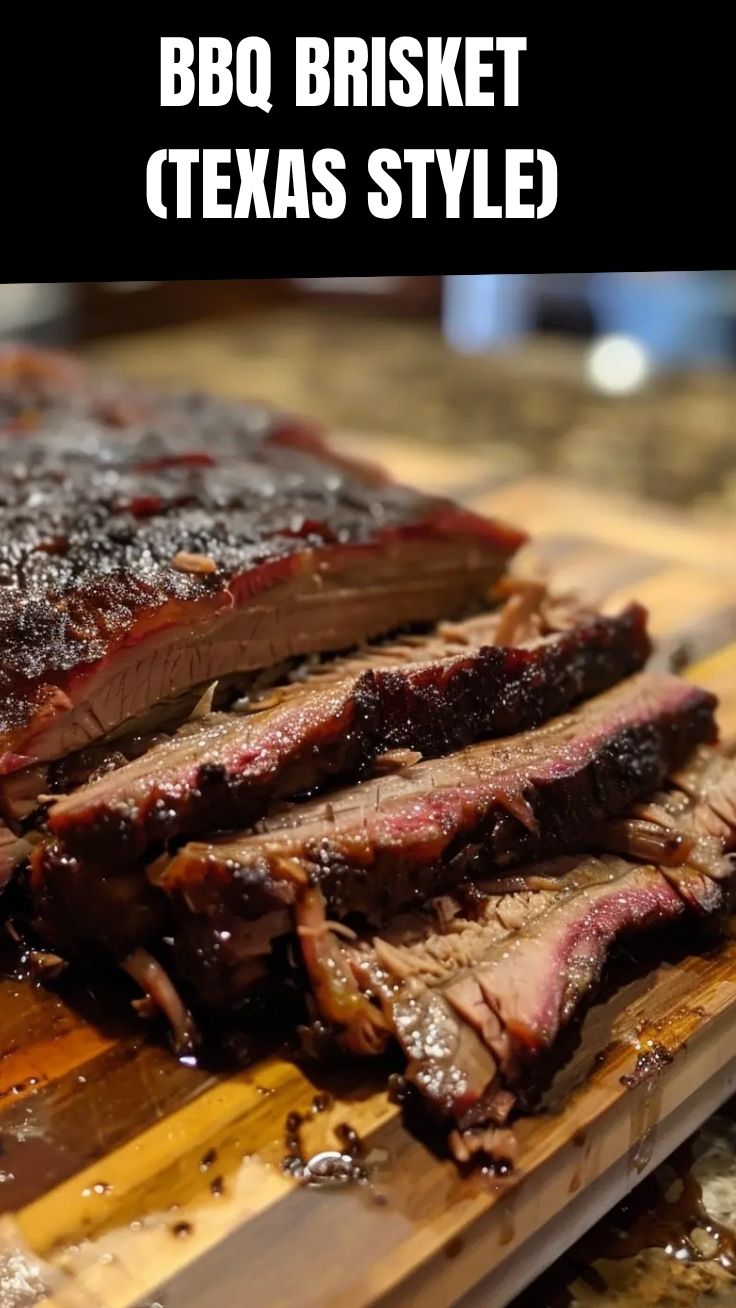
Master the Pit: Unleash Authentic BBQ Brisket (Texas Style) at Home!
Ever dreamt of that melt-in-your-mouth, smoky smoked brisket, straight from the heart of Texas, but thought it was too intimidating to make yourself? Think again! Today, we’re demystifying one of the most iconic BBQ dishes, empowering you to create an authentic BBQ Brisket (Texas Style) in your own backyard. Preparing this at home isn’t just about saving money; it’s about the pure satisfaction of mastering a culinary art form, controlling every nuance of flavor, and impressing your loved ones with a dish that truly stands apart. Get ready to embark on a flavorful journey that will transform your understanding of barbecue.
Ingredients & Kitchen Tools
- 12-15 lb Whole Untrimmed Brisket (Packer Brisket): Look for USDA Prime or Choice grade for best marbling and tenderness. The fat cap is crucial for moisture.
- Coarse-Ground Black Pepper: The primary seasoning, providing a bold, peppery crust.
- Kosher Salt: Essential for seasoning and creating that flavorful bark.
- Optional – Garlic Powder & Paprika: For a subtle depth of flavor, if desired.
- Wood Chunks (Oak or Post Oak Recommended): The secret to authentic Texas smoke flavor. Avoid mesquite for long cooks, as it can be too strong.
- Apple Cider Vinegar (in a spray bottle): Used to spritz the brisket, keeping it moist and aiding bark formation.
- Butcher Paper (Pink, Unwaxed): For wrapping the brisket during the stall to retain moisture and tenderize. Aluminum foil can also be used, but butcher paper allows for better bark development.
- Large Roasting Pan or Aluminum Foil Pan: To catch drips and carry the brisket.
- High-Quality Digital Meat Thermometer: Crucial for monitoring internal temperature accurately (probe thermometer and instant-read).
- Smoker (Offset, Pellet, or Kamado Style): Any smoker capable of maintaining a consistent low temperature (225-275°F) for extended periods.
- Sharp Carving Knife: For slicing the finished brisket against the grain.
- Insulated Cooler: For resting the brisket.
Prep Time & Cooking Schedule
- Prep Time: 30-60 minutes (trimming and seasoning)
- Cook Time: 10-16 hours (approximately 1 hour per pound, but cook to temperature, not time)
- Resting Time: 2-4 hours
Plan your cook well in advance! A packer brisket is a marathon, not a sprint. For a Saturday lunch, consider starting your brisket late Friday night or very early Saturday morning. The long cooking and resting times are non-negotiable for achieving perfect tenderness.
Step-by-Step Instructions
1. Trim the Brisket: Using a sharp knife, trim the hard, unflappable fat from the fat cap down to about ¼ to ½ inch thickness. Remove any silverskin from the lean side. Shape the brisket to be aerodynamic for even cooking.
2. Season Generously: Liberally apply the coarse-ground black pepper and kosher salt over all surfaces of the brisket. If using, sprinkle garlic powder and paprika. Don’t be shy; the bark is where a lot of the flavor resides when you’re making authentic BBQ Brisket (Texas Style).
3. Preheat Your Smoker: Bring your smoker to a stable temperature of 225-275°F (107-135°C). Add your wood chunks to establish a clean, thin blue smoke.
4. Smoke the Brisket (Unwrapped): Place the brisket fat side up (or towards the heat source, if applicable) in your smoker. Maintain consistent temperature. Spritz with apple cider vinegar every hour or so once the bark has set (usually after 3-4 hours) to keep it moist. This initial phase helps develop the beautiful, flavorful bark characteristic of truly amazing smoked brisket.
5. Hit the Stall & Wrap: After 6-8 hours, or when the internal temperature reaches 150-170°F (65-77°C), the brisket will “stall,” meaning its temperature rise will slow or stop. This is due to evaporative cooling. At this point, wrap the brisket tightly in butcher paper (or foil). Return it to the smoker.
6. Finish Cooking: Continue cooking until the internal temperature reaches 200-205°F (93-96°C) and, more importantly, it feels “probe tender.” The probe of your thermometer should slide in with little to no resistance, like butter, in both the flat and the point.
7. The Critical Rest: Remove the brisket from the smoker and, still wrapped, place it in an insulated cooler (without ice) for a minimum of 2 hours, but ideally 3-4 hours. This resting period is absolutely crucial for the meat to reabsorb its juices, resulting in an incredibly tender and moist brisket.
8. Slice & Serve: Once rested, unwrap the brisket. Separate the point from the flat (a natural seam will guide you). Slice the flat against the grain into pencil-thick slices. For the point, you can cube it for burnt ends or slice it for richer, fattier pieces.
Nutritional Benefits & Advantages
Brisket, while known for its fat content, offers significant protein, essential vitamins like B12, and minerals such as iron and zinc. When slow-cooked, much of the fat renders out, leaving behind a flavorful, tender meat. Choosing a lean-trimmed flat cut can further reduce caloric intake while still enjoying the rich taste. Smoking also avoids the added oils and fats often associated with pan-frying or deep-frying, focusing instead on pure meat flavor.
Tips, Variations & Cooking Advice
- Wood Selection: Experiment with different woods! While oak is classic, pecan offers a slightly sweeter, nuttier profile, and cherry provides a beautiful mahogany color.
- Rub Variations: While salt and pepper is king, feel free to add a pinch of cayenne for heat, or a touch of brown sugar for a sweeter bark. However, for true Texas style, keep it simple.
- The Power of Spritzing: Don’t underestimate the apple cider vinegar spritz. It not only keeps the surface moist but also helps build the bark.
- Mastering Temperature: Consistency is key. Invest in a good quality smoker and learn how to manage its temperature. Fluctuations can lead to dry or tough meat.
- Burnt Ends: The point of the brisket is perfect for making “burnt ends.” After separation, cube the point, toss with some BBQ sauce, and return to the smoker for another 1-2 hours until caramelized and tender.
Common Mistakes to Avoid
- Not Enough Salt and Pepper: Don’t be timid with the rub. The bark needs a substantial amount to form properly and provide flavor.
- Cooking to Time, Not Temperature/Feel: Every brisket is different. Rely on your thermometer and, more importantly, the “probe tender” feel.
- Skipping the Rest: This is perhaps the biggest mistake. A rushed rest leads to dry, tough meat. Be patient!
- Slicing with the Grain: Always slice against the grain. Slicing with the grain will result in stringy, chewy meat.
- Inconsistent Smoker Temperature: Wild temperature swings lead to uneven cooking and can dry out your brisket.
Storage & Meal Prep Tips
Leftover brisket can be a treasure!
- Refrigeration: Store sliced or unsliced brisket in an airtight container for 3-4 days in the refrigerator. To maintain moisture, you can add a little beef broth or leftover drippings to the container.
- Freezing: For longer storage, freeze brisket. Wrap individual portions tightly in plastic wrap, then foil, or use a vacuum sealer. It can be frozen for up to 3 months.
- Reheating: The best way to reheat is low and slow. Place wrapped brisket (with a splash of broth) in an oven at 250°F (120°C) until warmed through. Alternatively, microwave carefully on low power, or use a sous vide bath for excellent results. Avoid high heat, which can dry it out.
Conclusion
Crafting an authentic BBQ Brisket (Texas Style) at home is a rewarding culinary adventure. From trimming and seasoning to the long smoke and essential rest, each step contributes to the unparalleled tenderness and deep, smoky flavor that defines a truly great smoked brisket. Don’t be discouraged by the time commitment – the anticipation only makes the final product taste even better. Give this recipe a try, embrace the low-and-slow philosophy, and prepare to impress your taste buds and your guests. Share your creations in the comments below!
FAQs
Q1: What’s the best wood for Texas-style brisket?
A1: Post oak is traditionally preferred, but readily available oak works wonderfully. It provides a clean, hearty smoke that complements the beef without overpowering it.
Q2: My brisket stalled for a very long time. Is that normal?
A2: Yes, the “stall” is completely normal and can last for several hours. This is why wrapping the brisket is a common technique to push through it and prevent the meat from drying out.
Q3: How do I know when my brisket is “probe tender”?
A3: Probe tenderness is critical. When you insert a thermometer probe or skewer into different parts of the brisket, it should slide in with very little resistance, much like pushing it through room-temperature butter.
Q4: Can I make this in an oven if I don’t have a smoker?
A4: While you won’t get the authentic smoke flavor, you can cook a brisket in an oven using a similar low-and-slow method. You can use liquid smoke for a hint of flavor, but nothing truly replaces a smoker.
Q5: My brisket came out dry. What went wrong?
A5: Common culprits for dry brisket include not resting it long enough, overcooking (cooking to too high a temperature and missing probe tenderness), or inconsistent smoker temperatures that dry out the meat. Ensure you trim the fat cap appropriately and spritz regularly during the initial smoking phase.
Proven way to grow your BBQ Brisket (Texas Style) in 3 steps
Ingredients
Equipment
Method
- Trim the brisket, removing hard fat and silver skin, leaving about 1/4 inch of fat on the flat for moisture.
- Combine the salt, pepper, and garlic powder to create the rub, then generously apply it to all sides of the brisket.
- Preheat your smoker to 250°F (120°C) using post oak wood for authentic Texas flavor. Place the brisket fat-side up on the smoker.
- Smoke the brisket for 6-8 hours, or until the internal temperature reaches 165-175°F (74-79°C) and a deep bark has formed.
- Wrap the brisket tightly in butcher paper when it reaches the target temperature, then return it to the smoker.
- Continue cooking until the brisket probes tender in all sections, typically reaching an internal temperature of 200-205°F (93-96°C) and cook for another 4-6 hours.
- Rest the brisket in a cooler for 2-4 hours, then slice against the grain and serve.