The Ultimate Late Summer Ratatouille Recipe: A Provencal Classic Made Simple
Are you staring at a counter overflowing with zucchini, eggplant, and ripe tomatoes, wondering what to do before they turn? There’s a reason why this humble vegetable stew has survived centuries of culinary trends—it’s the very essence of late summer captured in a single, fragrant dish. This Late Summer Ratatouille delivers concentrated, deep flavor without requiring complicated techniques. Preparing it at home means you control the quality of ingredients and adjust seasoning to your preference. You’ll also discover how this versatile dish fits perfectly into Easy Summer Dinner Recipes when you need a satisfying meal that doesn’t heat up the kitchen. The magic of this Late Summer Ratatouille lies in patience and simple techniques.
Ingredients & Kitchen Tools
For the Vegetables:
– 1 large eggplant (about 1 lb), diced into 1-inch cubes (choose firm, glossy skin for best texture)
– 2 medium zucchini, halved lengthwise then sliced ½-inch thick (young zucchini needs no seeding)
– 1 large yellow onion, diced (sweet varieties like Vidalia work beautifully)
– 4 garlic cloves, minced (fresh garlic is non-negotiable here)
– 2 bell peppers (one red, one yellow), seeded and cut into 1-inch chunks
– 4 large Roma tomatoes, peeled and chopped (or one 14-oz can crushed tomatoes)
– 3 tablespoons olive oil (extra virgin adds fruity notes)
– 2 sprigs fresh thyme and 1 bay leaf
– Salt, black pepper, and red pepper flakes to taste
– 2 tablespoons fresh basil, chiffonade (plus extra for garnish)
Kitchen Tools:
– Large heavy-bottomed Dutch oven or deep skillet (at least 5 quarts)
– Sharp chef’s knife and cutting board
– Wooden spoon or silicone spatula
– Measuring spoons and liquid measuring cup
Optional Substitutions: Swap zucchini with yellow summer squash, or use canned diced tomatoes instead of fresh Roma tomatoes.
Prep Time & Cooking Schedule
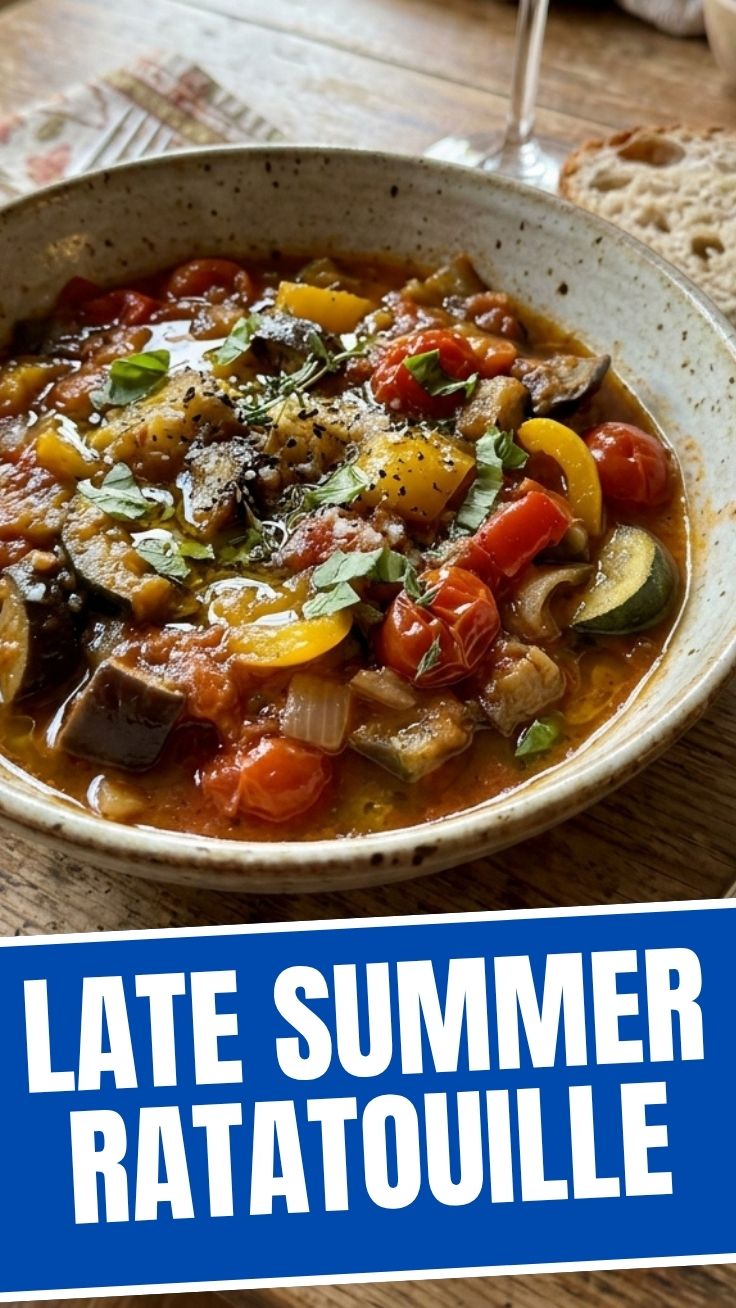
Plan for 20 minutes of active prep and about 45 minutes of cooking time. The dish benefits from a 15-minute resting period after cooking—this allows the flavors to meld beautifully. Total time from start to table: approximately 1 hour 20 minutes. For best results, avoid rushing the sauté step; each vegetable layer needs proper browning to develop caramelized depth.
Step-by-Step Instructions
Step 1: Prepare the Vegetables
Salt the eggplant cubes and let them sit in a colander for 15 minutes. This draws out bitterness and excess moisture. Rinse and pat dry thoroughly.
Step 2: Sauté in Layers
Heat 2 tablespoons olive oil in your Dutch oven over medium-high heat. Add onions and cook until translucent (about 5 minutes). Add garlic and cook 30 seconds until fragrant. Push everything to the sides.
Step 3: Build the Base
Add bell peppers and cook 4 minutes, stirring occasionally. Then add the zucchini and sauté another 3 minutes. Season each layer lightly with salt and pepper. Your Late Summer Ratatouille starts taking shape now as the vegetables soften and release their juices.
Step 4: Simmer with Tomatoes
Add the chopped tomatoes, thyme sprigs, bay leaf, and a pinch of red pepper flakes. Reduce heat to medium-low and let the mixture simmer uncovered for 20 minutes. Stir occasionally. The stew should bubble gently—not boil aggressively. This slow cooking transforms the flavors and creates the signature texture for which Easy Summer Dinner Recipes are celebrated.
Step 5: Finish and Rest
Remove from heat, discard the bay leaf and thyme stems, and fold in fresh basil. Cover and let stand 15 minutes before serving. Taste and adjust salt—a final squeeze of lemon juice can brighten everything.
Nutritional Benefits & Advantages
Ratatouille is a nutritional powerhouse. Eggplant provides fiber and nasunin, an antioxidant that supports brain health. Zucchini delivers vitamin C and potassium, while tomatoes offer lycopene, which becomes more bioavailable with cooking. Bell peppers contribute more vitamin C than citrus fruits. Olive oil aids absorption of fat-soluble vitamins from the vegetables. This dish is naturally gluten-free, vegan, and low in calories (approximately 180 calories per serving). The high water content of summer vegetables keeps you hydrated during warmer weather.
Tips Variations & Cooking Advice
Flavor Variations:
– Add a tablespoon of capers or olives for briny complexity
– Stir in a teaspoon of smoked paprika for depth
– Top with crumbled feta or goat cheese for creamy contrast
Cooking Methods:
– Oven method: Toss all vegetables with oil and seasonings, spread on a baking sheet, and roast at 400°F for 30 minutes. Combine with tomato sauce and bake covered 20 minutes.
– Slow cooker: Sauté aromatics first, then cook on low 6 hours.
Dietary Adaptations: Keep as is for vegan and gluten-free. For lower sodium, omit added salt and rely on herbs. To reduce oil, use nonstick pan and add splashes of vegetable broth.
Common Mistakes to Avoid
Mistake 1: Overcrowding the Pan
Sautéing too many vegetables at once creates steam instead of browning. Solution: Cook vegetables in batches if necessary.
Mistake 2: Under-seasoning
Eggplant and zucchini absorb salt. Solution: Season each layer gradually and taste before serving.
Mistake 3: Mushy Vegetables
Cooking too long at high heat breaks down structures. Solution: Maintain gentle simmer and watch timing.
Mistake 4: Watery Final Dish
Fresh tomatoes release significant liquid. Solution: Cook uncovered to allow evaporation, or use canned crushed tomatoes that have already reduced.
Storage & Meal Prep Tips
Store leftover ratatouille in an airtight container in the refrigerator for up to 5 days. The flavors improve overnight as herbs continue infusing. For freezing, portion into freezer-safe bags and remove excess air—ratatouille freezes well for up to 3 months. Thaw overnight in the fridge before reheating.
To reheat, warm gently in a covered skillet over medium-low heat, adding a splash of water or broth if needed. Microwave works but may alter texture for the pepper pieces. Serve cold as a salad topping or at room temperature on crusty bread—this versatility makes it ideal for batch cooking.
Conclusion
This proven stew transforms garden abundance into something deeply satisfying. Mastering this Late Summer Ratatouille recipe gives you a reliable go-to dish that showcases peak-season produce without fuss. The method we’ve covered works beautifully as one of those Easy Summer Dinner Recipes you’ll return to week after week—whether served as a main course with crusty bread, alongside grilled proteins, or spooned over pasta. Try this recipe this weekend and discover how simple techniques elevate humble vegetables into a memorable meal. Share your version in the comments below—I’d love to see your take on this classic!
FAQs
Can I make ratatouille ahead of time?
Absolutely. In fact, next-day ratatouille tastes better. Cook as directed, cool completely, and refrigerate. Reheat gently before serving.
What if I don’t have fresh thyme?
Use 1 teaspoon dried thyme per sprig, or substitute with herbes de Provence (about 1 tablespoon) for authentic flavor.
Why is my ratatouille watery?
Excess moisture often comes from zucchini or unpeeled eggplant. Salt the vegetables beforehand and cook uncovered to let steam escape.
Can I omit the eggplant?
Yes, but you’ll lose some texture and substance. Replace with extra zucchini, mushrooms, or chickpeas for additional volume.
Is this recipe freezer-friendly?
Yes, it freezes beautifully for up to three months. However, the texture of peppers may soften slightly after thawing.
How do I make this a complete meal?
Serve over quinoa, couscous, or rice, or tuck it into a warm pita with hummus for a balanced dinner.
Proven way to grow a 5-star Late Summer Ratatouille
Ingredients
Equipment
Method
- Plant eggplant, zucchini, peppers, and tomatoes in well-drained soil with at least 6-8 hours of sunlight daily, ensuring proper spacing for good air circulation and growth.
- Provide consistent watering, especially during dry spells, and use organic compost for nutrients and mulch to retain soil moisture and regulate temperature.
- Prune eggplants and tomatoes to enhance fruit production by removing suckers and bottom leaves, and stake taller plants like tomatoes to support their growth.
- Monitor for pests and diseases, using organic pest control methods like neem oil or insecticidal soap, and consider companion planting to deter common garden pests.
- Harvest vegetables at their peak ripeness; pick eggplants when glossy and firm, zucchinis when tender, bell peppers when deeply colored, and tomatoes when fully red and slightly soft to the touch.
- Chop all vegetables into uniform 1-inch pieces, ensuring even cooking, and mince the garlic and chop the fresh herbs.
- Heat olive oil in a large pot or Dutch oven over medium heat, then add the chopped onion and cook until softened, about 5 minutes.
- Stir in the minced garlic and bell peppers, cooking for another 5 minutes until the peppers start to soften.
- Add the eggplant and zucchini, stirring well to combine, and cook for 10-15 minutes until vegetables begin to tenderize.
- Mix in the chopped tomatoes, fresh thyme, salt, and pepper, bringing the mixture to a gentle simmer.
- Cover and cook on low heat for 30-40 minutes, stirring occasionally, until all vegetables are very tender and the flavors have melded.
- Stir in the fresh basil just before serving, and adjust seasoning as needed, serving warm as a side or main dish.